












Light Year Definition
A light year measures distance light travels in one year. For example, it helps measure stars' distance from Earth.
View Lesson on Sun and Other Stars

Become a member to get full access to our entire library of learning videos, reading material, quiz games, simple DIY activities & more.
Become a member to get full access to our entire library of learning videos, quiz games, & more.
Plans & Pricingto watch this full video.
Access All Videos
and Lessons, No Limits.
Access All Videos
No credit card required,
takes 7 sec to signup.
No card required
Ready-to-go lessons
that save you time.
Ready-to-go lessons
If you are on a school computer or network, ask your tech person to whitelist these URLs:
*.wistia.com, fast.wistia.com, fast.wistia.net, embed-fastly.wistia.com, embed-cloudfront.wistia.com, embedwistia-a.akamaihd.net
Sometimes a simple refresh solves this issue. If you need further help, contact us.
Sun and Other Stars
Fun Facts
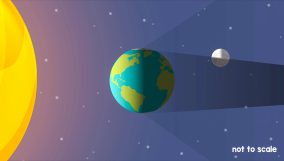
- Light from the sun reaches Earth in about 8 minutes.
- The next closest star to Earth after the sun is a little over 4 light years away from Earth.
- Light travels at 186,000 miles each second.
Why Do We Need To Know About Light Year
Learning about light years helps us grasp how huge the universe is and the importance of measuring how far away stars and galaxies are for science and everyday use. This idea is key in astronomy, which lets scientists study stars and galaxies that are millions of light years away. It’s also important for finding our way using the stars, both in the past and now.
Knowing about light years is useful for things like phone calls and TV signals that go through space, understanding how the sun affects Earth, and finding planets outside our solar system that might support life. This knowledge supports jobs in space science, studying life in space, and even learning about how different cultures see the stars.
Frequently Asked Questions
Check out the Full Lesson on Sun and Other Stars
In this lesson, we learn that:
- Our sun is a star of average size and brightness.
- Stars come in different sizes and distances from Earth.
- Stars that are farther away appear smaller and dimmer.
Related Topics
- Amplitude Definition
- Binary Code Definition
- Competition Definition
- Earth’s Rotation Definition
- Ecosystem Definition
- Electromagnetic Spectrum Definition
- Engineering Definition
- Environment Definition
- Exoskeleton Definition
- Fresh Water Definition
- Group Behavior Definition
- Heat Definition
- Hydrosphere Definition
- Internal Structures Definition
- Kuiper Belt Definition
- Lever Definition
- Light Year Definition
- Limited Resource Definition
- Magnetic Field Definition
- Mold Fossils Definition
- Moon Definition
- Mutation Definition
- Partial Eclipse Definition
- Phases Of The Moon Definition
- Physical Map Definition
- Plant Growth Definition
- Pollen Definition
- Pollination Definition
- Pollution Definition
- Predation Definition
- Property Definition
- Reactants Definition
- Rock Definition
- Scientist Definition
- Sediment Filter Definition
- Sedimentary Rock Definition
- Seed Definition
- Signal Definition
- Star Definition
- Symbiosis Definition
- Texture Definition
- Tides Definition
- Trait Definition
- Transverse Wave Definition
- Unbalanced Force Definition
- Vibrating Definition
- Water Cycle Definition
- Wedge Definition
Start a Free Trial Today. Get a $5 Amazon Gift Card!
Teachers! Start a free trial & we'll send your gift card within 1 day. Only cards left. Try it now.
This email is associated with a Science Kit subscription. Kit subscriptions are managed on this separate page: Manage Subscription
-
Download InvoiceScience & Math$/yr
-
Download InvoiceScience Only$/yr
access all lessons
• No credit card required •
"My students loved the videos. I started the video subscription in May and used them as a review before the state test, which I know contributed to 100% of my class passing the state test."
Rhonda Fox 4th Grade Teacher, Ocala, Florida
Use Generation Genius in Your School
Access all lessons free for 30 days.
"My students loved the videos. I started the video subscription in May and used them as a review before the state test, which I know contributed to 100% of my class passing the state test."
Rhonda Fox 4th Grade Teacher, Ocala, Florida
• No credit card required •
Already a member? Sign In
* no credit card required *
Get District Quote
Sent!
Thank you for your inquiry.
We will email you a quote as soon as we can.
Please login or create an account to access additional resources
Generation Genius joined the Newsela, Inc. family this year!
We've updated our Terms of Use and Privacy Policy for our evolving business and new features.
By selecting the “Agree” button below, you acknowledge that you have reviewed and accepted the Terms of Use and Privacy Policy.

no credit card required
Skip, I will use a 3 day free trial
Enjoy your free 30 days trial
-
Unlimited access to our full library
of videos & lessons for grades K-5. -
You won’t be billed unless you keep your
account open past your 14-day free trial. -
You can cancel anytime in 1 click on the
manage account page or by emailing us.
-
Unlimited access to our full library of videos & lessons for grades K-5.
-
You won't be billed unless you keep your account open past 14 days.
-
You can cancel anytime in 1-click on the manage account page.
Cancel anytime in 1-click on the manage account page before the trial ends and you won't be charged.
Otherwise you will pay just $10 CAD/month for the service as long as your account is open.
Cancel anytime on the manage account page in 1-click and you won't be charged.
Otherwise you will pay $10 CAD/month for the service as long as your account is open.
We just sent you a confirmation email. Enjoy!
Done
GENERATION GENIUS