









Engineering Definition
Engineering uses scientific, mathematic, and design principles to solve problems. For example, civil engineering improves society by designing bridges.
View Lesson on Engineering Design Process

Become a member to get full access to our entire library of learning videos, reading material, quiz games, simple DIY activities & more.
Become a member to get full access to our entire library of learning videos, quiz games, & more.
Plans & Pricingto watch this full video.
Access All Videos
and Lessons, No Limits.
Access All Videos
No credit card required,
takes 7 sec to signup.
No card required
Ready-to-go lessons
that save you time.
Ready-to-go lessons
If you are on a school computer or network, ask your tech person to whitelist these URLs:
*.wistia.com, fast.wistia.com, fast.wistia.net, embed-fastly.wistia.com, embed-cloudfront.wistia.com, embedwistia-a.akamaihd.net
Sometimes a simple refresh solves this issue. If you need further help, contact us.
Engineering Design Process
Fun Facts
- Electrical engineers work on how to connect all the motors to an energy source in a robot.
- Chemical engineers created an oil-absorbing chemical for ocean spills.
- Aerospace engineers develop rockets that can land themselves.
Why Do We Need To Know About Engineering
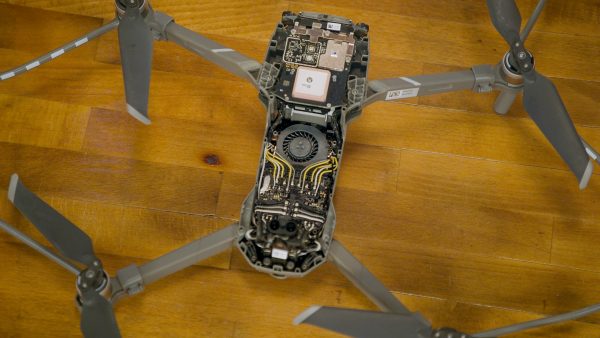
Engineering is about learning how things are built and why creating new things is important. Engineers use science and math to make things better for us, like drones or microwaves.
There are many types of engineering, like civil, electrical, and chemical. Each type works on different problems. For example, mechanical engineers make machines to sort recycling, and aerospace engineers design rockets that can land by themselves. This shows how engineering helps solve big problems and make new technology.
Frequently Asked Questions
Check out the Full Lesson on Engineering Design Process
In this lesson, we learn that:
- Engineers use science, math and creativity to solve problems.
- Engineers use the "engineering design process," which is composed of 3 simple phases.
- First, define an engineering problem, then develop possible solutions, and finally optimize the design solution.
Related Topics
- Air Mass Definition
- Bacteria Definition
- Biomimicry Definition
- Carbon Dioxide Definition
- Classify Definition
- Compound Definition
- Continental Drift Definition
- Convection Definition
- Corona Definition
- Definition Of Evidence
- Definition Of Force
- Definition Of Living Things
- Electricity Definition
- Electromagnetic Spectrum Definition
- Electron Definition
- Engineering Definition
- Engineering Design Process Definition
- Environment Definition
- Force Definition
- Greenhouse Gases Definition
- Information Transfer Definition
- Law Of Conservation Of Matter Definition
- Light Year Definition
- Liquid Definition
- Liquid Nitrogen Definition
- Marsupial Definition
- Melting Definition
- Mineral Definition
- Muscular System Definition
- Mutation Definition
- Nervous System Definition
- Newton’s 2nd Law Of Motion Definition
- Newton’s 3rd Law Of Motion Definition
- Organ Definition
- Partial Eclipse Definition
- Period Definition
- Problem Definition
- Reflecting Surface Definition
- Rock Definition
- Sediment Filter Definition
- Smelling Definition
- Solution Definition
- States Of Matter Definition
- Surface Runoff Definition
- Total Eclipse Definition
- Water Cycle Definition
- Water Distribution Definition
- Weight Definition
Start a Free Trial Today. Get a $5 Amazon Gift Card!
Teachers! Start a free trial & we'll send your gift card within 1 day. Only cards left. Try it now.
This email is associated with a Science Kit subscription. Kit subscriptions are managed on this separate page: Manage Subscription
-
Download InvoiceScience & Math$/yr
-
Download InvoiceScience Only$/yr
access all lessons
• No credit card required •
"My students loved the videos. I started the video subscription in May and used them as a review before the state test, which I know contributed to 100% of my class passing the state test."
Rhonda Fox 4th Grade Teacher, Ocala, Florida
Use Generation Genius in Your School
Access all lessons free for 30 days.
"My students loved the videos. I started the video subscription in May and used them as a review before the state test, which I know contributed to 100% of my class passing the state test."
Rhonda Fox 4th Grade Teacher, Ocala, Florida
• No credit card required •
Already a member? Sign In
* no credit card required *
Get District Quote
Sent!
Thank you for your inquiry.
We will email you a quote as soon as we can.
Please login or create an account to access additional resources
Generation Genius joined the Newsela, Inc. family this year!
We've updated our Terms of Use and Privacy Policy for our evolving business and new features.
By selecting the “Agree” button below, you acknowledge that you have reviewed and accepted the Terms of Use and Privacy Policy.

no credit card required
Skip, I will use a 3 day free trial
Enjoy your free 30 days trial
-
Unlimited access to our full library
of videos & lessons for grades K-5. -
You won’t be billed unless you keep your
account open past your 14-day free trial. -
You can cancel anytime in 1 click on the
manage account page or by emailing us.
-
Unlimited access to our full library of videos & lessons for grades K-5.
-
You won't be billed unless you keep your account open past 14 days.
-
You can cancel anytime in 1-click on the manage account page.
Cancel anytime in 1-click on the manage account page before the trial ends and you won't be charged.
Otherwise you will pay just $10 CAD/month for the service as long as your account is open.
Cancel anytime on the manage account page in 1-click and you won't be charged.
Otherwise you will pay $10 CAD/month for the service as long as your account is open.
We just sent you a confirmation email. Enjoy!
Done
GENERATION GENIUS