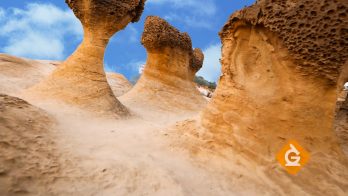
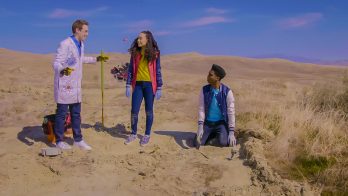
The Earth’s surface gets broken down through weathering. Small pieces of the Earth get moved through erosion. The small pieces are deposited somewhere else through a process called deposition.
The human body is made up of multiple interacting systems. We will learn about the circulatory, digestive, respiratory and muscular systems. It takes ALL of your body systems working together to help living things survive.
Energy is the ability to make things happen. A moving object transfers energy when it comes in contact with another object. Making an object faster or heavier results in more energy transfer. In a collision, some energy is converted into sound and heat.
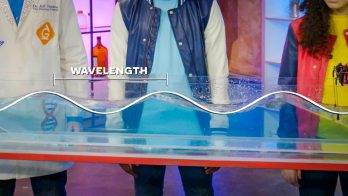
Waves are one way energy is moved from place to place. Amplitude is the height of the wave. Wavelength is the distance between wave peaks. The sound we hear is a type of wave that travels through the air.
All plants & animals have structures that help them survive. Each structure has a specific function. Animal structures may appear similar or different depending on where they live.
Information collected through senses is processed in the brain. Information travels to and from the brain through the nervous system. Animals use sensory information to guide their actions and help them survive.
Fossil fuels are sources of energy made from prehistoric plants and animals. Non-renewable energy comes from sources that could eventually run out. Renewable energy comes from sources that can be easily replenished. Renewable energy includes sunlight, wind and water power.
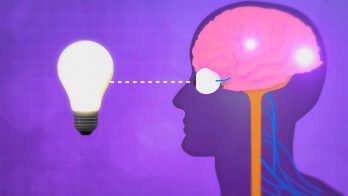
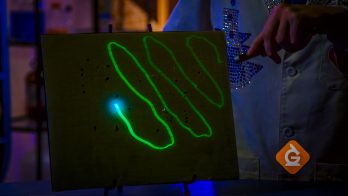
Light travels in a straight line and reflects off of things. We can see because light reflects off objects and enters our eyes. Our eyes do not produce light, they only detect it.
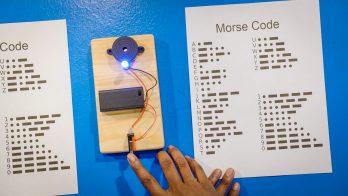
Patterns are used to communicate information electronically. Text and images are transferred through a pattern of 1’s and 0’s. Patterns of 1’s and 0’s are sent and received by microchips in our devices. Music is also transferred through 1’s and 0’s, in both CDs and music players.
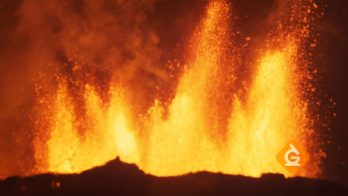
Earthquakes, tsunamis and volcanoes are a result of natural processes. Earthquakes and volcanoes occur in patterns on Earth’s surface. They are mainly found along the boundaries between oceans and continents. Humans cannot eliminate these hazards, but we can take steps to reduce their impact.
Rock layers provide evidence of Earth’s landscapes from the past. The oldest rock layers are at the bottom and the newest layers are at the top. The location of fossils in rock layers provides evidence of earth’s past landscapes.
Science is the process of learning about the natural world through observation and experimentation. The more evidence we have about a theory the more confident we are about it. You must be willing to change your mind based on new evidence. Many things around us appear to be science but are not.
"My students loved the videos. I started the video subscription in May and used them as a review before the state test, which I know contributed to 100% of my class passing the state test."