State testing is the only time of year when the hallways are quiet. Your students are tired of bubbles, you’re been proctoring scripts for days, and everyone is thinking of the upcoming end-of-year classroom party.
Start Here: The Question That Gets Everything Moving
Ask your students: “Is your brain like a muscle that gets tired, or a computer that just runs out of storage?”
Most will tell you it’s a computer. They think if they cram one more practice prompt into their heads, the “hard drive” is going to crash or they’ll simply run out of room.
Here’s the fact that makes them pay attention: Your brain actually performs better when it’s tricked into thinking it’s playing.
Try telling a 5th grader that they’re actually practicing “quantitative analysis” while they’re watching a DIY video on how to make giant bubbles. They’ll roll their eyes. But ask them to predict the probability of the bubble popping before it hits the grass? Now they’re doing the math without the test-prep trauma.
Testing Season Prep & Brain Break Resources by Grade 🚀
When it comes to studying and learning, taking more breaks can lead to more impactful learning.
According to Edutopia, “taking breaks every 10-15 minutes for elementary school students and 20-30 minutes for middle / high school students can benefit learning. For example, something as simple as a stretch break, moving to a different part of the room, or singing a song. “
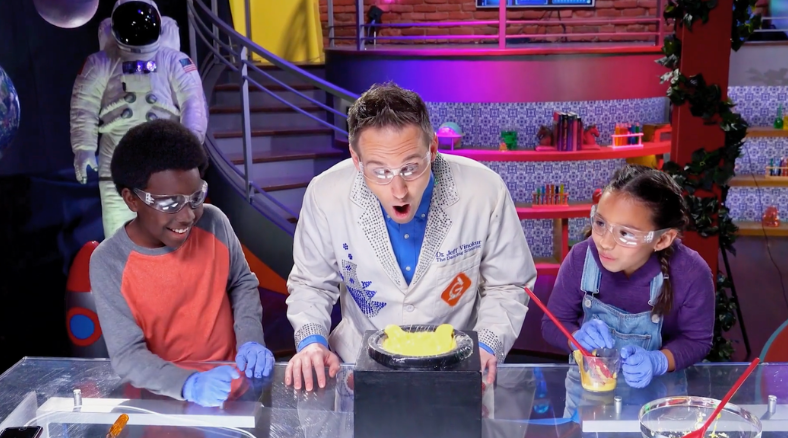
Perhaps you want to take a 15-30 minute break? Try one of our Generation Genius DIY activities to switch up learning.
Consider the following:
- End-of-Year Classroom Ice Cream Activity
- Unpoppable Bubbles DiY Activity
- Oil Spill Clean-up DIY Activity
- End-ofYear Brain Breaks & Activities
| Resource | Best For | Prep Level |
| Science Videos for Kids | K-8 | Zero prep, use toggle for grade |
| Math Videos for Kids | K-8 | Zero prep, use toggle for grade |
| ELA Videos for Kids | K-5 | Zero prep, use toggle for grade |
| What is Science – Introduction to Science | K-2 | Zero prep |
| Mental Math Within 100 | K-2 | Zero prep |
| What is Science (3-5 version) | 3-5 | Zero prep |
| Balanced & Unbalanced Forces | 3-5 | Zero prep |
| Chemical Vs. Physical Changes | 3-5 | Zero prep |
| Intro to Algebraic Expressions | 6-8 | Zero prep |
| Probability (Single events) | 6-8 | Zero prep |
| Probability (Compound events) | 6-8 | Zero prep |
| Science Resource Hub Collections | K-8 | Zero prep |
| DIY Science Activities for Kids | K-8 | Zero prep |
Grades K-2: The “Wiggle” Management Phase
K-2 students don’t usually have the high-stakes “Big Test,” but they definitely feel the weird energy in the building. They need to feel like science is still happening even when the hallway is a “Quiet Zone.”
Introduction to Science Video for Kids
Grades 3-5: The Engagement Battle
This is the sweet spot for testing anxiety. They know it matters, they’re nervous, and their attention spans are fried by 10:00 AM. Use math lessons that feel like games to keep the “test-ready” skills sharp without the “test-prep” aesthetic.
Intro to Fractions Using the Number Line Video for Kids
Grades 6-8: The “This is Cringe” Defense
Middle schoolers deal with test stress by acting like they don’t care. To get past the wall, you need content that focuses on the “how” and “why” of variables of data without it making it look like a practice exam. Once they realize this knowledge can help them order pizza, they’ll be excited and ready to work.
Intro to Algebraic Expressions Video for Kids
The “I Have 20 Minutes Before the Next Proctoring Shift” Version
No time to prep? Here’s exactly what to do:
Minutes 1-5: Put the “Brain Break” video on the screen. Let them move. Don’t try to make it “educational” yet—just let them get the testing jitters out.
Minutes 6-15: Switch to a Science or Math video that aligns with a standard they struggled with on the last benchmark. The visual explanations do the heavy lifting for you.
Minutes 16-20: Open the “Discussion Questions” on the lesson page. Ask three. If they answer correctly, they get 2 minutes of “free talk” before the next bell.
Testing season is more than just a calendar of quiet hours. It’s a marathon that requires actual mental fuel, not just more practice bubbles. Use the brain breaks and keep them curious.
For more test prep, check out Building Math Confidence for Testing Season





 GENERATION GENIUS