Teaching science at your kitchen table usually means choosing between dry textbook lectures or a three-hour Pinterest mess that ends in frustration. Here’s how to teach actual K-8 standards-aligned science concepts in 20 minutes without turning your home into a hazard zone.
Start Here: The Why Question 💡
Ask your kids why objects move, why seasons change, or what happens when ice melts. Write down what they say.
80% of kids will tell you that heavier things fall faster, or that it’s summer because Earth is physically closer to the sun.
Here’s the fact that makes them pay attention: Every single physical reaction and natural force operating around them follows exact, repeatable laws that don’t care about intuition.
Try dropping a shoe and a heavy hardback book at the exact same time onto your kitchen rug. Watch their jaws drop when both hit at the exact same millisecond.
Evergreen Homeschool Science Resources by Grade
| Resource | Best For | Prep Level |
| Pushes and Pulls | K-2 | Zero prep |
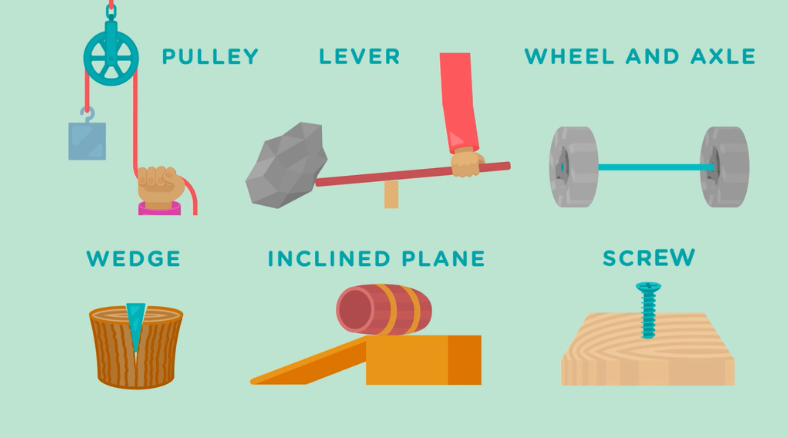
| Simple Machines | K-2 | Zero prep |
| Earth’s Orbit & Rotation | 3-5 | Zero prep |
| Chemical vs. Physical Changes | 3-5 | Zero prep |
| Balanced & Unbalanced Forces | 3-5 | Zero prep |
| Chemical Reactions | 6-8 | Zero prep |
| Atoms & Molecules | 6-8 | Zero prep |
| Pushes & Pulls Music Video Song | K-2 | Zero prep |
| Mini Golf DIY Activity – Pushes & Pulls | K-2 | Low prep |
| Popsicle Stick Catapult DIY Activity – Simple Machines | K-2 | Low prep |
| Sundial DIY Activity – Earth’s Orbit | 3-5 | Low prep |
| Secret Message Writer DIY Activity – Physical & Chemical Changes | 3-5 | Low prep |
| Balanced & Unbalanced Forces DIY Activity | 3-5 | Low prep |
| Make an Egg Bounce DIY Activity – Chemical Reactions | 6-8 | Low prep |
| Extracting Iron from Cereal DIY Activity – Atoms & Molecules | 6-8 | Low prep |
Grades K-2: Stop overcomplicating simple mechanics
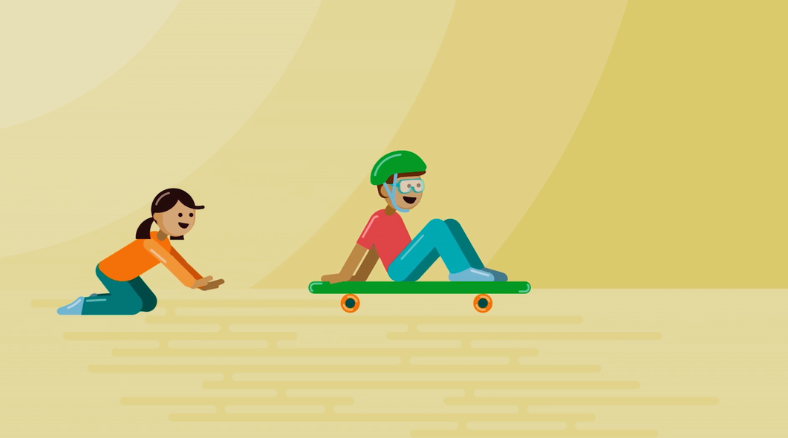
K-2 learners don’t need a 40-page curriculum or a box of expensive plastic balances to understand how the physical world works. They need clear visual anchors, immediate physical feedback, and zero reading-heavy sections. When they can physically push a toy car across carpet versus tile, force stops being an abstract word and becomes something they feel.
Pushes and Pulls Video Lesson & Activities
Grades 3-5: Unpacking spatial scale without the headaches
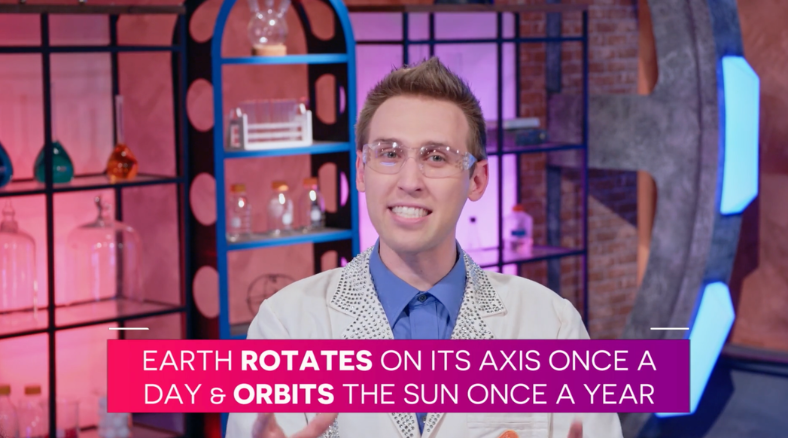
By 3rd grade, textbook descriptions of planetary motion turn into blank stares because kids can’t visualize scale from a 2D diagram. They need high-definition visuals that bridge the gap between what they see in the sky and what is actually happening in space. Students actually love it when you break down cosmic phenomena into something tangible without sending you on a wild hunt for obscure craft supplies.
Earth’s Orbit & Rotation Video Lessons with Activities
Grades 6-8: Chemistry that clicks
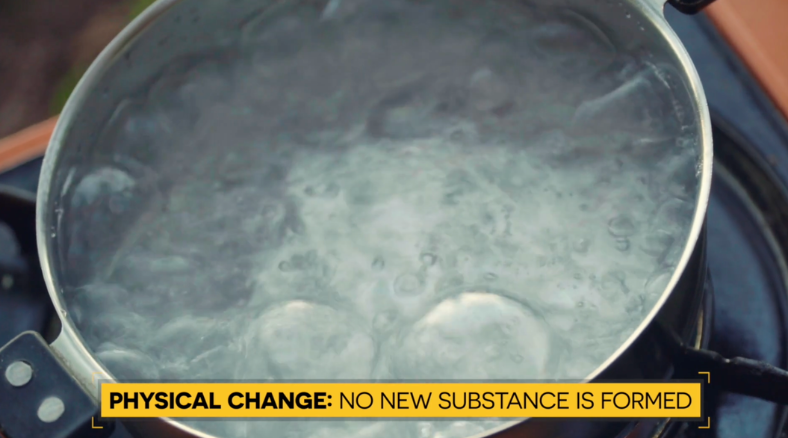
Middle schoolers have zero patience for babyish science demonstrations, but they’re easily intimidated by dense chemical equations. For example, they need real-world phenomena, like why burning wood is permanent while melting ice isn’t, explained with deadpan clarity and real fast-motion footage.
Chemical Reactions Video Lesson & Activities
The “I Have 20 Minutes Before Grocery Shopping” Version
No time to prep? Here’s exactly what to do:
Minutes 1-5: Ask the misconception question out loud at the kitchen table and write down their answers on a sticky note.
Minutes 6-17: Hit play on the 12-minute Generation Genius video for your grade level.
Minutes 18-20: Do the quick 3-question online quiz together directly on screen to lock in the standard.
Take the learnings of motion, chemical, and physical change to the grocery store. For example, you could pick up some eggs and try the bounce egg DIY activity as a family. Or maybe stack household objects and have a hypothesis why and how the objects will fall. Homeschool science is more than just keeping up with grade-level benchmarks. It’s giving your kids a reliable framework to make sense of the real world around them.
For more on homeschool, check out Homeschool Math Curriculum Lessons & Activities (K-8)


 GENERATION GENIUS