Today we’re having an ice meltdown! Read on to learn more from teacher, Taylor Blair, on how to make this fun and easy ice melt race diy activity.
Ice Melt Race DIY Activity : The Test
How exactly does ice melt? We’re going to test these theories today with teacher, Taylor Blair, (teachmesomethingood). Do different conditions change the speed of melting? Your job is to predict, test, and prove which method is going to melt the ice the fastest.
Just like real scientists conducting an experiment, we’re only going to change one variable that way we can clearly identify which caused these results. Because if we change too many things at once, we’re not going to know what caused the results in our experiment. So, we’re only changing one variable that proves how big of a difference just that one little change can make.
Ice Melt Race DIY Activity: What You Need
If you’re doing a science activity, sometimes you only need a few items.
- 4 ice cubes
- 4 cups
- Salt
- Foil
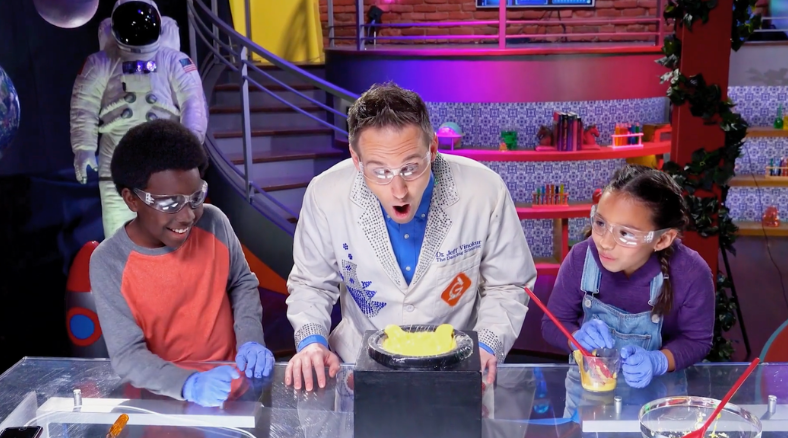
We have four ice cubes. Since the race is to see which ice cube will melt first, try to get the same size ice cube in each cup. First, we have our control cup. This is just going to be an ice cube sitting in a cup. Second, we have an ice cube sitting in a cup in the room and just add salt to see how and if that changes anything. Third, we’re going to line the cup in foil. Fourth, we’re going to take the ice cube outside and see how it does with real sun and heat
Ice Melt Race DIY Activity: Predictions
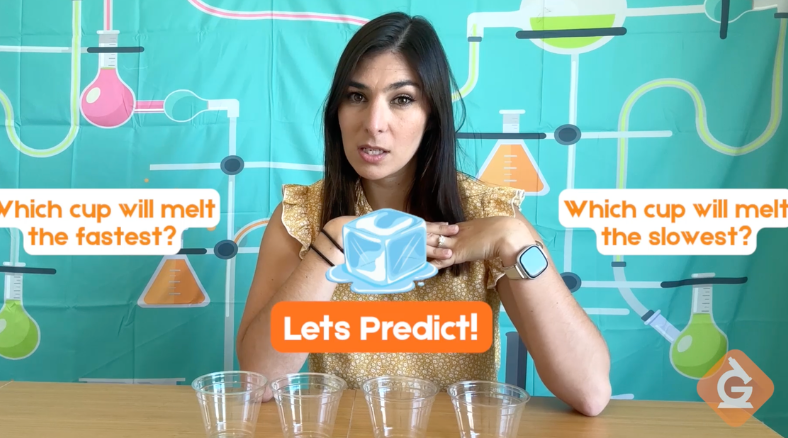
Let’s predict which one will melt the fastest and which one will melt the slowest. The control cup with nothing, is just a cup in a room with ice. Second cup, add some salt. Third cup, lined with foil. Fourth cup, out in the sun.
Consider the following:
•Which ice cube starts melting first?
•Which ice cube starts changing shape first?
•Which ice cube changes shape the fastest?
•Which ice cube barely melts at all?
Alright, the time has come and we’re ready for our ice melt off. 🚀
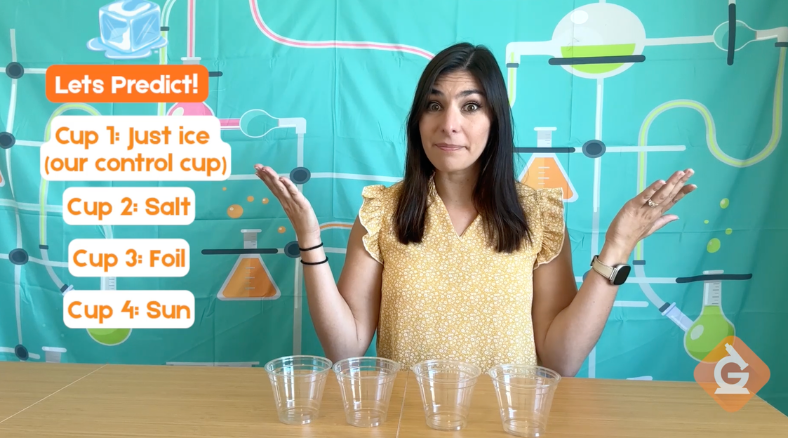
1.Cup and ice
2.Cup, salt, and ice
3.Cup, ice, and foil
4.Cup, ice, and sun
Ice Melt Race DIY activity: The Race Breakdown
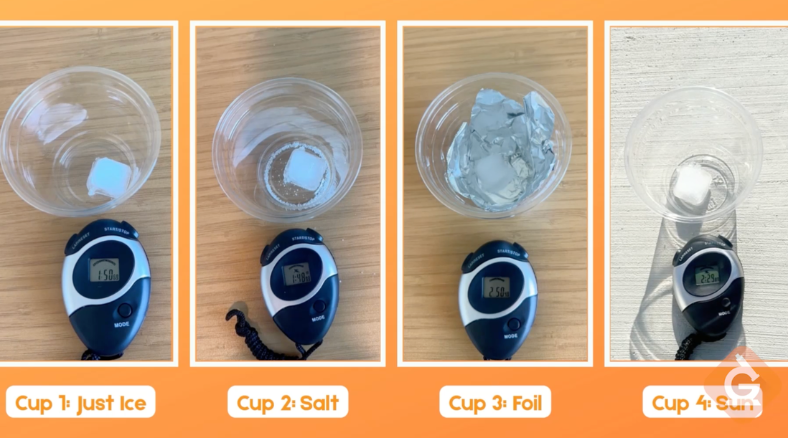
What is happening with our ice melt race?
Melting happens whenever ice absorbs heat energy and it turns it into liquid water. First place, the sun and heat are the first melting point. The sun is providing constant heat. The molecules start moving faster, so therefore melting is happening at a faster rate.
Depending on location, the temperature might be different, but for comparison, inside we keep it around 70 degrees. Which changes shape the fastest. It looks like foil is in second place. Now, foil is a really good conductor, meaning it holds heat well. So, as foil absorbs the warm air, it holds onto that heat really well, which is basically heating up the ice cube and causing it to melt quicker.
In third place, we melted ice with salt in one hour and 15 minutes. What happened with the salt? With salt, we start to see a quick melt from where the salt made contact but then all of a sudden as it starts to become more liquid it actually slows down the melting process because the ice cube is sitting in such cold salty water.
A few questions:
- Did the salt speed up the melting process or did it go at a quick speed and then slow down?
- Would this process be different if more salt was added throughout the process?
So even though all these ice cubes started the same way, heat did not reach them the same way. And that’s called a heat transfer. Heat transfer is how heat moves from warmer areas to cold ones. Naturally, the sun added the most heat. But, the foil transferred heat faster. And the salt changed the freezing point, making a cold kind of slushy. The salt caused the ice to melt quickly and then maintain the ice cube shape for a little bit longer before it eventually dwindled into a cold slush.
Ice Melt Race DIY Activity: Takeaways
So, now that we’ve seen how different conditions affect how quickly ice can melt, think about how we can actually use this in real life. For example, how do we keep food cold in coolers? Our goal is to keep our drink cold or keep your food chilled. Or even the ice on roads. How many of you live in a place where you see when it’s cold and icy outside, they actually pour salt on the roads? This helps break the ice down faster, which makes the roads safer. There are so many ways where you can see this experiment in real time because science is everywhere.
For more DIY activities, check out End-of-Year Classroom Activity: Balloon Rocket Race


 GENERATION GENIUS