What if you could make art without a paintbrush? Learn more on how to make a spin art force challenge DIY activity with teacher Taylor Blair.
Spin Art Force Challenge DIY Activity: What You Need
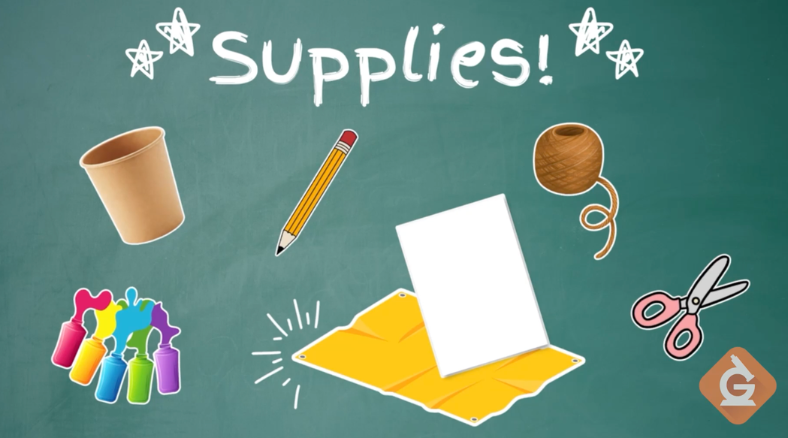
We’re turning motion into art with a simple science activity that uses a pendulum, gravity, and a little bit of paint. All you need is a few items.
Supplies:
•Paper
•Plastic Cup
•Pencil
•String
•Scissors
•Paint
•Tarp or cardboard (to go underneath the piece of paper)
It’s time to make a pendulum. But, what is a pendulum? You might recognize a pendulum from a grandfather clock or even the swings on a playground as you swing back and forth.
Spin Art Force Challenge DIY instructions:
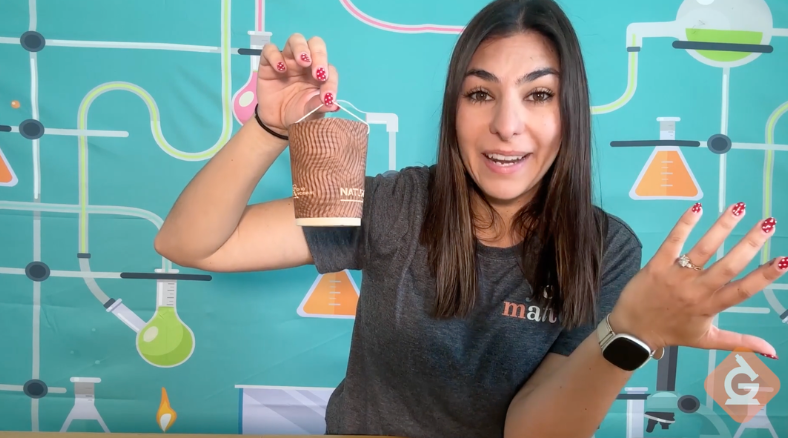
First, grab a cup and put one hole through one side and then put a hole in the other side.
Second, put a piece of string through both of them and tie a knot at the top. Third, add more strings. Add a piece of cardboard, tarp, or large sheet of paper to keep your floor protected.
This process is going to create the pendulum effect because this seems to be on a fixed point. A fixed point means it has a full range of motion. This means it’s not just going to move from front, back, or side to side. Don’t forget to add a piece of cardboard, tarp, or large sheet of paper to protect your floor.
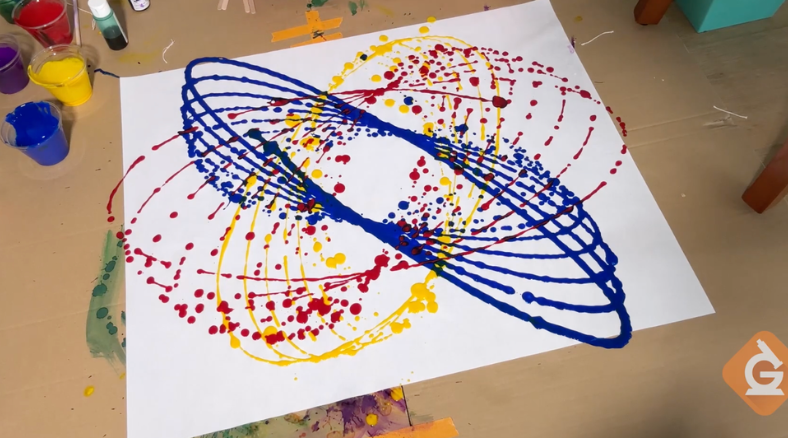
Also, you can add a little bit of water to your paint. That way you can thin out the paint and make it flow more freely into the cup. The gravity will do all the work. As the pendulum swings, gravity pulls it back and forth, while the paint records its path on the paper. You also have the chance to swap out your paint colors once it starts to run low and test the pattern loops.
A few questions:
•What happens when we pull the pendulum back further?
•Will the loops be bigger?
•How does motion play a part in the artwork?
•Does the way you swing your pendulum affect how your art appears?
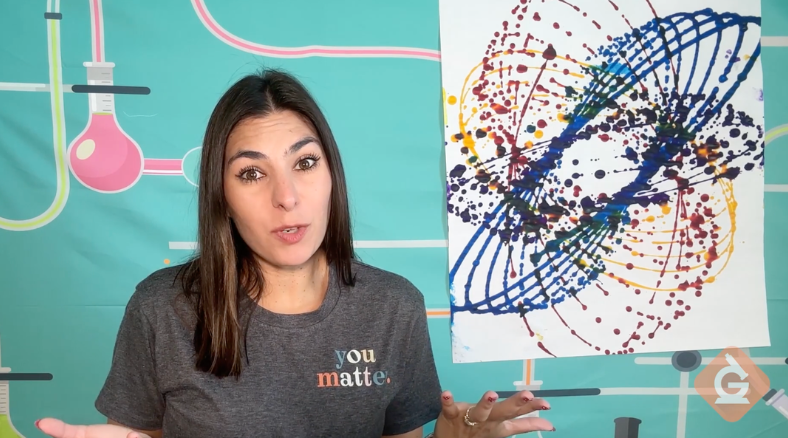
Naturally, scientists don’t expect every trial to look exactly the same. Small differences in testing can affect results.So, scientists repeat experiments and try different things . But each trial helps us learn how different variables can affect the result. Your first paint color is your baseline and from there you have the opportunity to explore, experiment, and test how your paint appears on the paper.
A fun part of this DIY activity is that no two paintings are going to look exactly alike, because no two activities are exactly alike. Naturally, the artwork didn’t just create something beautiful. The art collected data. Every loop, line, and splatter tells a story of gravity, motion, and energy working together.
For more DIY activities, check out Sidewalk Chalk Paint: Back-to-School Science Activity


 GENERATION GENIUS