Can we turn a running liquid into something we can actually draw with? Read on to learn more from teacher Taylor Blair in this low-prep Sidewalk Chalk Paint: Back-to-School Science Activity.
Sidewalk Chalk Paint: Back-to-School Science DIY Activity – What You Need
Chalk paint is fun to play with, but how does it get made? What do you think happens when we mix different materials together? It turns out that you need just a few items to create sidewalk chalk.
Supplies:
•Plaster of Paris
•Food coloring
•Water
• Bowl
•Spoon
•Silicon molds or ice cube molds
How to Make Sidewalk DIY Chalk Paint
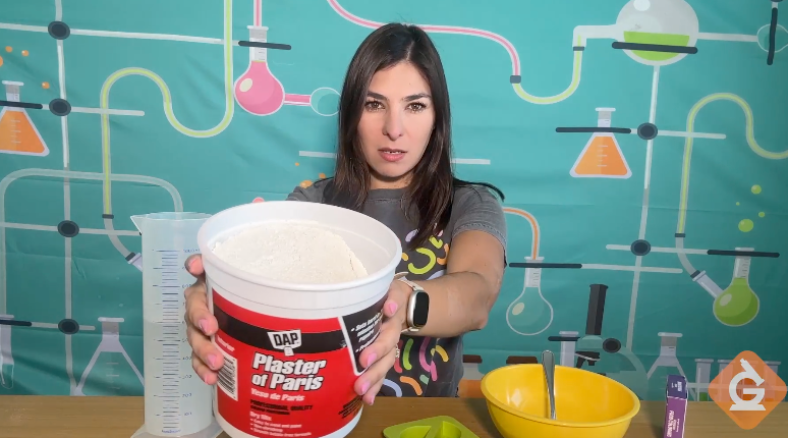
First, start with one cup of Plaster of Paris. Next, add a half cup of water, and mix until smooth. Then you can add the food coloring for fun. It’s not a necessity, but depends on what color of chalk you want.
Now if you’re going to make a bigger batch, you’ll want to keep a two to one ratio.
Small batch: One cup of plaster to half cup water.
Double batch: Two cups of plaster to one cup of water.
Whatever you’re doing for the powder, half of that for water. Once you start mixing, it should be thicker than milk, but not as thick as cake batter. Once the mix is ready, we can go ahead and start pouring into the molds. The liquid is starting to take shape in the mold.
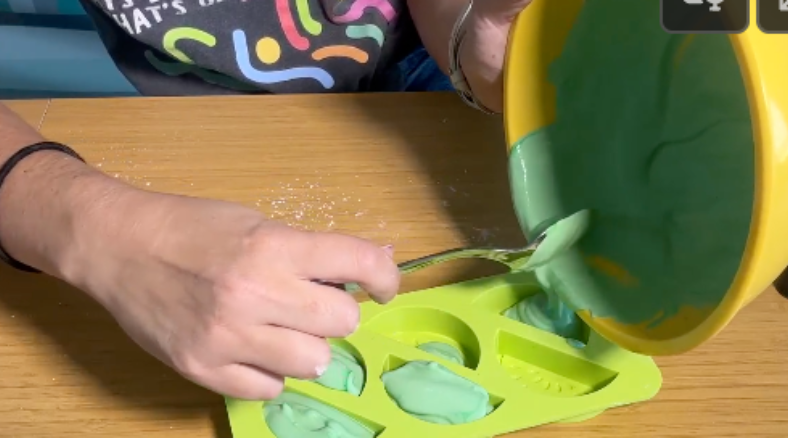
So right now, our mixture looks very different from when we started. It went from a powder to a thick colorful mixture. This is an example of physical change. The physical change is when the appearance of the ingredients change, but doesn’t completely change into a new substance.
So now comes the waiting part because our chalk needs time to dry.
What do you think will happen while this mold sits?
Will the water stay inside?
Will the water disappear?
Where do you think it goes?
Let this sit for 24 hours so it can dry.
After 24 Hours:
So our chalk held shape, but what happened to the water? Now the water didn’t disappear. It moved from a liquid to a gas that moved into the air. This is called evaporation.
Sidewalk Chalk Paint DIY Activity: Takeaway
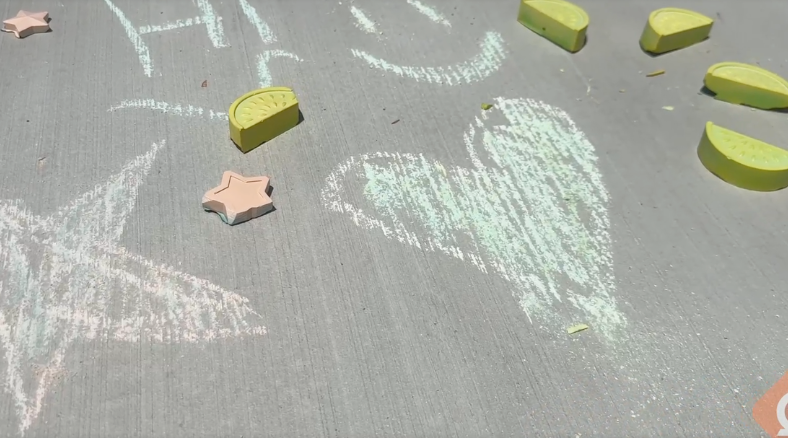
We started with powder and water and mixed them together to make a physical change. But science didn’t stop there. Because in the next step when the water evaporated and the mixture hardened, that was actually a chemical change taking place because we have a whole new substance. It created chalk and is ready to become art.
But chemical reactions aren’t just happening whenever we’re making chalk. They happen every day all around us, like when we make eggs or bake a cake. That’s all chemical reactions. The more you look for them, the more you’ll realize that science isn’t just something that we learn.It’s happening all around us every single day.
For more on DIY activities, check out Pool Noodle Engineering DIY activity


 GENERATION GENIUS