What if you could make something dance in a glass of water? No stirring involved, just raisins and science. Check out this low-prep Thanksgiving Science DIY activity with teacher Taylor Blair.
Dancing Raisins Thanksgiving Science DIY Activity: What You Need
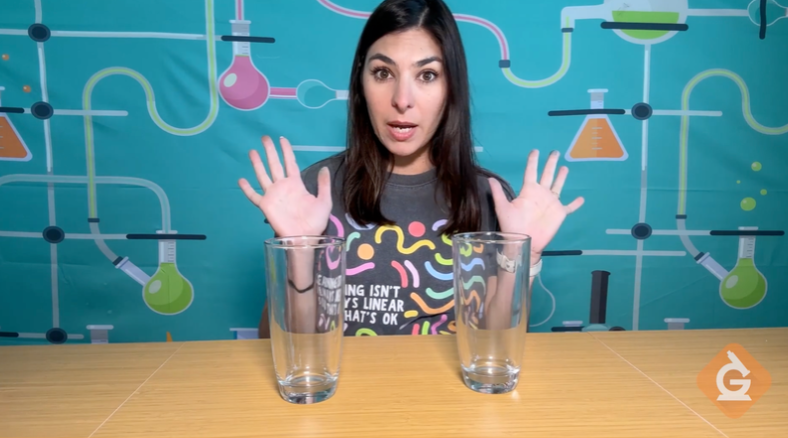
Your learners are probably full of energy with the holidays right around the corner. So, why not keep the energy going with a fun thanksgiving science activity? With just a few simple steps (and supplies) here’s how to get started.
Supplies:
•Raisins
•Soda water
•2 clear glasses
•Plain tap water
•Optional: cranberries, carrots, apple slices
Instructions:
1. Set up two clear glasses side by side.
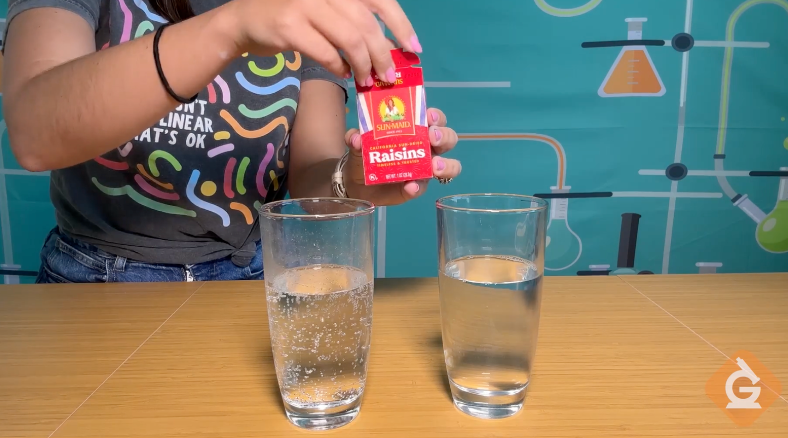
2. Fill up one glass with tap water and one with soda water. Don’t change any other variables other than the type of liquid. Also, make sure you use the same type of glassware and amount of liquid.
3. Drop a few raisins into the plain tap water glass.
4. Drop the same amount of raisins into the soda water glass.
While you watch and observe, consider the following questions:
•What will the raisins do in plain water vs. soda water?
•Will the raisins float, sink, or dance?
•Does anything happen to the raisins?
•Do bubbles appear on the raisins?
•Do bubbles appear in the glass?
Dancing Raisins DIY Activity: Takeaway
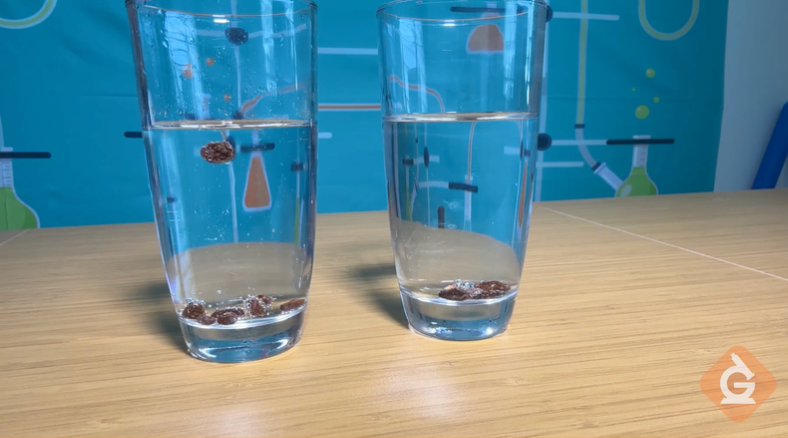
Now, let’s take a look at our raisins.
Same raisins in the same glasses, but two completely different outcomes. The first glass contains plain tap water. And the raisins aren’t excited about it. They’re not dancing.
The second glass has a different effect. With the soda water, you can see the raisins rising and falling. As long as it isn’t bubbly, that’s what’s going to give this effect because soda water has CO2 in it. In fact, the CO2 is the little bubbles that we see forming on the raisins. Another fun fact is the smaller the raisin, the better they dance.
What’s the Secret Behind Dancing Raisins
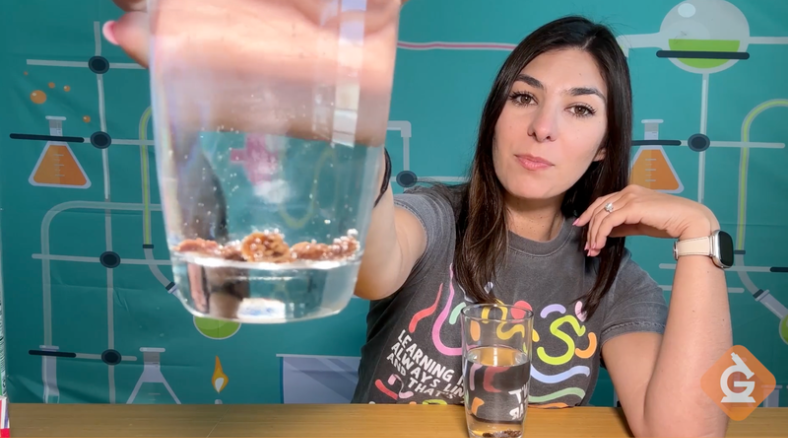
Soda water contains carbon dioxide, or CO2, that has been dissolved under pressure. When you open a bottle or pour into a cup, the gas starts trying to escape in the form of tiny bubbles. So the raisin plus the bubbles added to it now becomes less dense than water, giving it buoyancy. So that’s why they start to float to the top because less dense objects float upward.
But once it reaches the surface, the bubbles start to pop, leaving the raisin without those CO2 bubbles to hold it up. The raisin starts becoming more dense than the water, making it sink to the bottom. And the whole process repeats. The bubbles start attaching to the raisins. The bubbles raise them up, giving them buoyancy, bubbles pop and become more dense.
Now in plain water, no gas is coming out of any solution, but no CO2 bubbles form. If you look closely, there are some bubbles that are gathering on the raisins, but they don’t have any gas in them because it’s just normal water. Therefore, those bubbles don’t do anything to make it less dense. So they stay at the bottom because gravity is pulling them down.
Density and Buoyancy
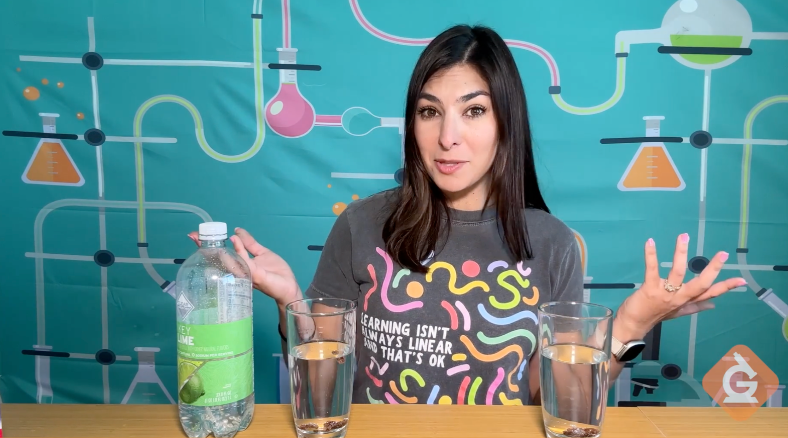
Buoyancy is the upward force from a fluid that causes things to rise up or float. So the raisin keeps switching between floating and sinking, lighter and heavier, and that’s what creates our dancing raisins.
Now, since it’s the holiday season, cranberries are usually ripe, go ahead and try this experiment with cranberries.Also, you could try apple slices and carrots. Perhaps you could try a contest between the three food items to see which item dances the most.
Some quick takeaways: It looks like a simple raisin was actually responding to the invisible forces all along. In plain water it appears nothing changed. But in soda water, tiny gas bubbles changed everything. It turned a sinking object into a floating one temporarily.
If something as simple as gas bubbles can make raisins dance, what else around you is moving because of invisible forces? That’s the best part of science that people forget.
For more on DIY activities, check out Pumpkin Patch Math Coordinate Plane: Fall Math Activity (4-6)


 GENERATION GENIUS