What do oozing pumpkins, glowing chemicals, and the bubbles have in common? Chemical reactions! Learn how to make a pumpkin ooze with Teacher Taylor Blair.
How to Make a Pumpkin Ooze & Bubble
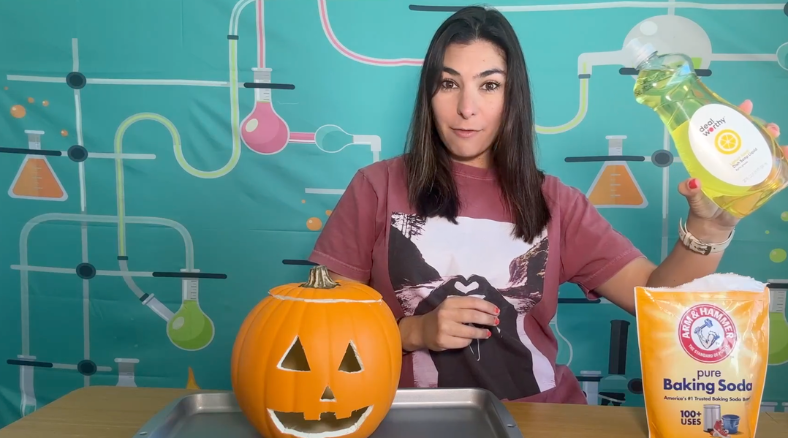
Are you looking for ways to add more spooky fun to your science curriculum? Learners get the chance to create a pumpkin that oozes and bubbles all by creating a chemical reaction with a few simple ingredients.
Supplies:
•Real or fake pumpkin
•Large baking sheat
•Baking soda
•White vinegar
•Dish soap
• Few different measuring cups
•Food coloring (optional)
Scientist pumpkin predictions :
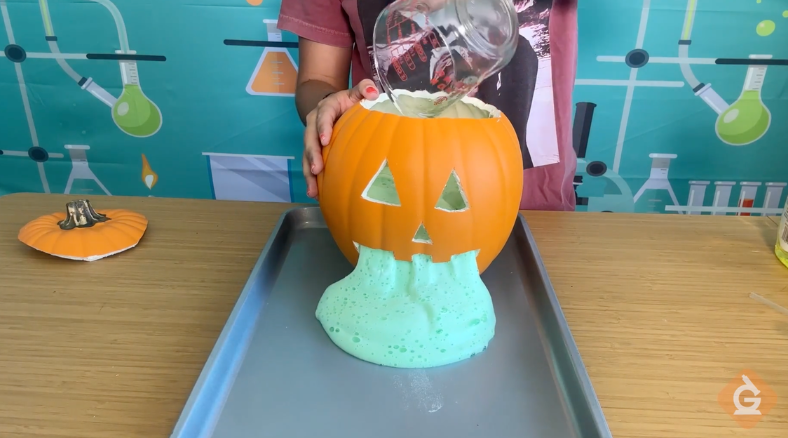
•What do you think will happen when we mix baking soda with vinegar and dish soap?
•Do you think the oozing foam will stay inside the pumpkin?
•Will the foam overflow?
•Will the foam flow through the mouth, eyes, or out the top?
Instructions:
Start with 1-2 cups of baking soda and pour it in the bottom of the pumpkin. If you have a bigger pumpkin, you might need more baking soda. Next, add one cup of vinegar. Also, you can add a few drops of food coloring. Stir the ingredients together. Add 1-2 squirts of dish soap.
Pumpkin Ooze Chemical Reaction 101:
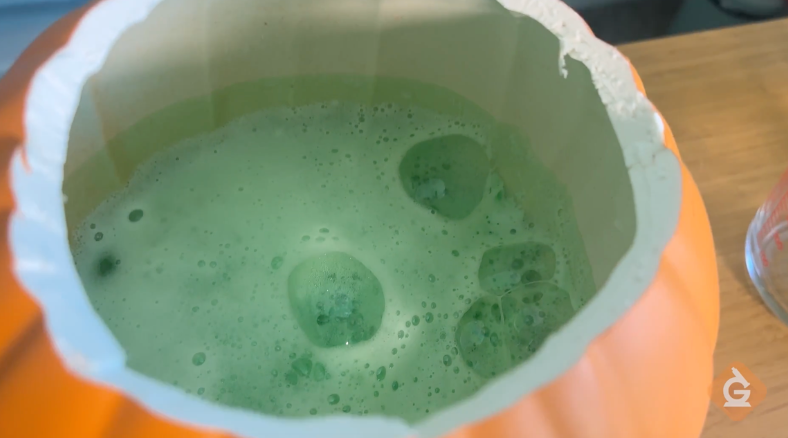
Here’s the exciting part. So, this is going to be an acid base, which is a chemical reaction.
Our base is baking soda, sodium bicarbonate. The vinegar is an acid and when you mix the two together it’s creating a chemical reaction.
How to Make a Pumpkin Ooze: Takeaways
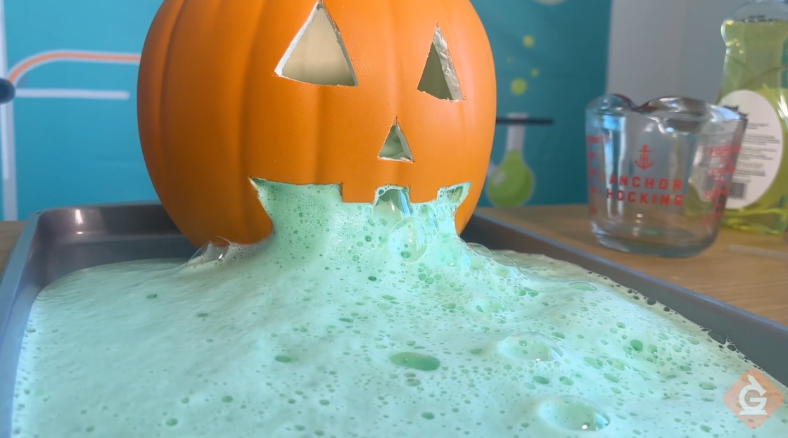
Because of this combination, it creates carbon dioxide gas. This expands rapidly creating millions of tiny bubbles. Normally, bubbles would just pop and fizz away. Naturally, since the addition of the dish soap, the soap traps the carbon dioxide inside the thick bubbles. This creates a slow, heavy, and oozing foam.
You can’t always see gas. But, in this experiment you can because the more the carbon dioxide is produced, the more bubbles come out of the pumpkin. This is evidence that a chemical reaction has taken place because a new substance was formed. It’s no longer just baking soda and vinegar. Happy Halloween!
For more DIY activities, check out Sidewalk Chalk Paint: Back-to-School Science Activity


 GENERATION GENIUS