1%
Processing, please wait...
It was processed successfully!
Login Create Free Account
en | es

Summer STEM Challenge – Rainbow Walking Water

Autopause

Materials

6 Clear Cups
6 Clear Cups
6 Paper Towels
6 Paper Towels
Pitcher of Water
Pitcher of Water
Yellow Food Color
Yellow Food Color
Blue Food Color
Blue Food Color
Red Food Color
Red Food Color

Instructions

STEP 1
0:25

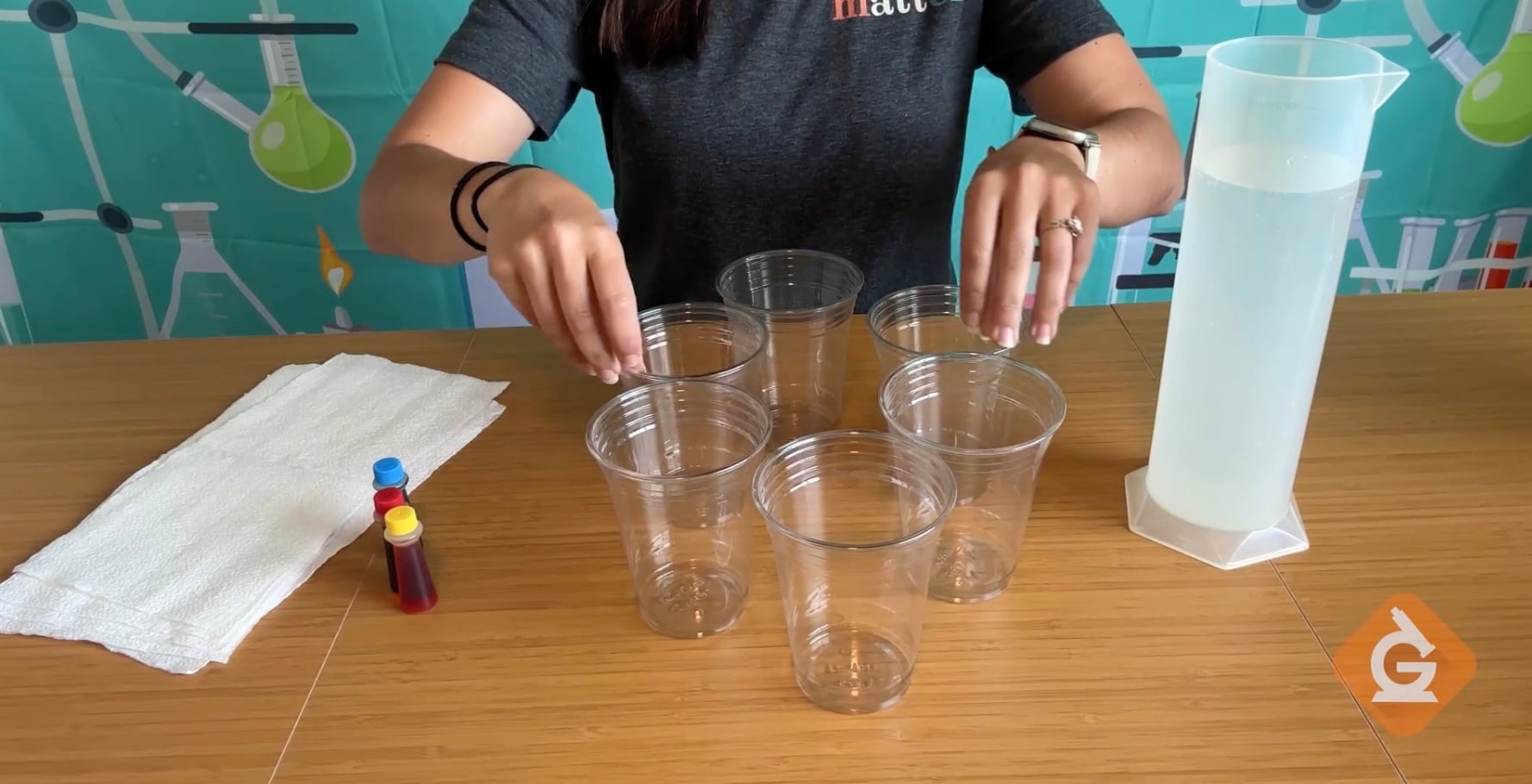
Arrange your cups in a circle. Place all six cups in a circle formation, alternating: filled, empty, filled, empty, filled, empty. You’ll have three cups of water and three empty cups.
STEP 2
0:36

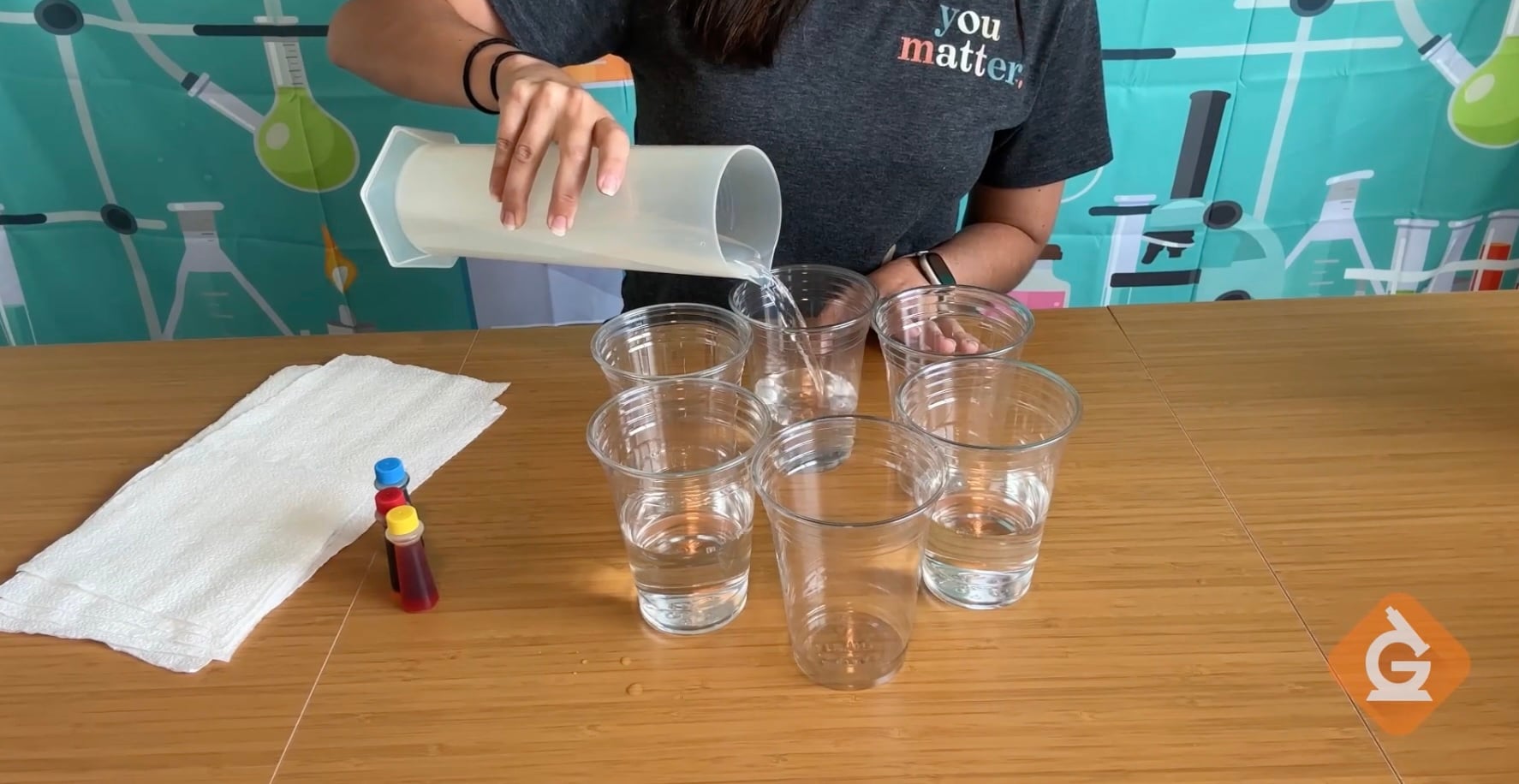
Fill every other cup with water. Pour water into the three alternating cups, filling them about halfway. Leave the other three cups completely empty.
STEP 3
0:53

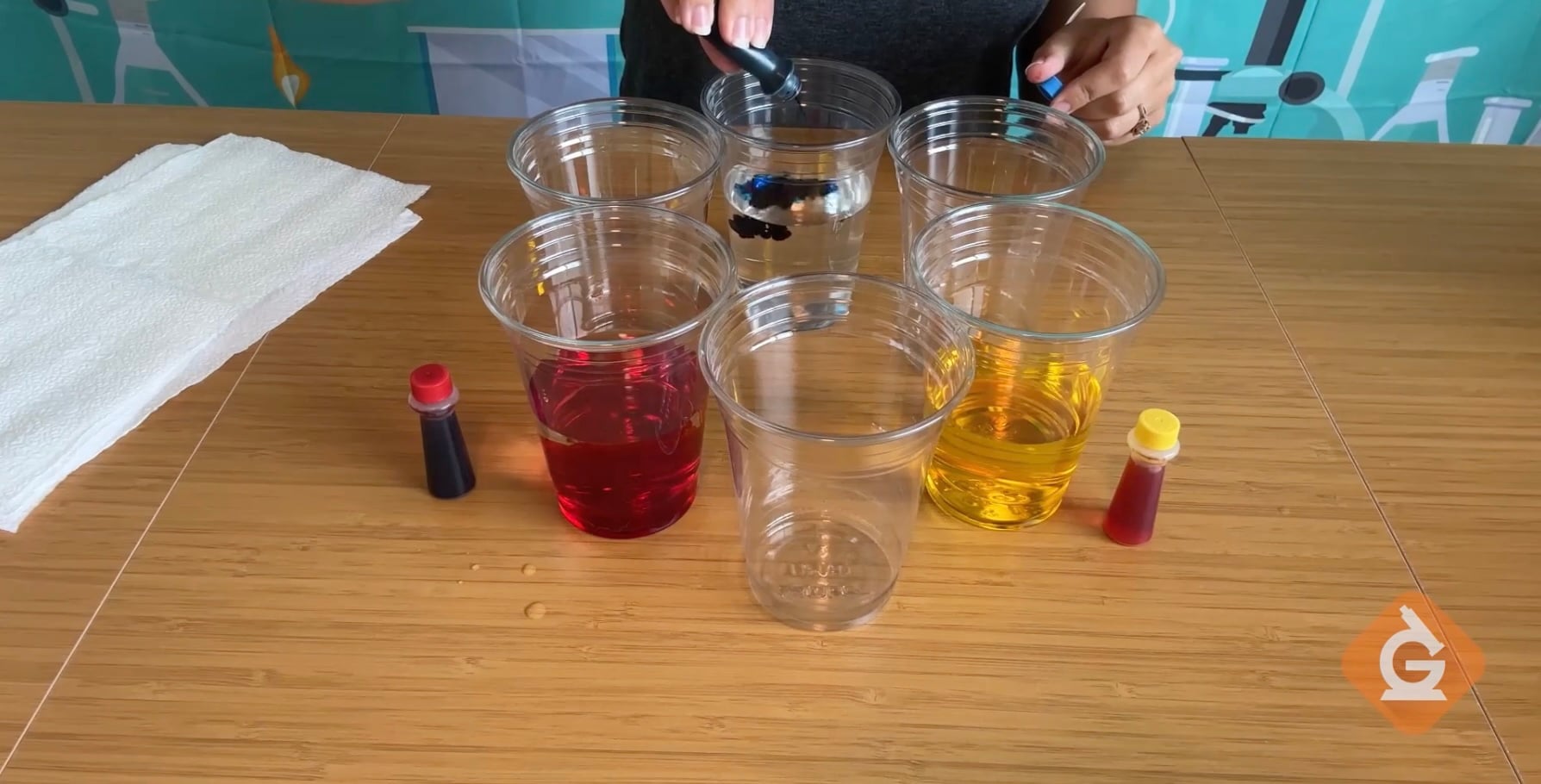
Add food coloring. Add a few drops of yellow to the first water cup, red to the second, and blue to the third. The colors don’t need to be next to each other — spread them around the circle.
STEP 4
1:19

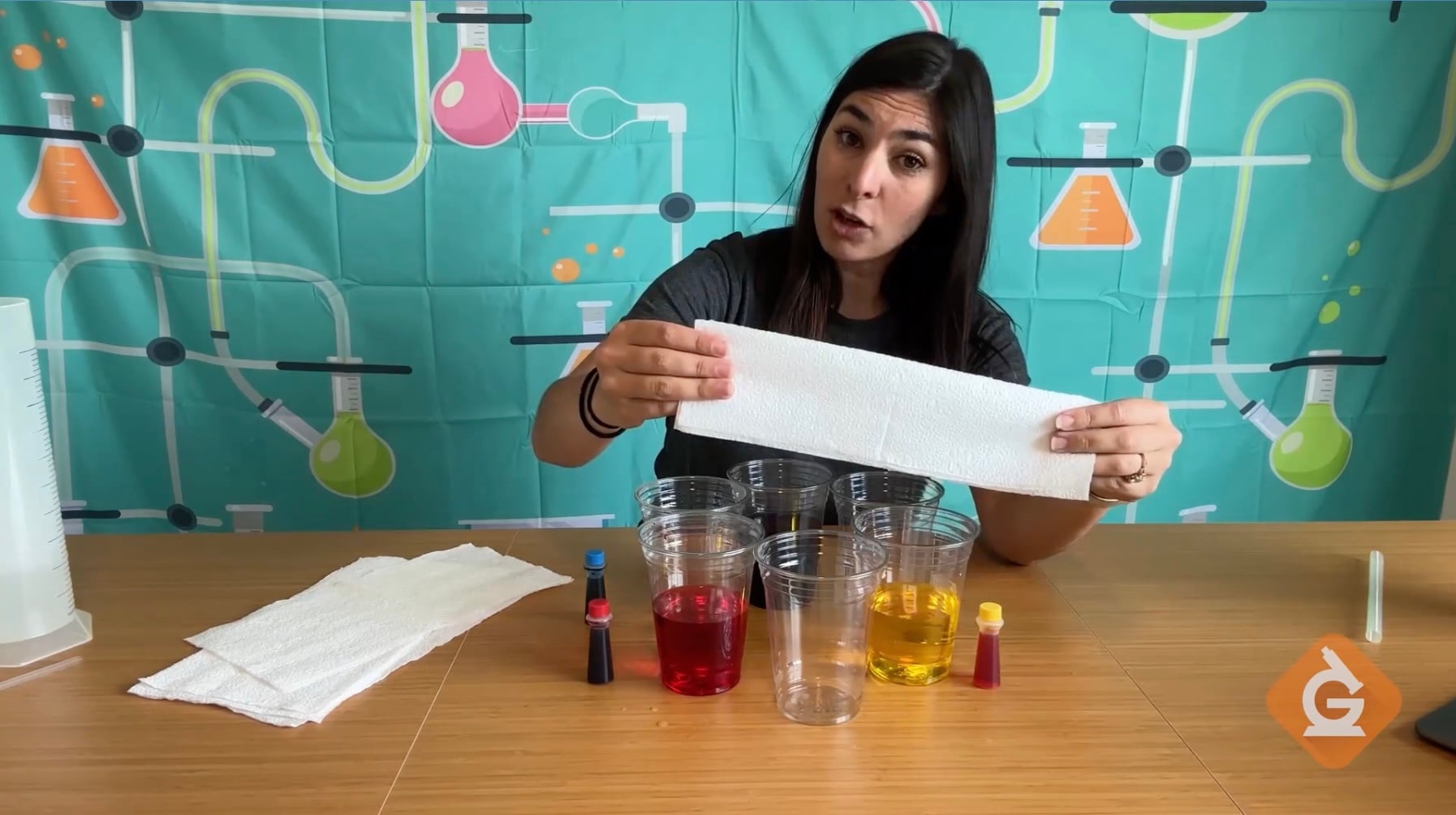
Fold your paper towels into bridges. Unfold a napkin or paper towel, then fold it lengthwise into a long, narrow strip — like a hotdog fold. Crease it well so it holds its shape. Repeat for all six bridges.
STEP 5
1:41

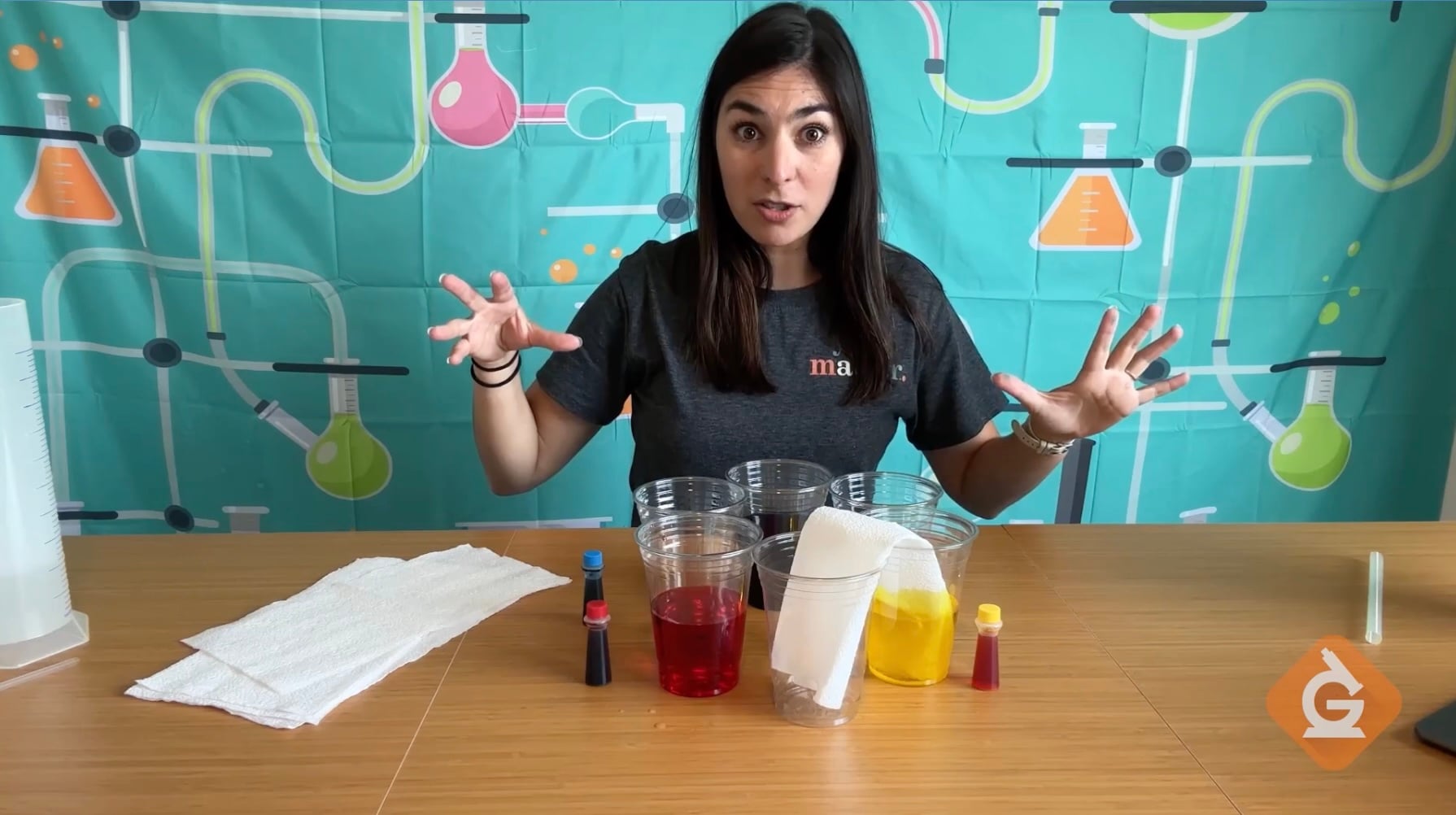
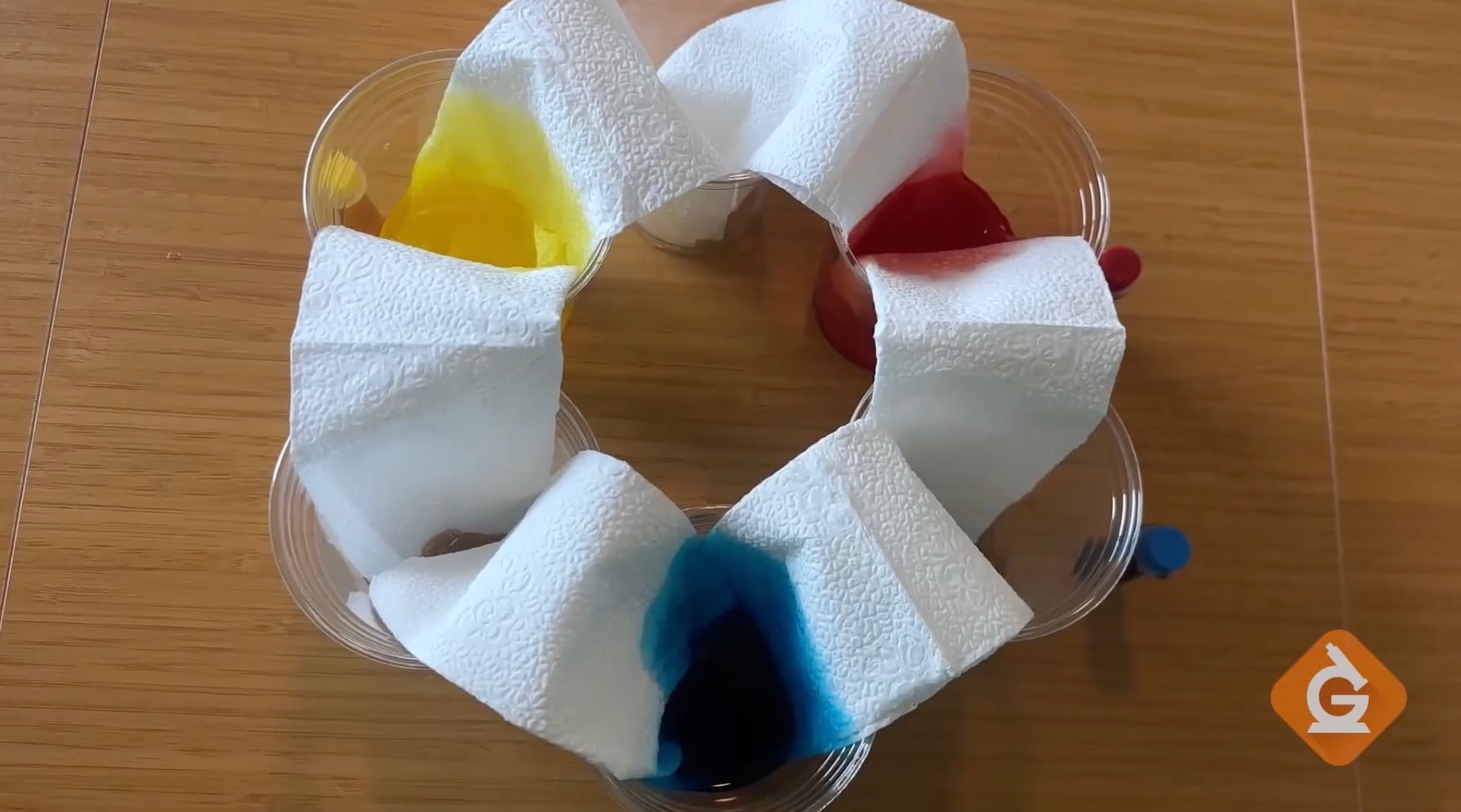
Connect the cups with paper towel bridges. Place one end of each paper towel strip into a water cup and the other end into the empty cup next to it. Work your way around the circle until every cup is connected.
STEP 6
2:20

Watch and wait. The water will start climbing the paper towels almost immediately! Check in every 10–15 minutes. The full rainbow takes longer than you might expect — give it at least 30–60 minutes for the empty cups to fill and the new colors to form.

How It Works

Water appears to defy gravity in this experiment — but it's not magic, it's capillary action. Water molecules are polar, meaning they have a positive and a negative side, which makes them naturally attracted to each other. This attraction is called cohesion, and it's what causes water molecules to stick together and follow one another like a line of ducklings trailing their mother.

But cohesion alone doesn't explain why the water climbs upward. That's where adhesion comes in. Paper towels and napkins are made of tiny fibers with microscopic gaps between them. Water molecules are attracted to those fibers and stick to them, pulling themselves into the narrow spaces and inching upward along the pathways. The smaller the gap, the stronger the capillary action — which is why a thin straw pulls water higher than a wide one, and why the fiber bridges in this experiment work so well. As the water travels from cup to cup, it carries the food coloring with it.

When two colors meet in an empty cup, they mix to create a brand new color — yellow and blue make green, red and yellow make orange, and red and blue make purple. This same process happens in nature every day: plants use capillary action to pull water up from their roots, through their stems, and all the way out to their leaves.
X
Success
We’ve sent you an email with instructions how to reset your password.
Ok
x
Choose Your Free Trial Period
3 Days

3 days to access to all of our teaching resources for free.

Continue to Lessons
14 Days

Get 14 days free by inviting other teachers to try it too.

Share with Teachers
Get 14 Days Free
By inviting 4 other teachers to try it too.
4 required

*only school emails accepted.

Skip, I will use a 3 day free trial

Thank You!

Enjoy your free 14 days trial