
1%
Processing, please wait...
It was processed successfully!
Login Create Free Account
en | es

Summer STEM Challenge – Fireworks in a Jar

Autopause

Materials

Jar of Warm Water
Jar of Warm Water
Clear Cup
Clear Cup
Vegetable Oil
Vegetable Oil
Yellow Food Color
Yellow Food Color
Blue Food Color
Blue Food Color
Red Food Color
Red Food Color
Straw
Straw

Instructions

STEP 1
0:50

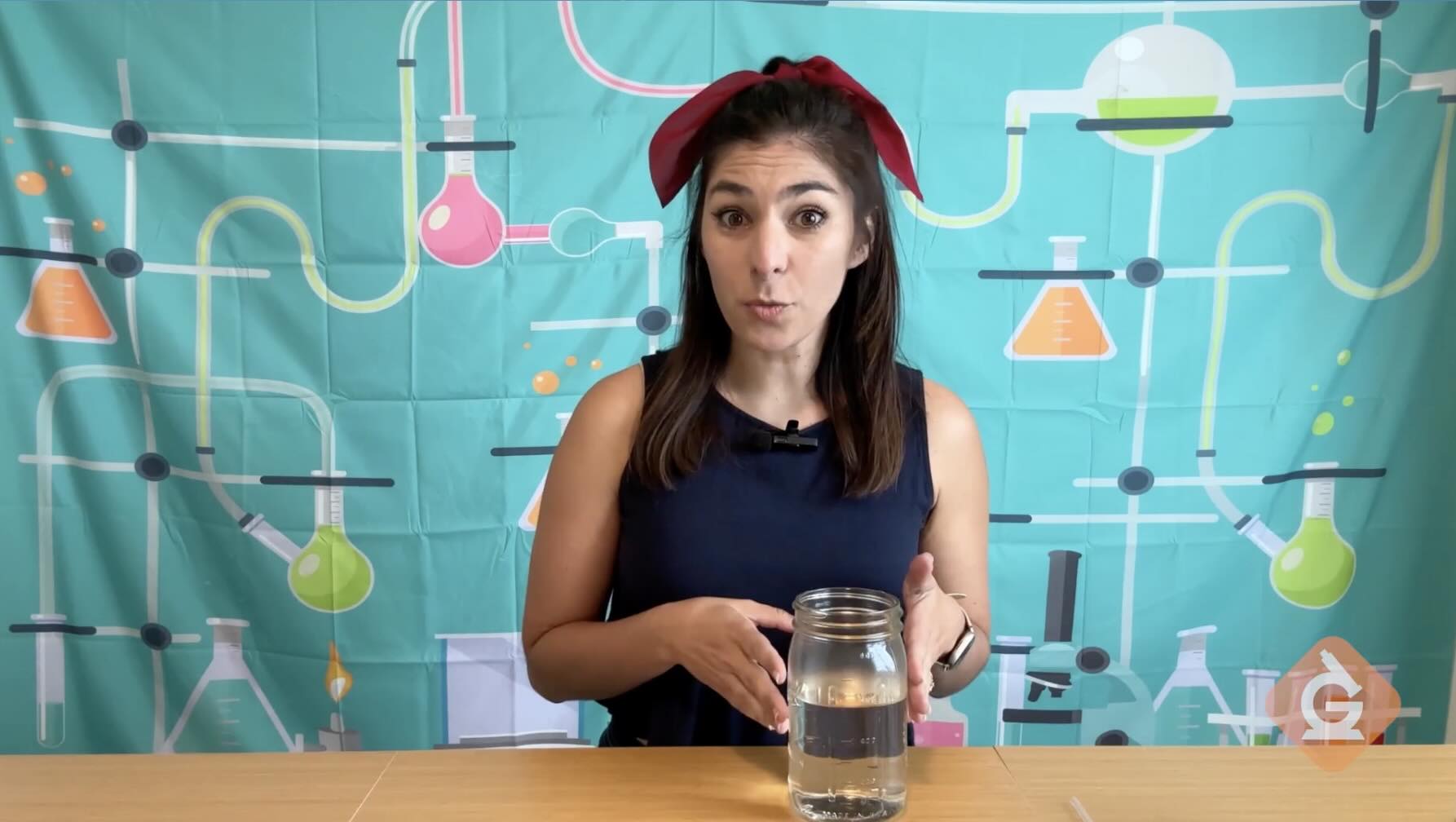
Fill your jar with warm water. Pour warm water into the jar until it’s about three-quarters full. Warm water molecules move faster than cold ones, which helps the food coloring spread quickly and dramatically once it hits the water later on.
STEP 2
1:18

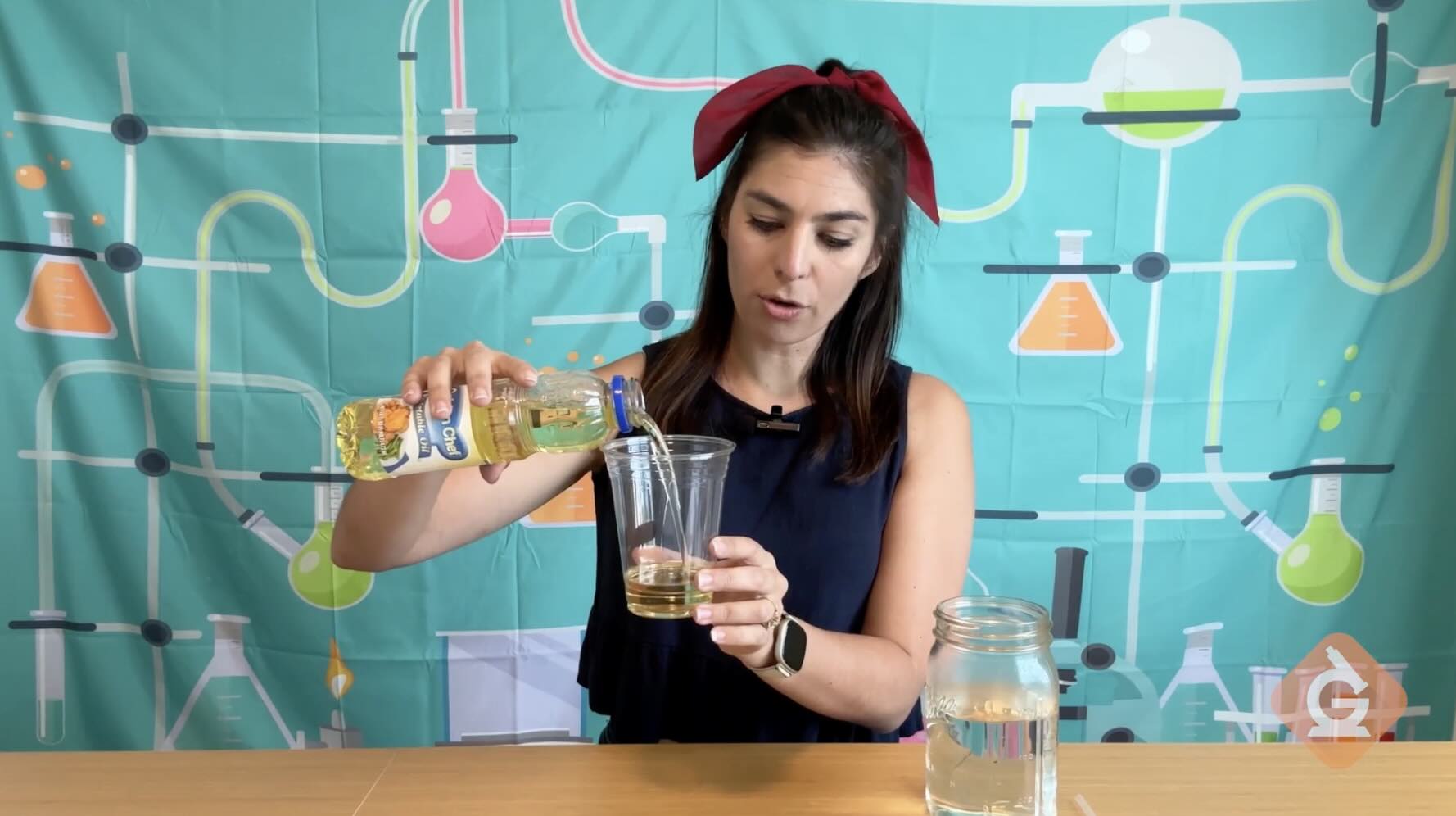
Pour oil into a small cup. Fill a separate cup about a quarter full with vegetable oil. This will be your color mixture base.
STEP 3
1:31

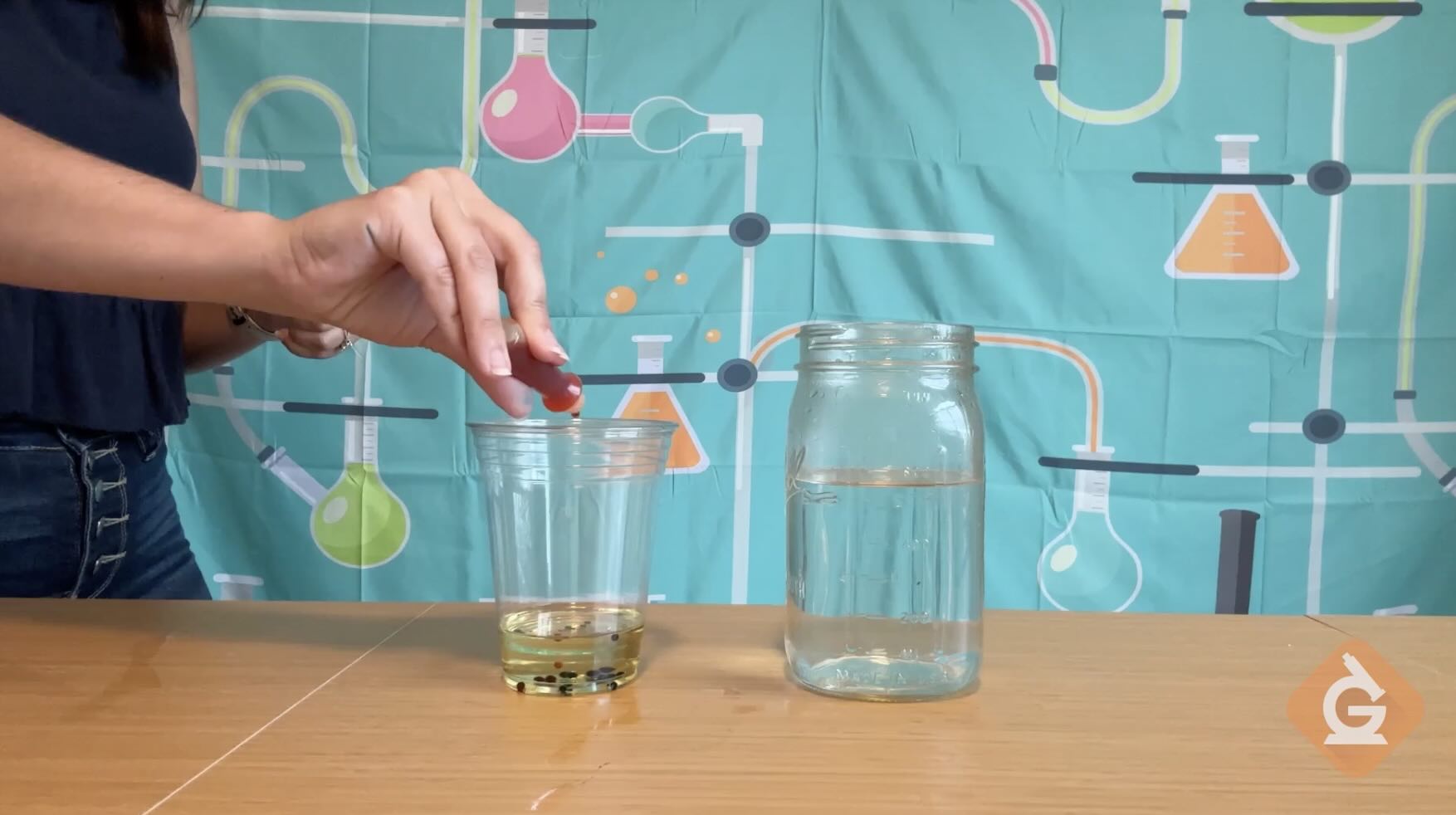
Add food coloring to the oil. Add a few drops of yellow, red, and blue food coloring into the cup of oil.
STEP 4
1:45

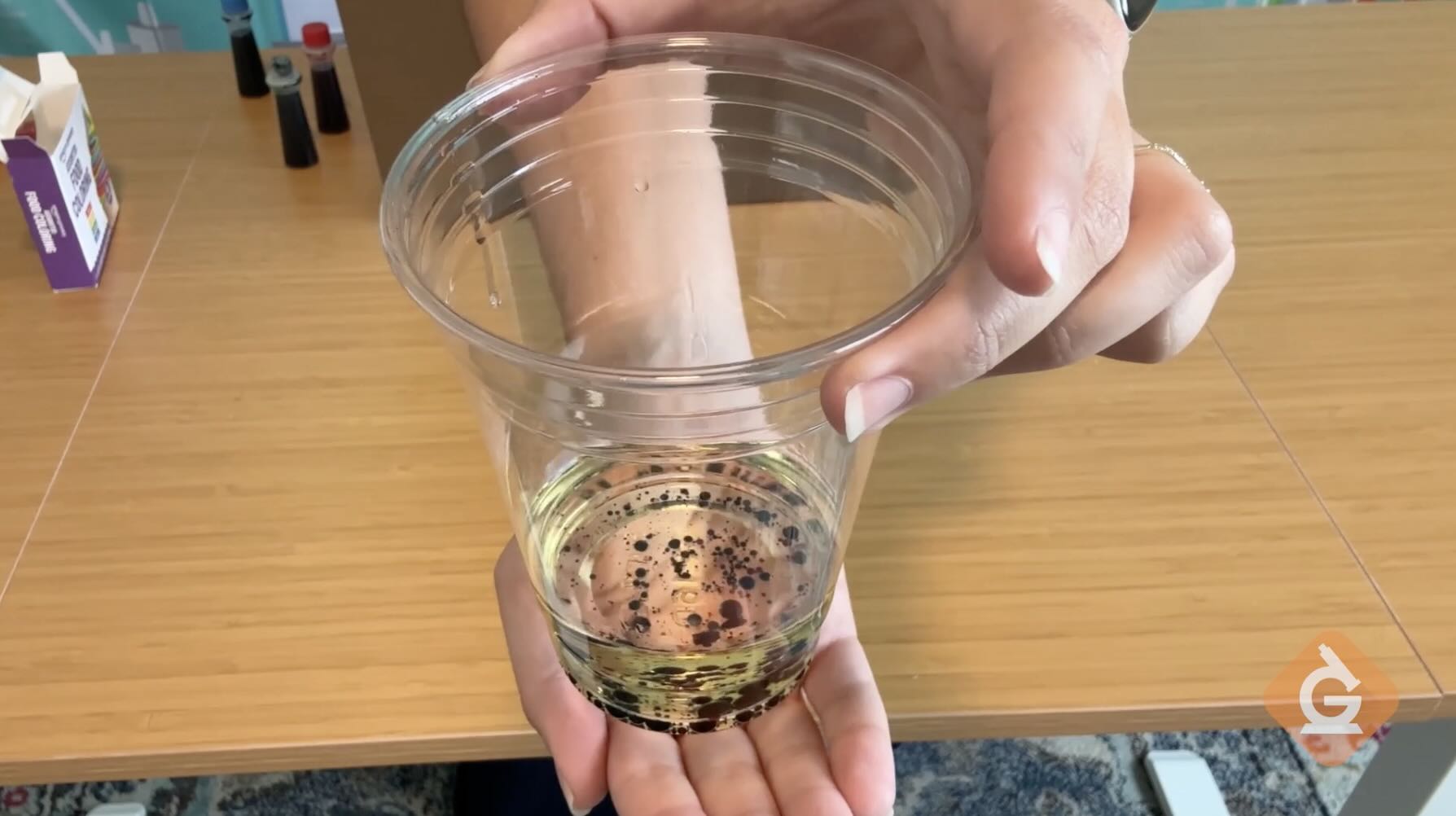
Stir gently — don’t fully mix. Use a straw, fork, or toothpick to stir slowly. The goal isn’t to blend the colors together, but to trap small, separate droplets of color inside the oil, like tiny color capsules.
STEP 5
2:09

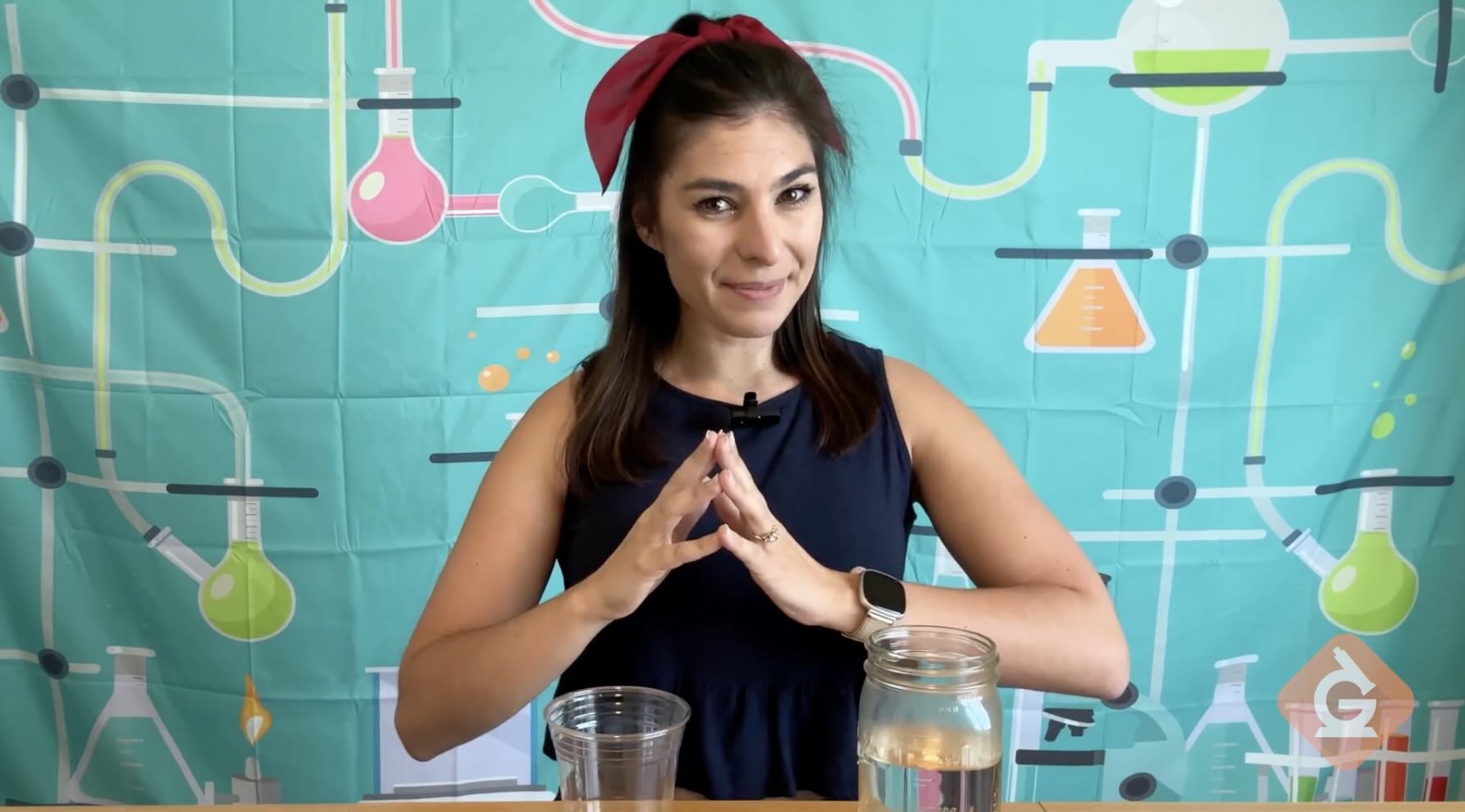
Make a prediction. Before pouring, guess what will happen when the oil and water meet. Will the colors float? Sink? Disappear? This is the moment real scientists pause to predict before testing.
STEP 6
2:30

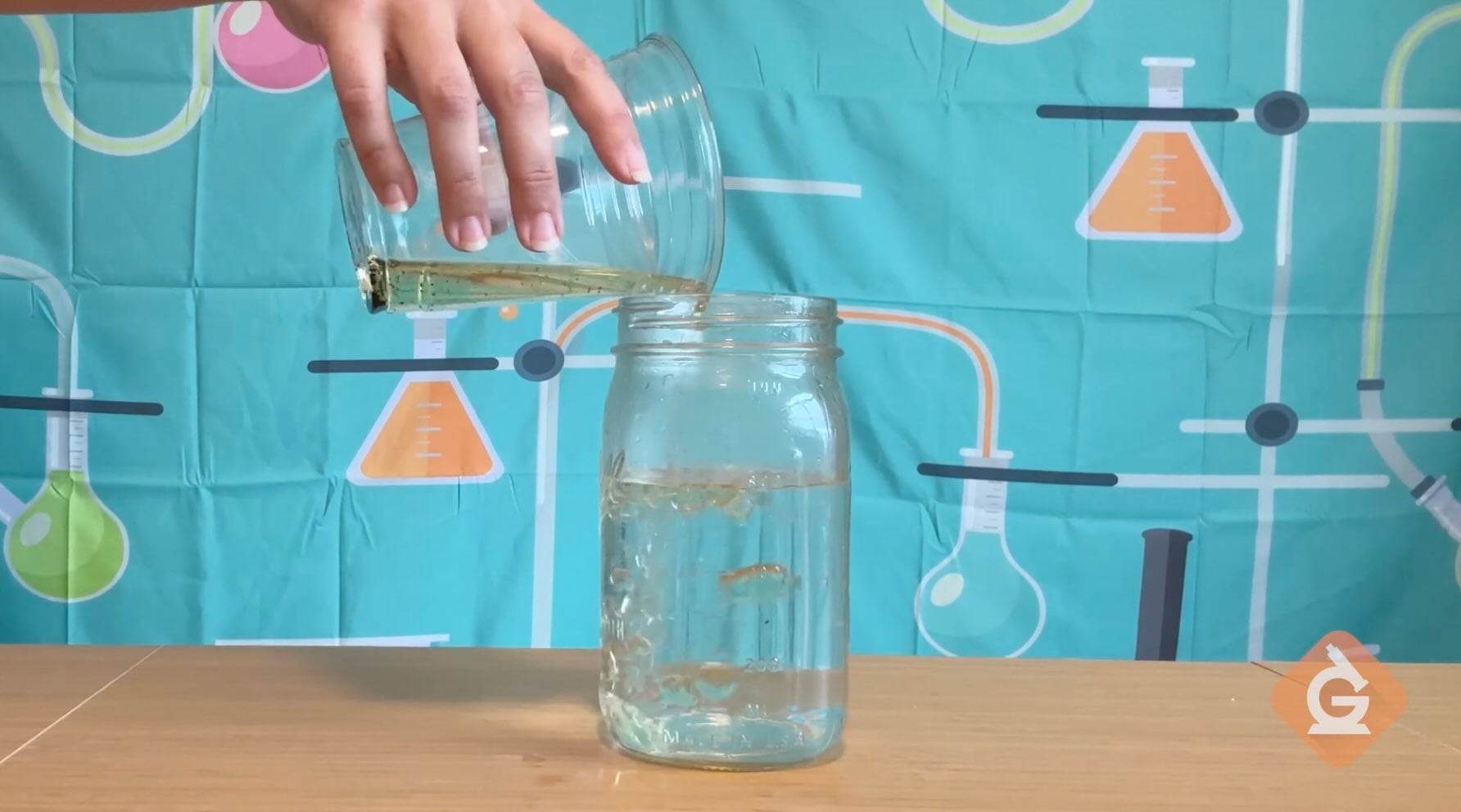
Pour the oil mixture into the jar. Slowly pour the color-and-oil mixture into the jar of warm water. Watch as the oil rises to the top while droplets of color break away and burst downward, spreading through the water like fireworks exploding in slow motion.

How It Works

Nothing is actually exploding or burning in this jar — the "firework" look comes down to three simple science concepts: density, solubility, and diffusion.

First is density. Oil is less dense than water, so no matter how you pour it, it will always rise and sit in its own layer on top — the two liquids simply won't mix together.

Second is solubility. Food coloring is water-based, not oil-based. That's why the drops sit as tiny separate beads inside the oil instead of blending in — the coloring is waiting to find water, its natural match.

Third is diffusion. The moment a droplet of food coloring breaks through and touches the water, it spreads outward in every direction at once. That spreading motion is what creates the colorful, explosive-looking bursts.

This same set of processes shows up everywhere: it's why dye disperses in a glass of water, how sugar dissolves into coffee, why ink bleeds outward on a paper towel, and even how nutrients move through cells in your body. Fireworks in a jar aren't magic — they're a small, safe demonstration of chemistry happening all around us, all the time.
X
Success
We’ve sent you an email with instructions how to reset your password.
Ok
x
Choose Your Free Trial Period
3 Days

3 days to access to all of our teaching resources for free.

Continue to Lessons
14 Days

Get 14 days free by inviting other teachers to try it too.

Share with Teachers
Get 14 Days Free
By inviting 4 other teachers to try it too.
4 required

*only school emails accepted.

Skip, I will use a 3 day free trial

Thank You!

Enjoy your free 14 days trial