


1%
Processing, please wait...
It was processed successfully!
Login Create Free Account
en | es

Summer STEM Challenge – Ice Melting Race

Autopause

Materials

4 Ice Cubes (same size)
4 Disposable Cups
4 Disposable Cups
4 Teaspoons of Salt
4 Teaspoons of Salt
Aluminum Foil
Aluminum Foil
A Timer
A Timer
Sunlight
Sunlight

Instructions

STEP 1
1:08

Make your prediction. Before touching anything, predict which cup will melt fastest and which will melt slowest. Write it down — real scientists always predict before they test.
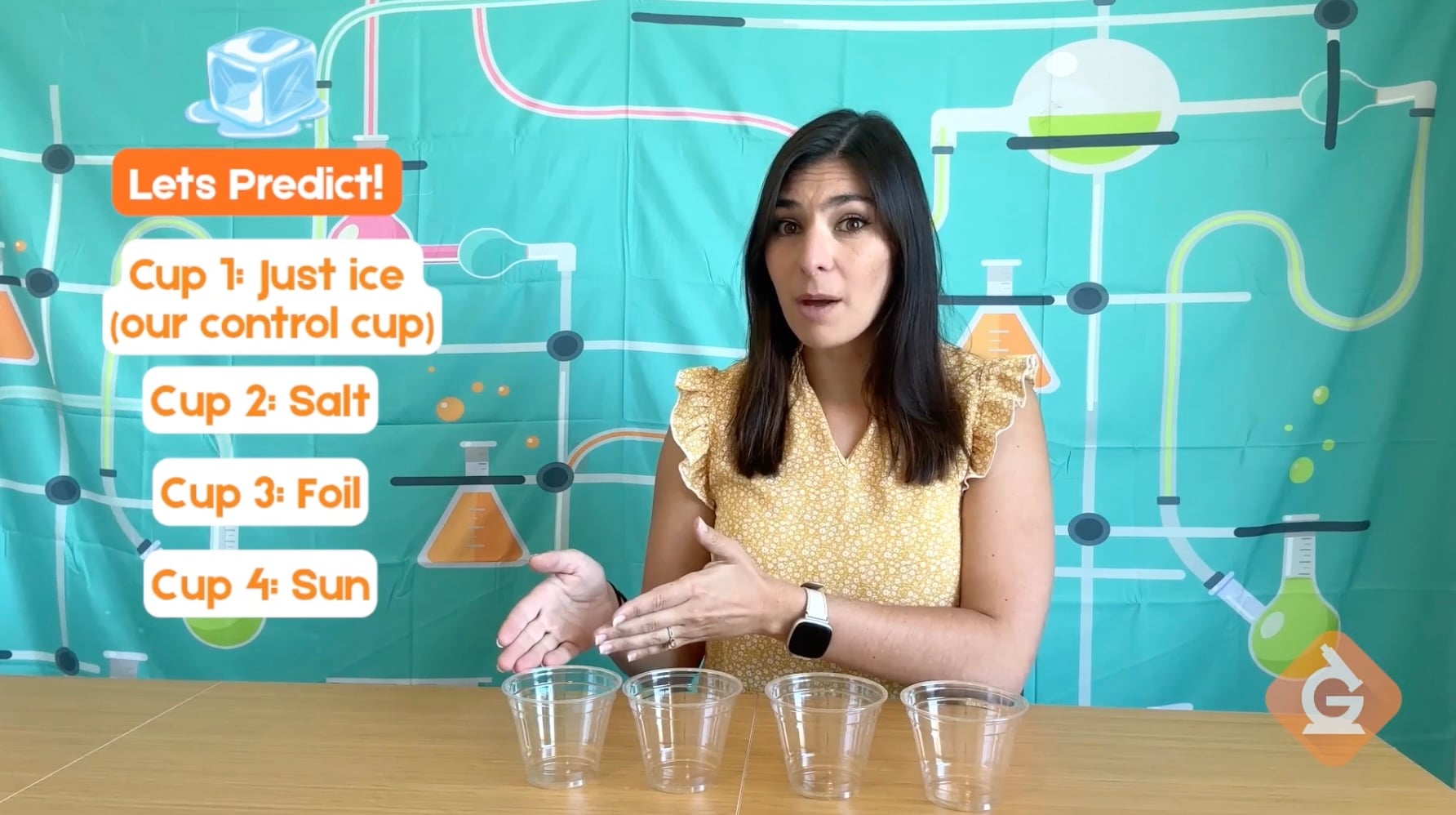
STEP 2
1:14

Set up the four cups. Label your four cups: Control, Salt, Foil, and Sun. Use ice cubes that are as close to the same size as possible — this keeps the experiment fair by changing only one variable at a time.
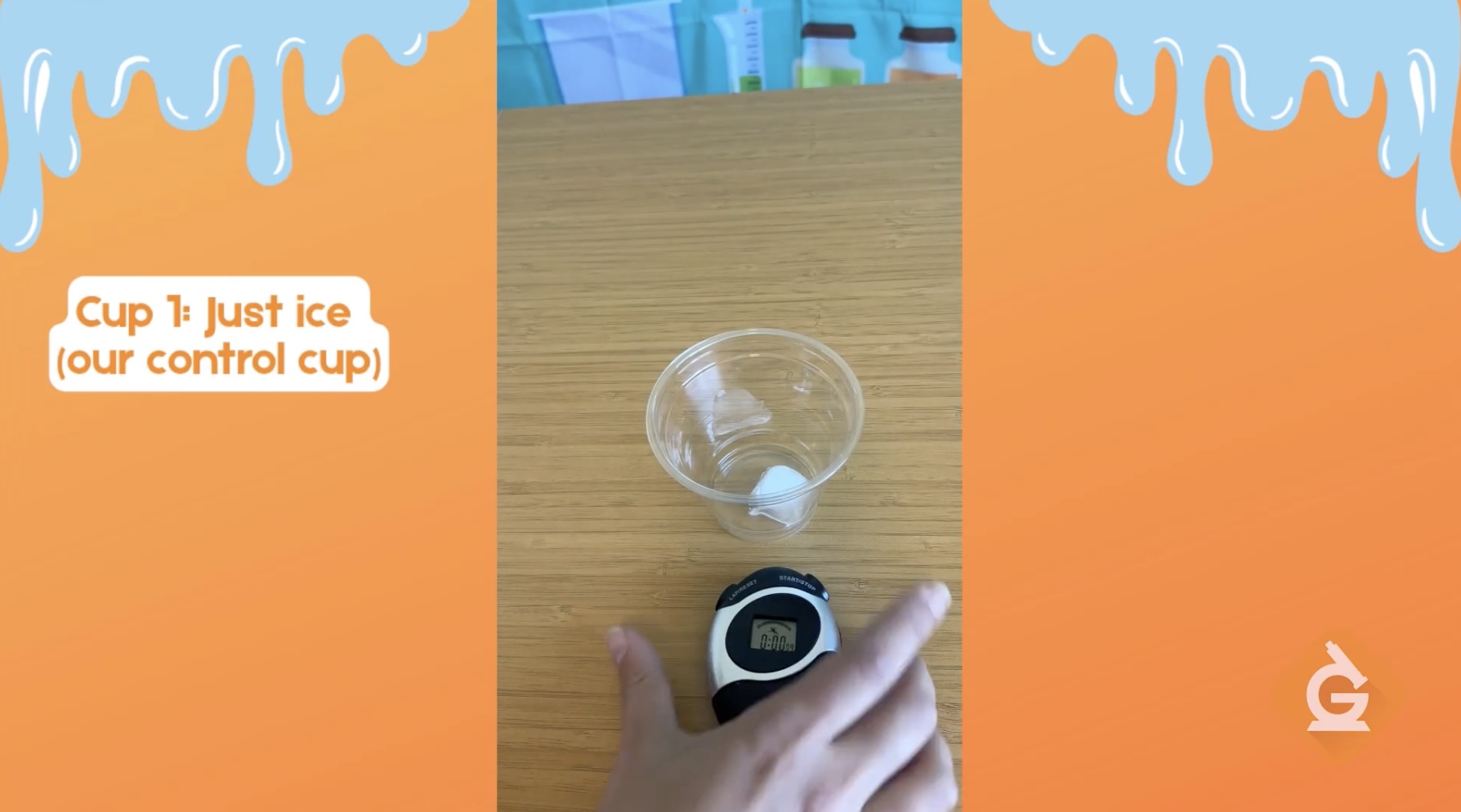
STEP 3
1:43

Prepare each Indoor cup. Drop one ice cube into each cup. For the Salt cup, sprinkle a few teaspoons of salt on top of the ice. For the Foil cup, line the inside of the cup with aluminum foil before adding the ice. Leave the Control cup plain.
STEP 4
1:53

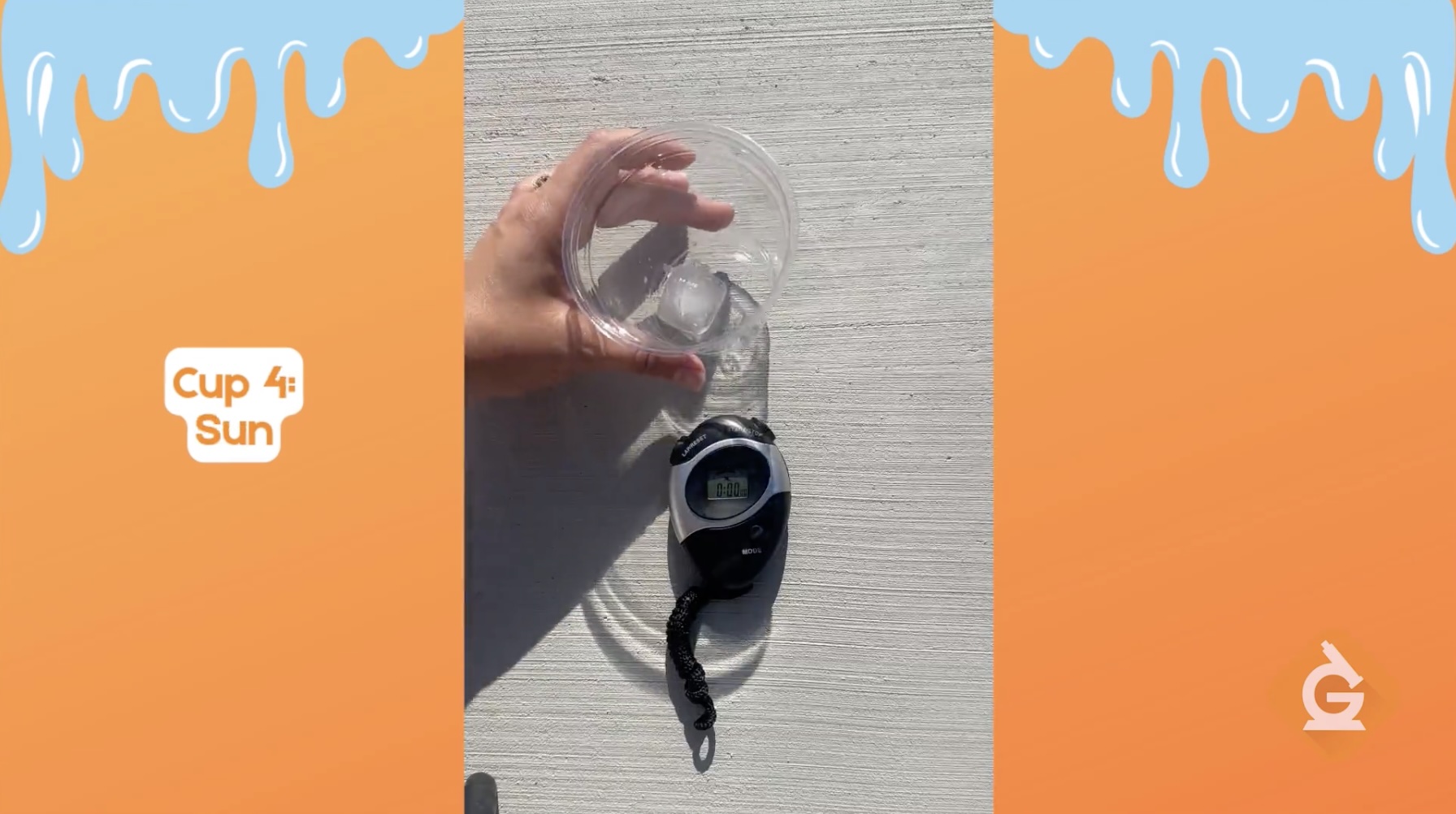
Place the sun cup outside. Take the fourth cup outside and set it in a spot with direct sunlight. Bring the other three cups inside and place them side by side at room temperature.
STEP 5
1:56

Start the race! Start your timer and let all four cups go at the same time. Check in every 10–15 minutes. Note which cube starts changing shape first, which melts fastest, and which holds on the longest.
STEP 6
2:09

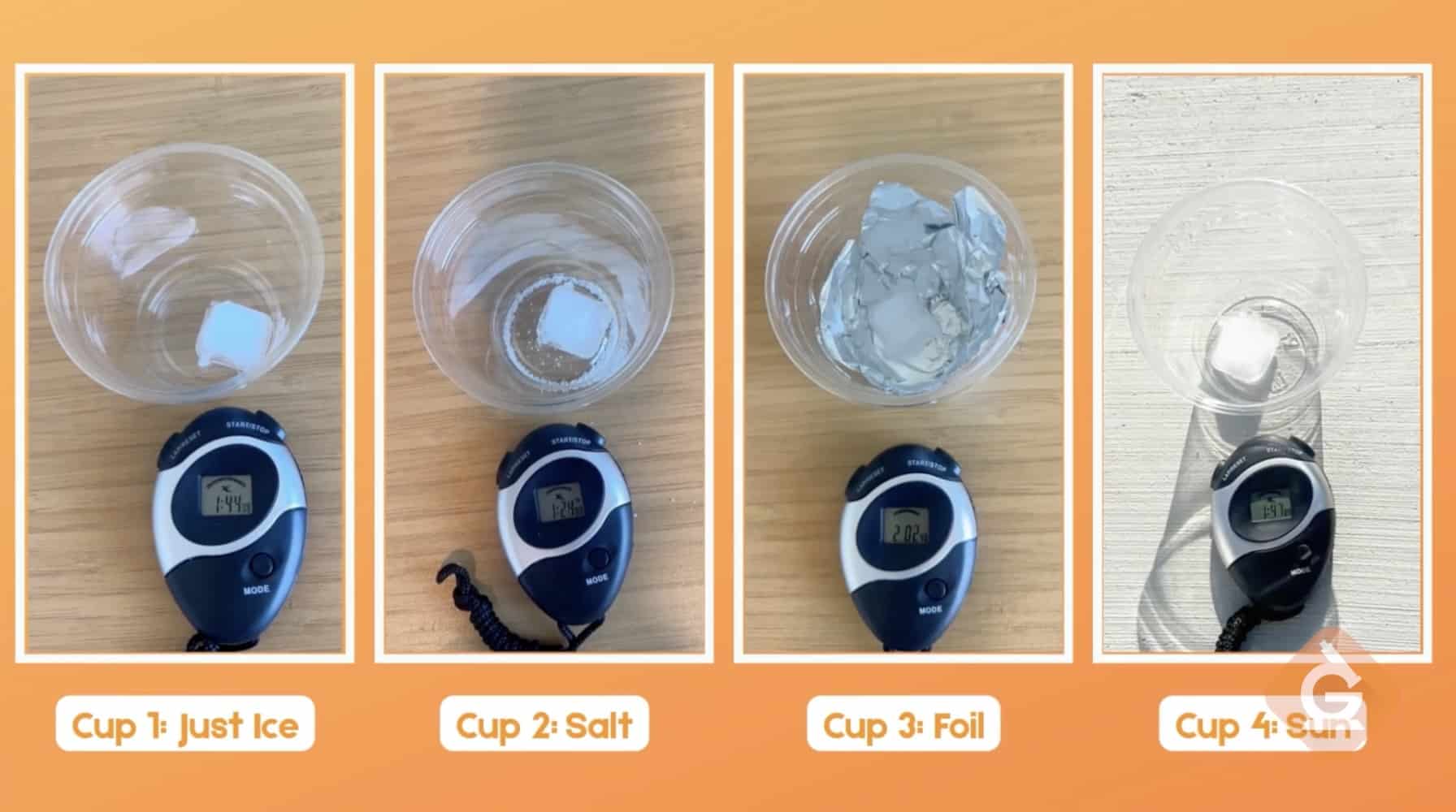
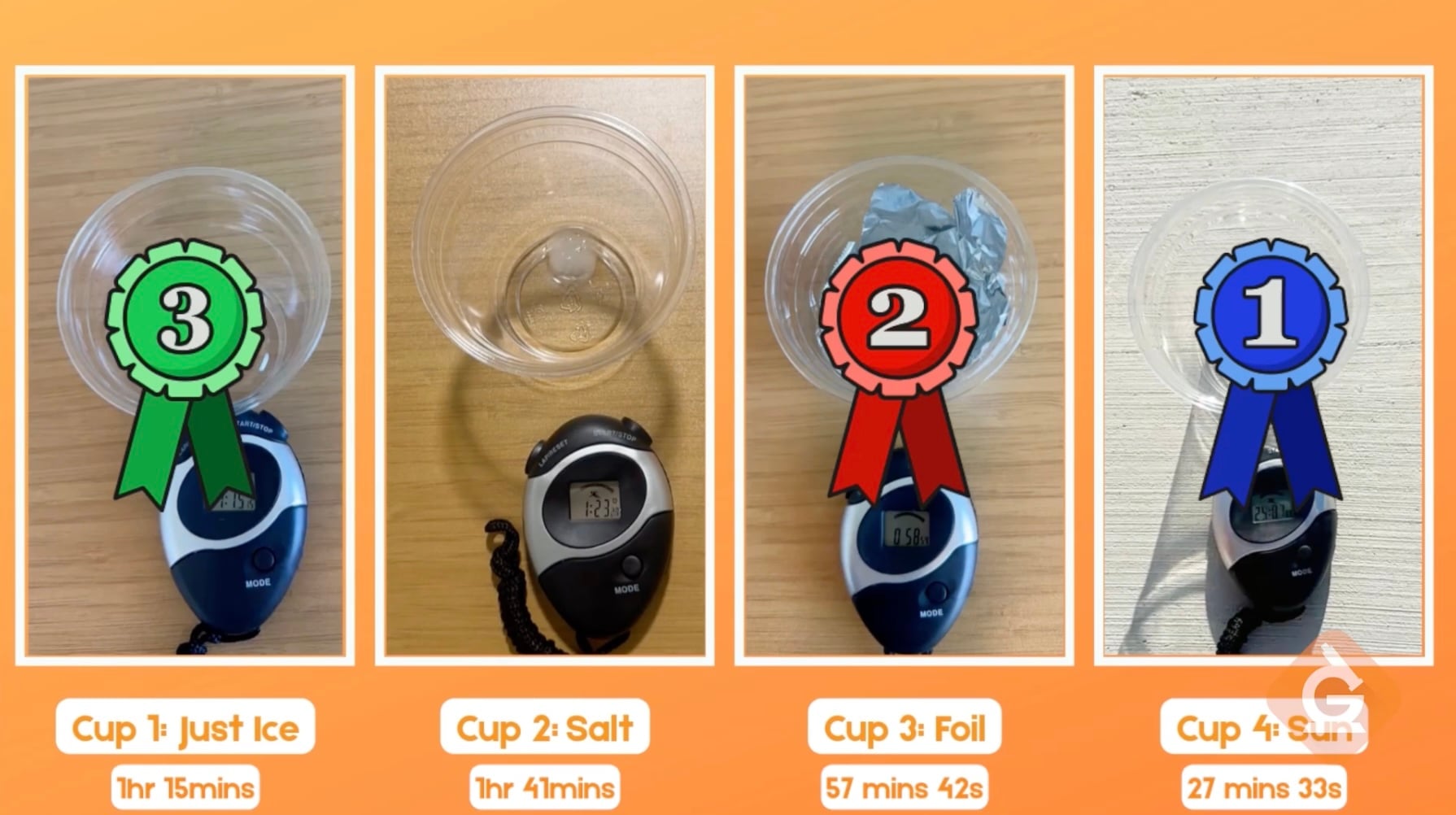
Record your results. Once all the ice has melted, compare your results to your predictions. Were you right? Check the results below to see how the experiment played out in the video.

How It Works

Ice melts when it absorbs heat energy from its surroundings, causing its molecules to move faster and break out of their frozen structure into liquid water. This experiment tests how different conditions affect the rate of that heat transfer.

Direct sunlight wins because the sun delivers a continuous, powerful source of heat energy — far more than room temperature air alone. Aluminum foil comes in second because it's an excellent heat conductor, meaning it absorbs warmth from the surrounding air and transfers it efficiently to the ice cube inside. The control cup melts slowly because the only heat source is the ambient room temperature air, which delivers energy at a much slower rate. Salt is the wildcard: it initially lowers the freezing point of water, causing a quick melt wherever it makes contact. But as the ice begins to liquefy, the ice cube ends up sitting in very cold, salty water that actually insulates it and slows the rest of the melting down.

This principle is exactly why salt is spread on icy roads in winter — it disrupts the freezing point and helps break down ice quickly. The same science also explains why foil-lined coolers keep food cold longer, and why your icy drink stays cold differently depending on what's around it.
X
Success
We’ve sent you an email with instructions how to reset your password.
Ok
x
Choose Your Free Trial Period
3 Days

3 days to access to all of our teaching resources for free.

Continue to Lessons
14 Days

Get 14 days free by inviting other teachers to try it too.

Share with Teachers
Get 14 Days Free
By inviting 4 other teachers to try it too.
4 required

*only school emails accepted.

Skip, I will use a 3 day free trial

Thank You!

Enjoy your free 14 days trial