



1%
Processing, please wait...
It was processed successfully!
Login Create Free Account
en | es

Pool Noodle Engineering Science Experiment

Autopause

Materials

Pool Noodle
Pool Noodle
Piece of Cardboard
Piece of Cardboard
Box of Toothpicks
Box of Toothpicks
Coins or small weights
Tub of Water / Sink
Tub of Water / Sink

Instructions

STEP 1
0:31

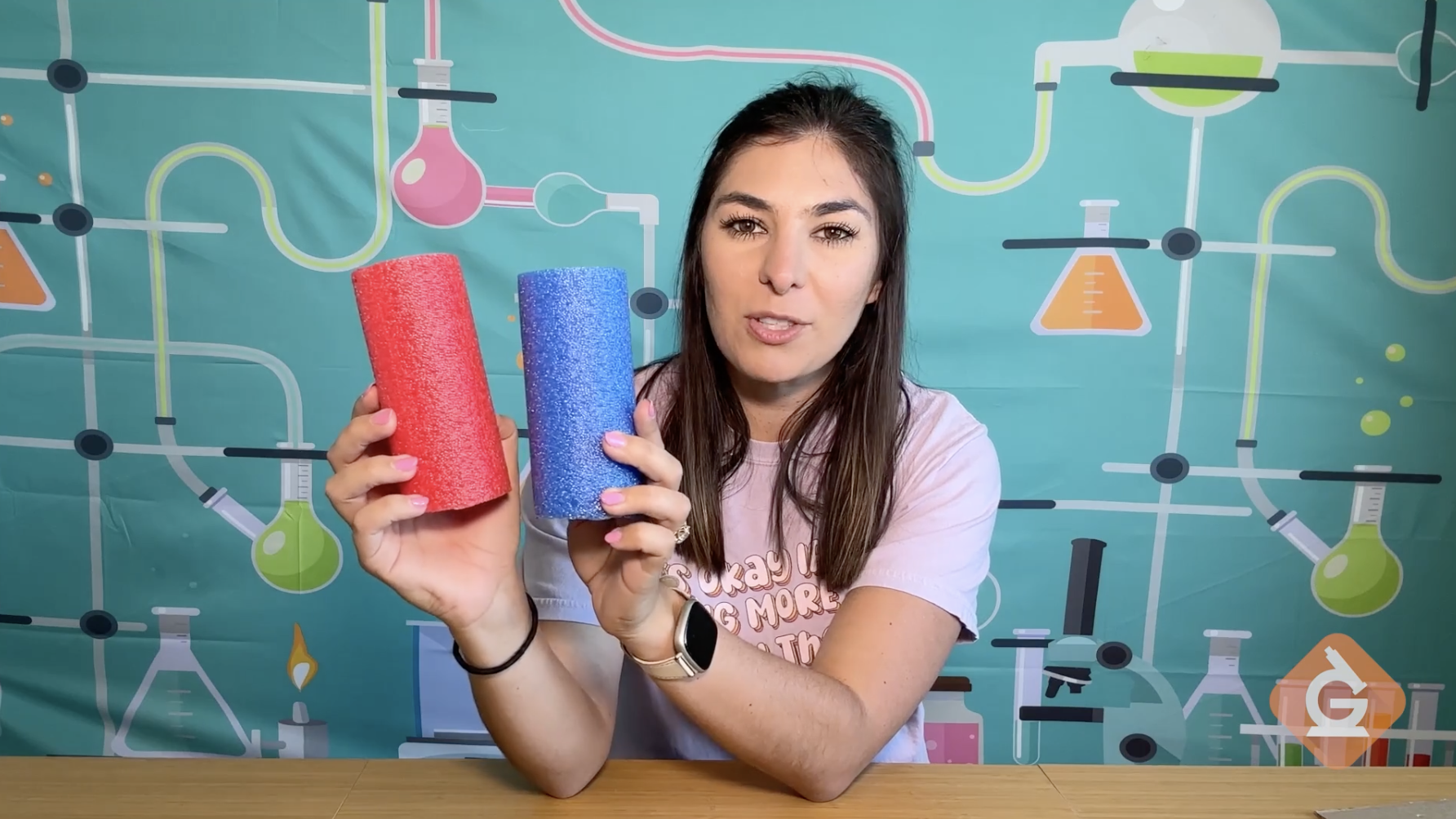
Cut your pool noodle into two 6″ pieces (lengths can vary — 4″, 5″, or 8″ all work).
STEP 2
1:44

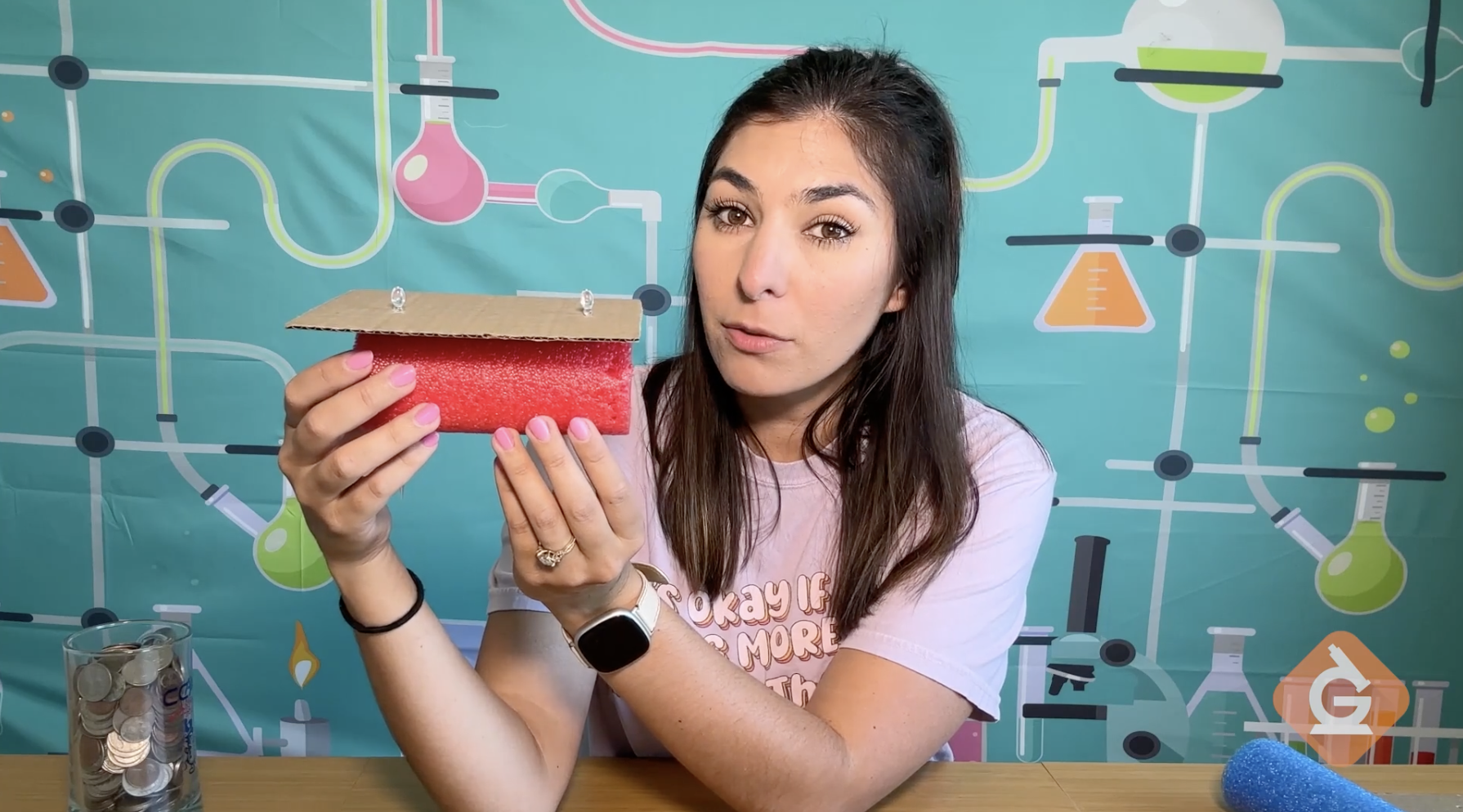
Boat 1: Attach one noodle to a cardboard platform using toothpicks. Predict: Will it float? Will it be stable?
STEP 3
3:01

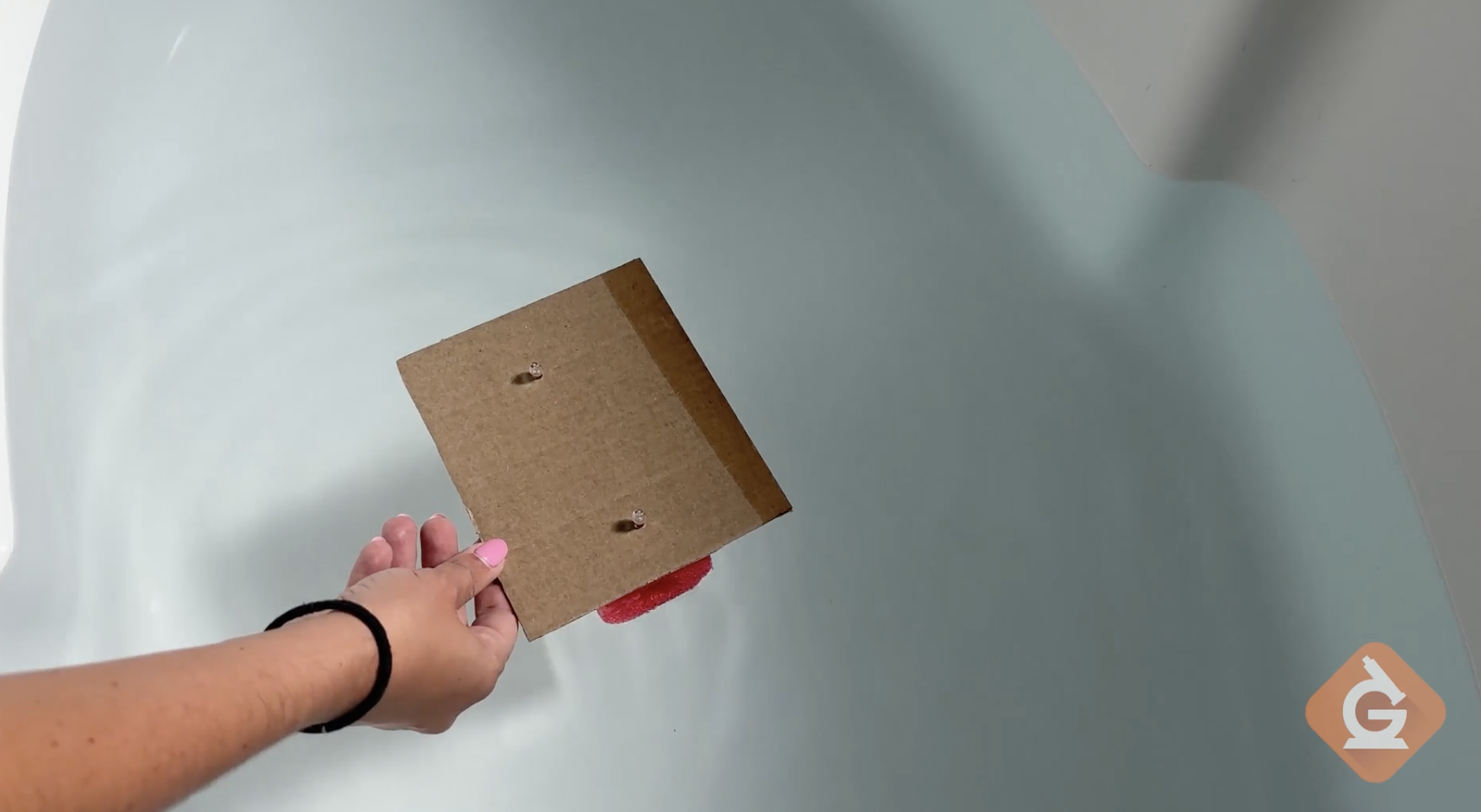
Place Boat 1 in the water and test it. Try adding coins. Record what happens.
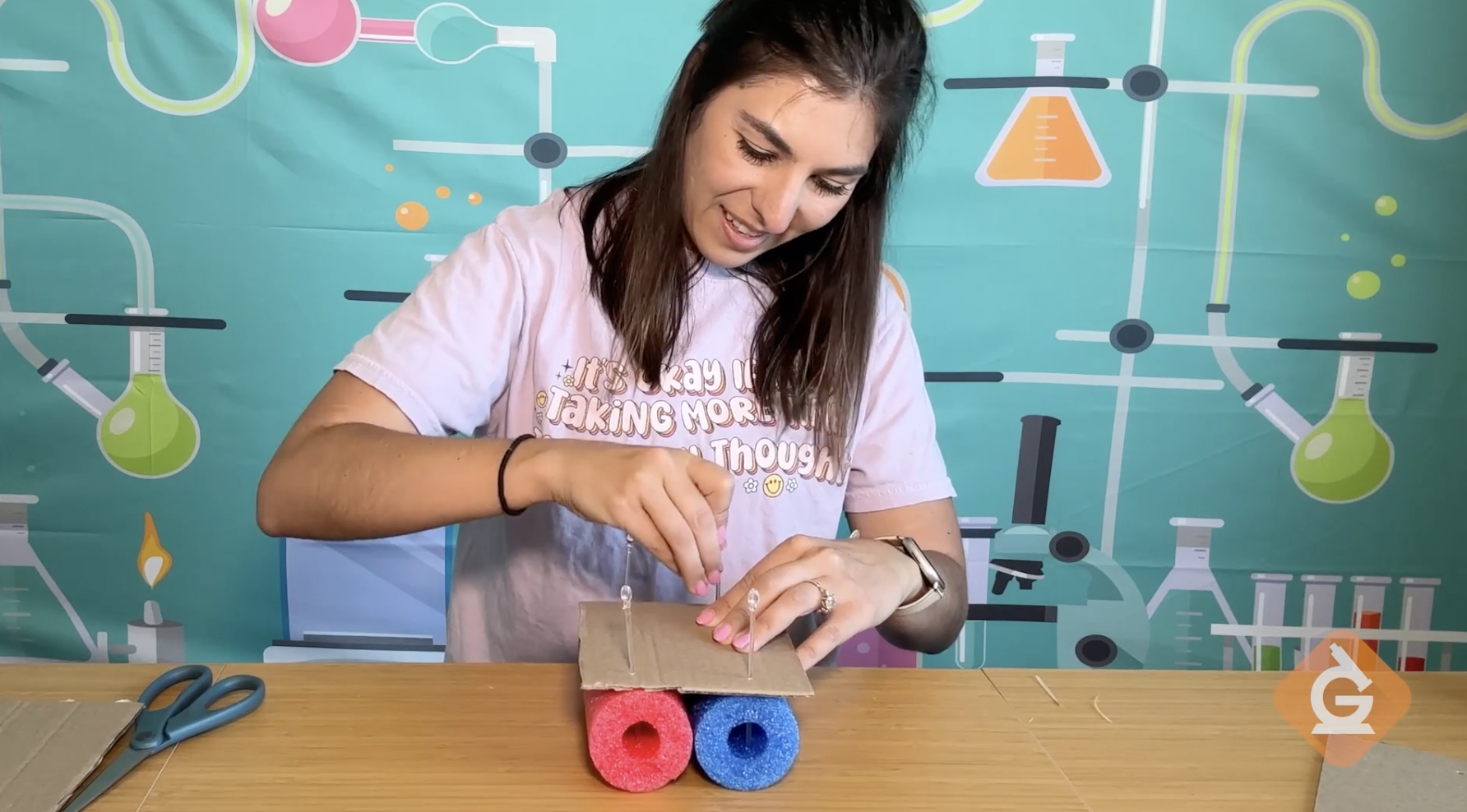
STEP 4
3:21

Boat 2: Attach two noodles side-by-side to a wider cardboard platform using toothpicks. Predict: Will it float better? Hold more weight?
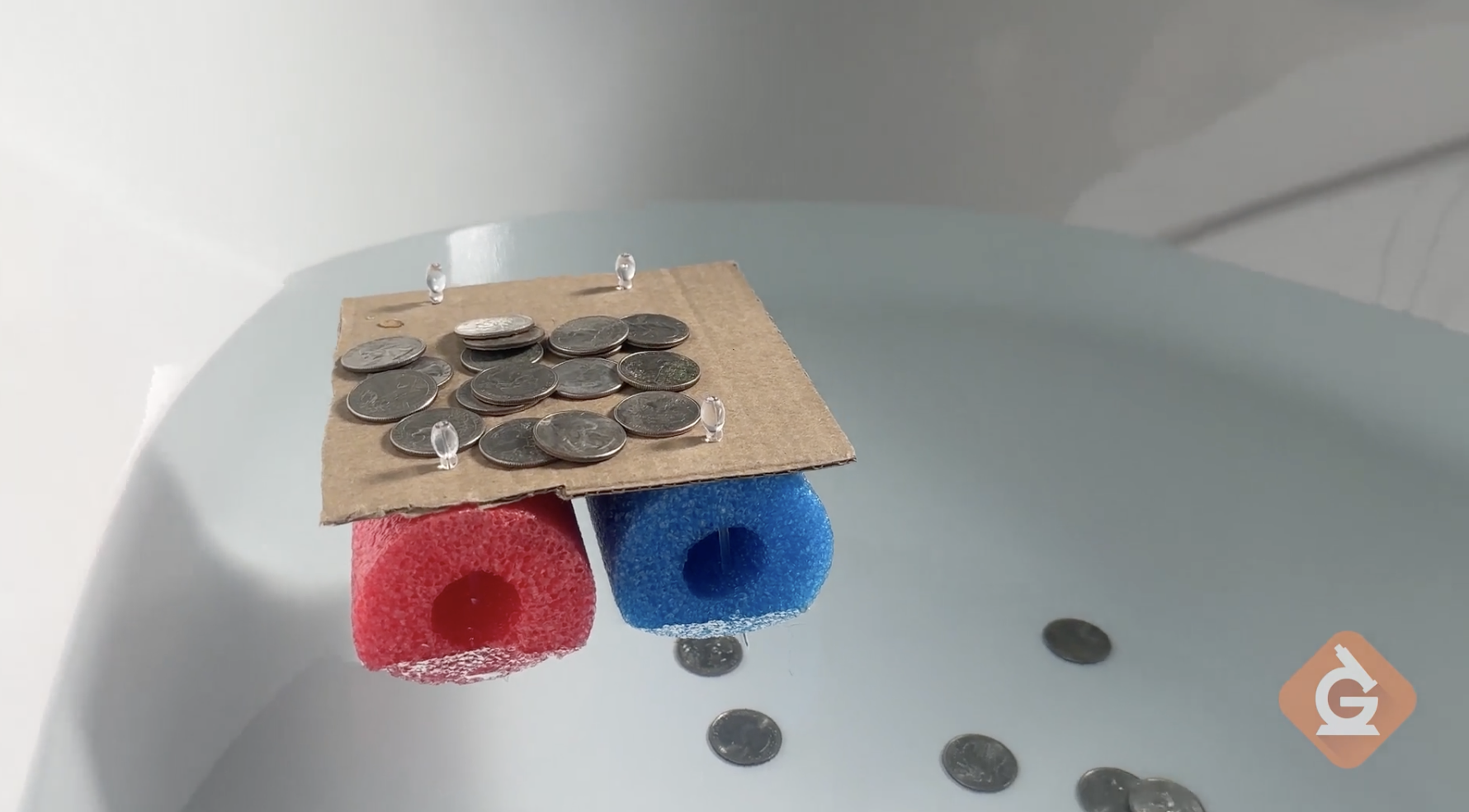
STEP 5
4:50

Test Boat 2 in the water. Add coins slowly and watch what happens when weight isn’t centered.
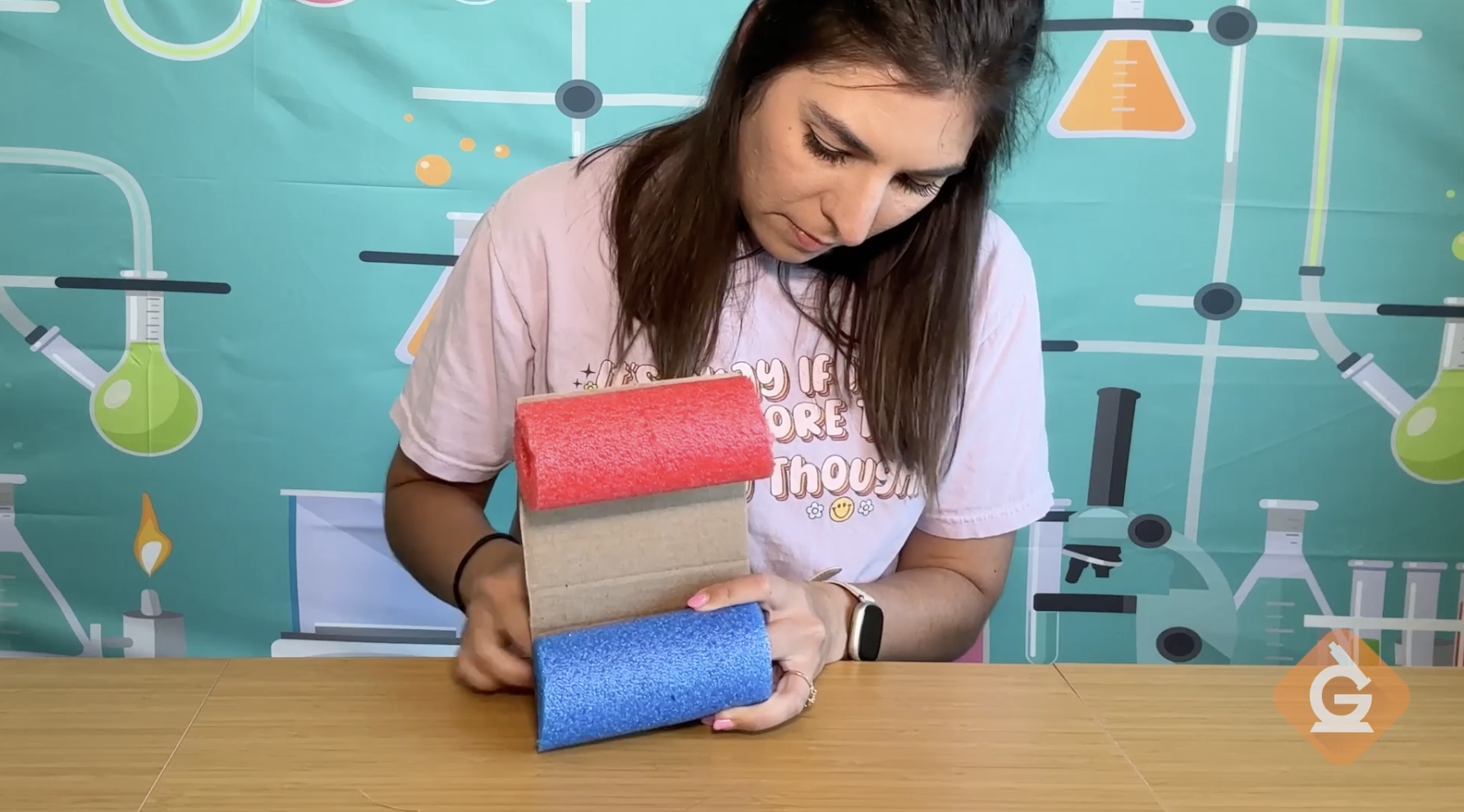
STEP 6
7:09

Boat 3 (Catamaran): Spread the two noodles apart with a gap between them, and attach a longer cardboard platform across both. Predict: Will a wider stance make it more stable?
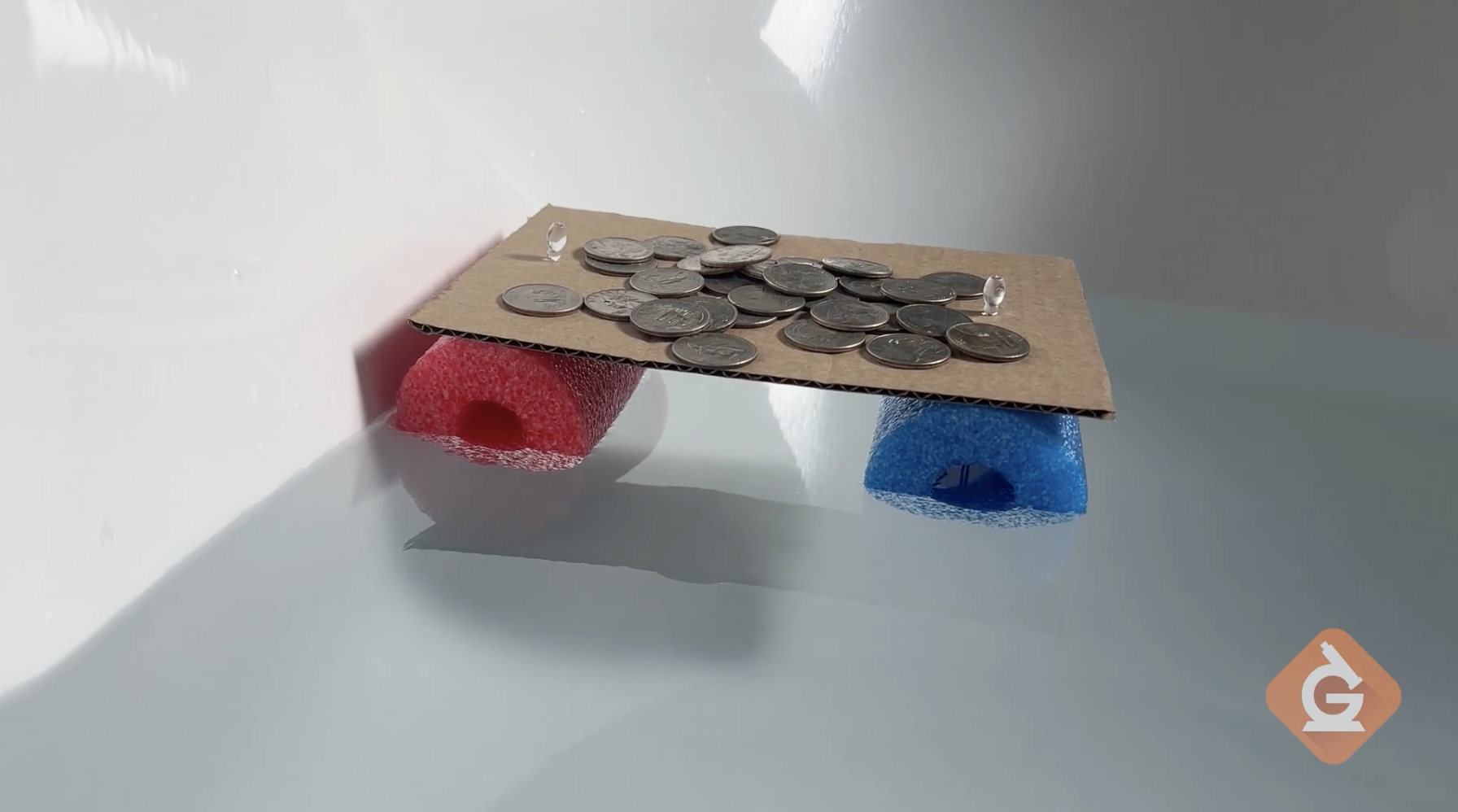
STEP 7
8:02

Test Boat 3 in the water. Add coins and compare how many it holds versus Boats 1 and 2.
STEP 8
9:25

Be creative — build a Boat 4! Try your own design changes to hold even more weight.

How It Works

Pool noodles are full of tiny air pockets, which makes them less dense than water — that's what makes them float. This upward force is called buoyancy. But floating isn't the same as being stable (resistant to tipping).

Just like standing on one foot is less stable than standing with your feet apart, a boat with a wide stance resists tipping better than a narrow one. Engineers use this same design-test-improve process — called iteration — to build things like real boats, bridges, and playgrounds that are both buoyant and stable.
X
Success
We’ve sent you an email with instructions how to reset your password.
Ok
x
Choose Your Free Trial Period
3 Days

3 days to access to all of our teaching resources for free.

Continue to Lessons
14 Days

Get 14 days free by inviting other teachers to try it too.

Share with Teachers
Get 14 Days Free
By inviting 4 other teachers to try it too.
4 required

*only school emails accepted.

Skip, I will use a 3 day free trial

Thank You!

Enjoy your free 14 days trial