


1%
Processing, please wait...
It was processed successfully!
Login Create Free Account
en | es

Oozing Pumpkin Halloween STEM Activity

Autopause

Materials

Pumpkin (real or fake)
Baking Soda
Baking Soda
White Vinegar
White Vinegar
Dish Soap
Dish Soap
Food Coloring
Food Coloring
Large Baking Sheet or Tray
Measuring Cups
Measuring Cups

Instructions

STEP 1

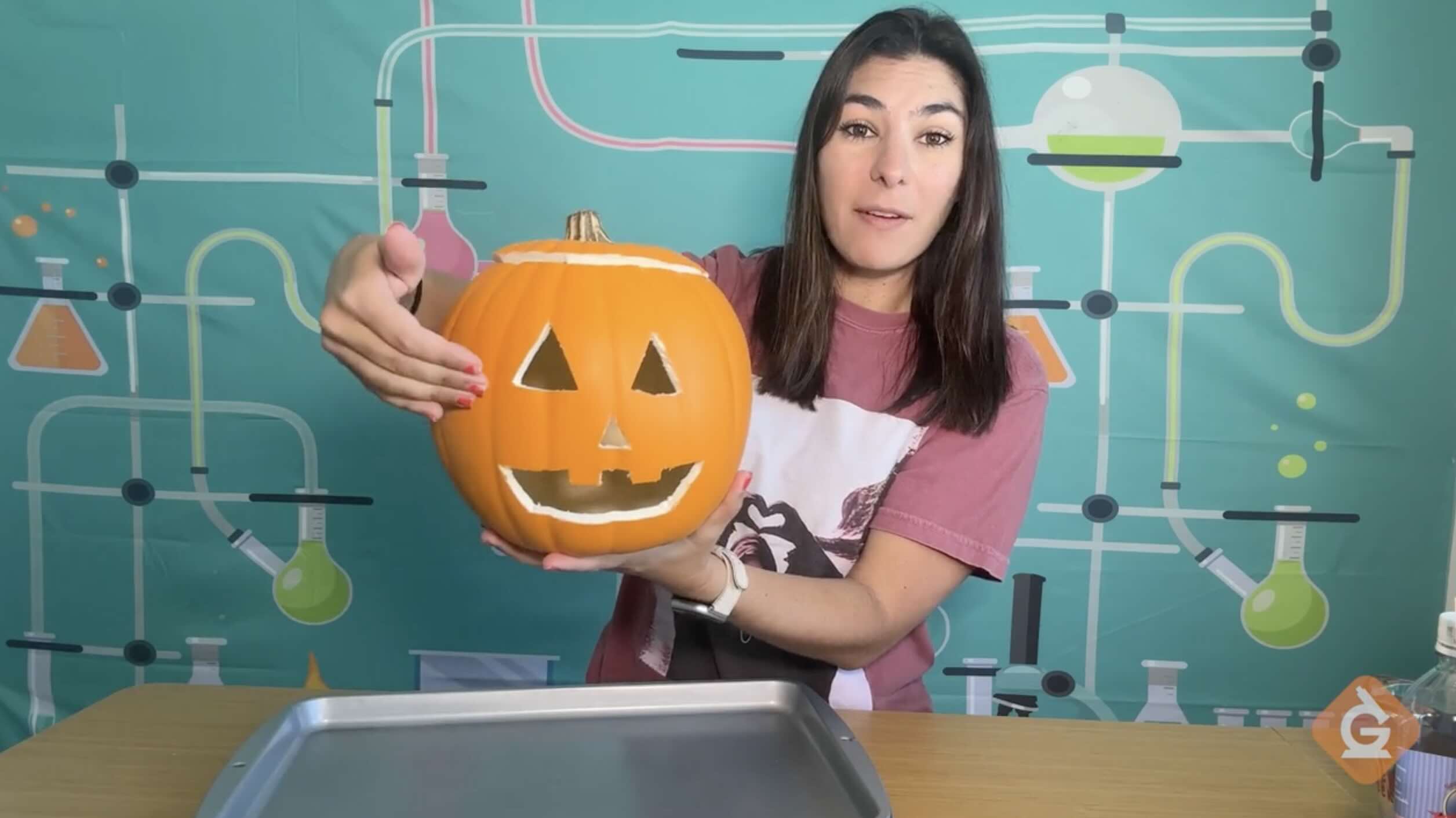
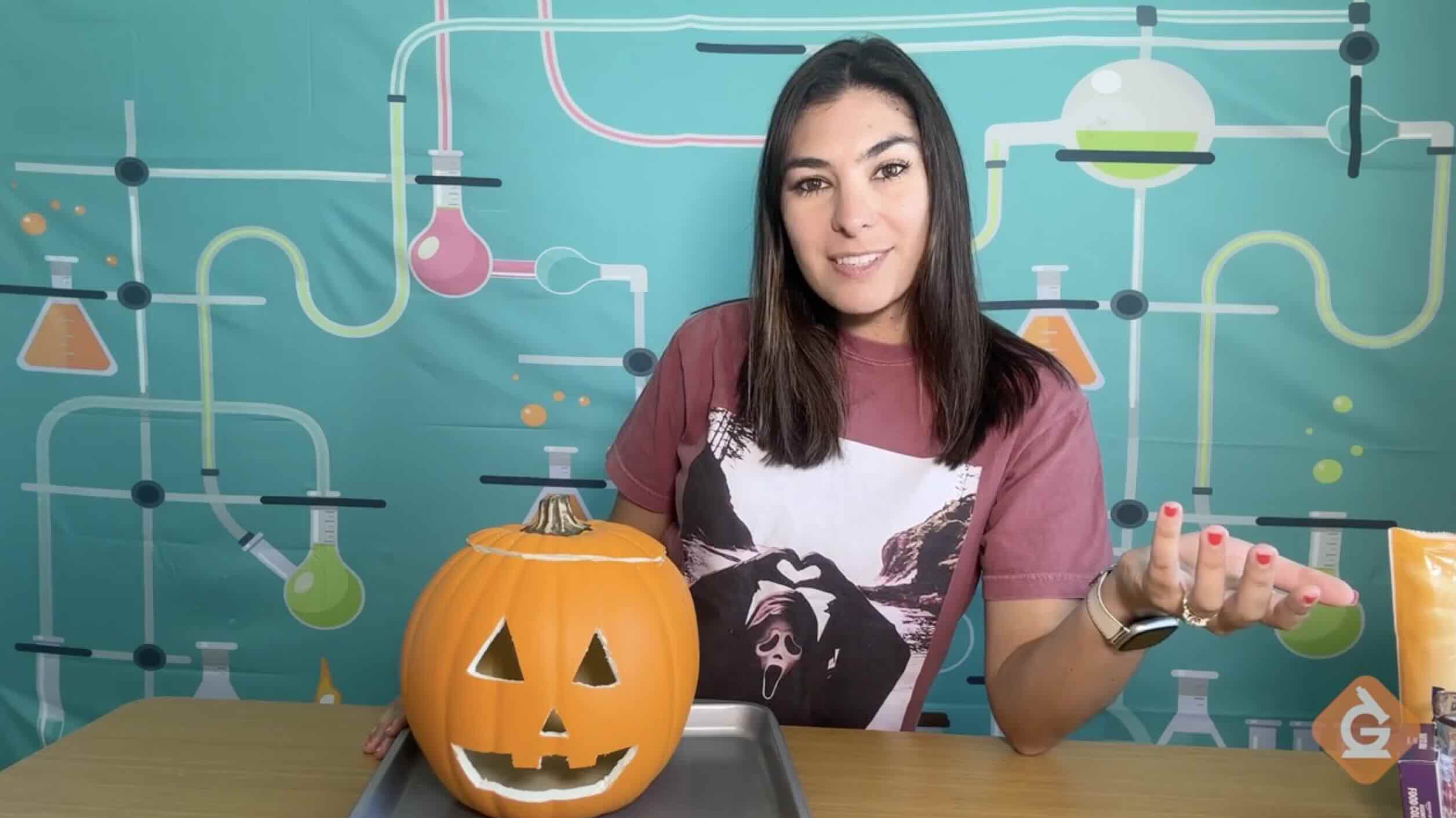
Carve a Jack-O’-Lantern face into your pumpkin and cut off the top. Set it on a large baking sheet, or do this activity outside, the ooze will overflow.
STEP 2

Before you start, make a prediction: what do you think will happen when you mix baking soda, vinegar, and dish soap inside the pumpkin? Will the foam stay inside, or will it overflow through the mouth, the eyes, or out of the top?
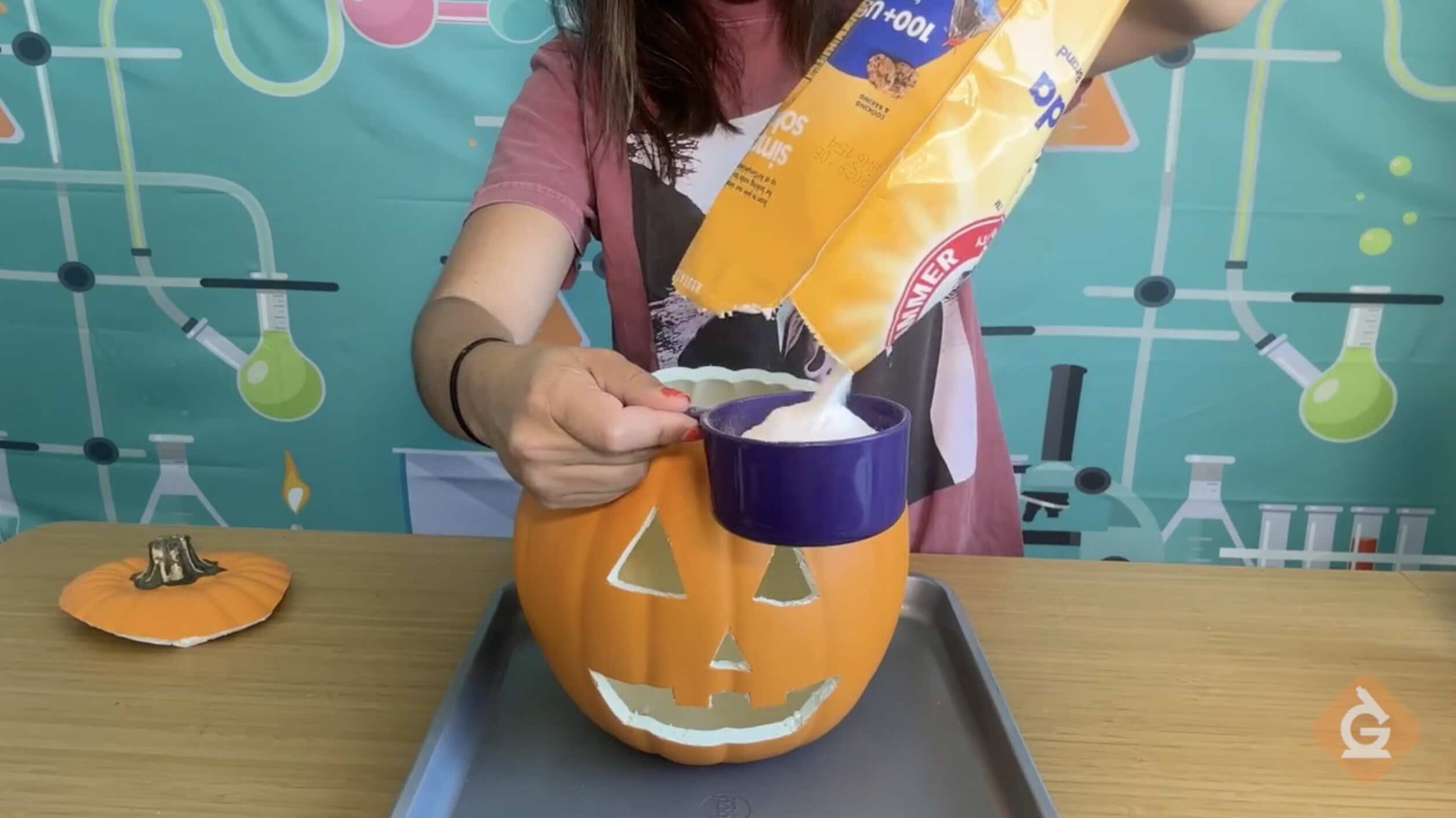
STEP 3

Pour about 1 cup of baking soda into the bottom of your pumpkin (use more for a bigger pumpkin).
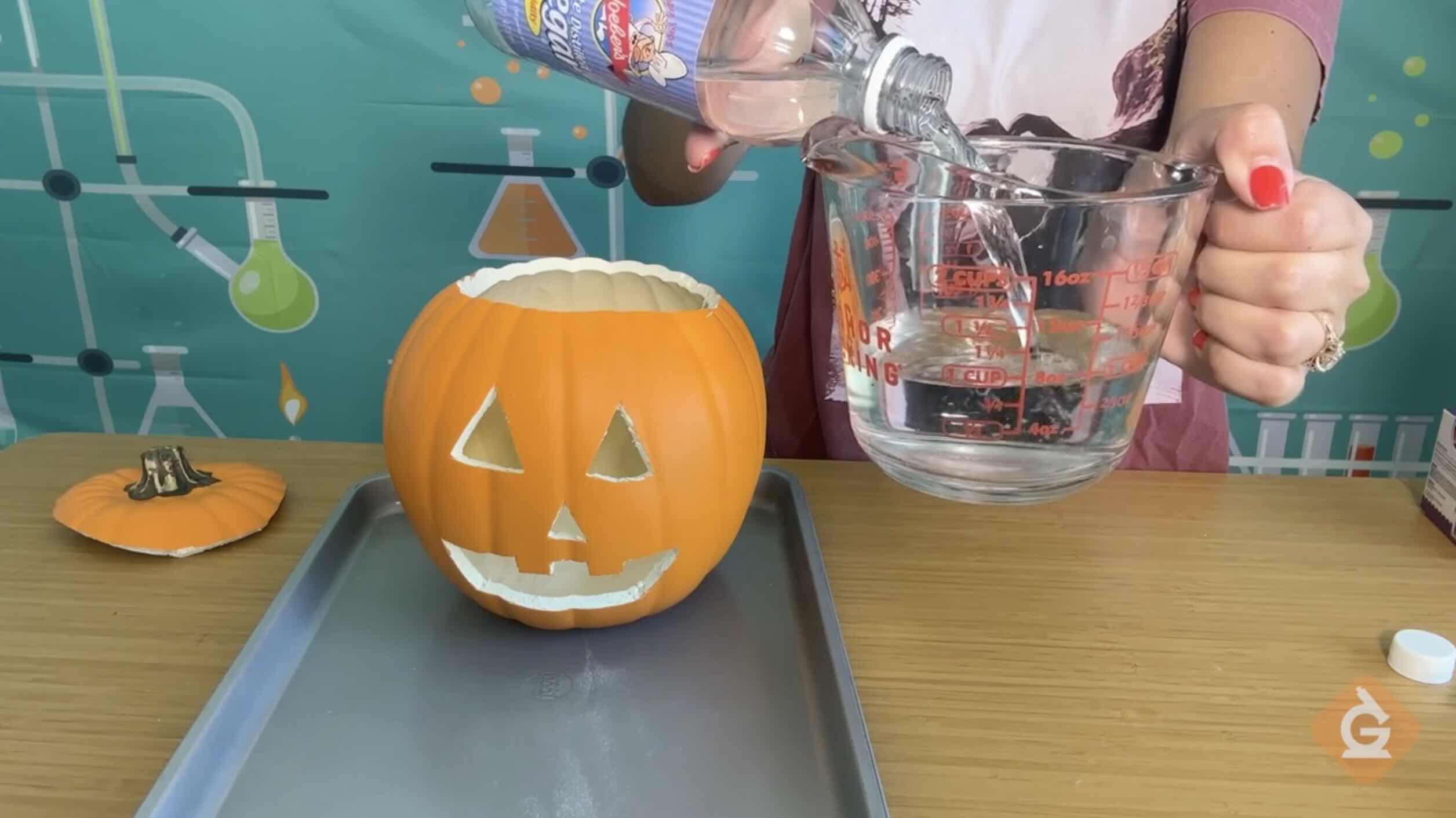
STEP 4

In a separate cup, measure about 1 cup of white vinegar. Add a few drops of food coloring and stir.
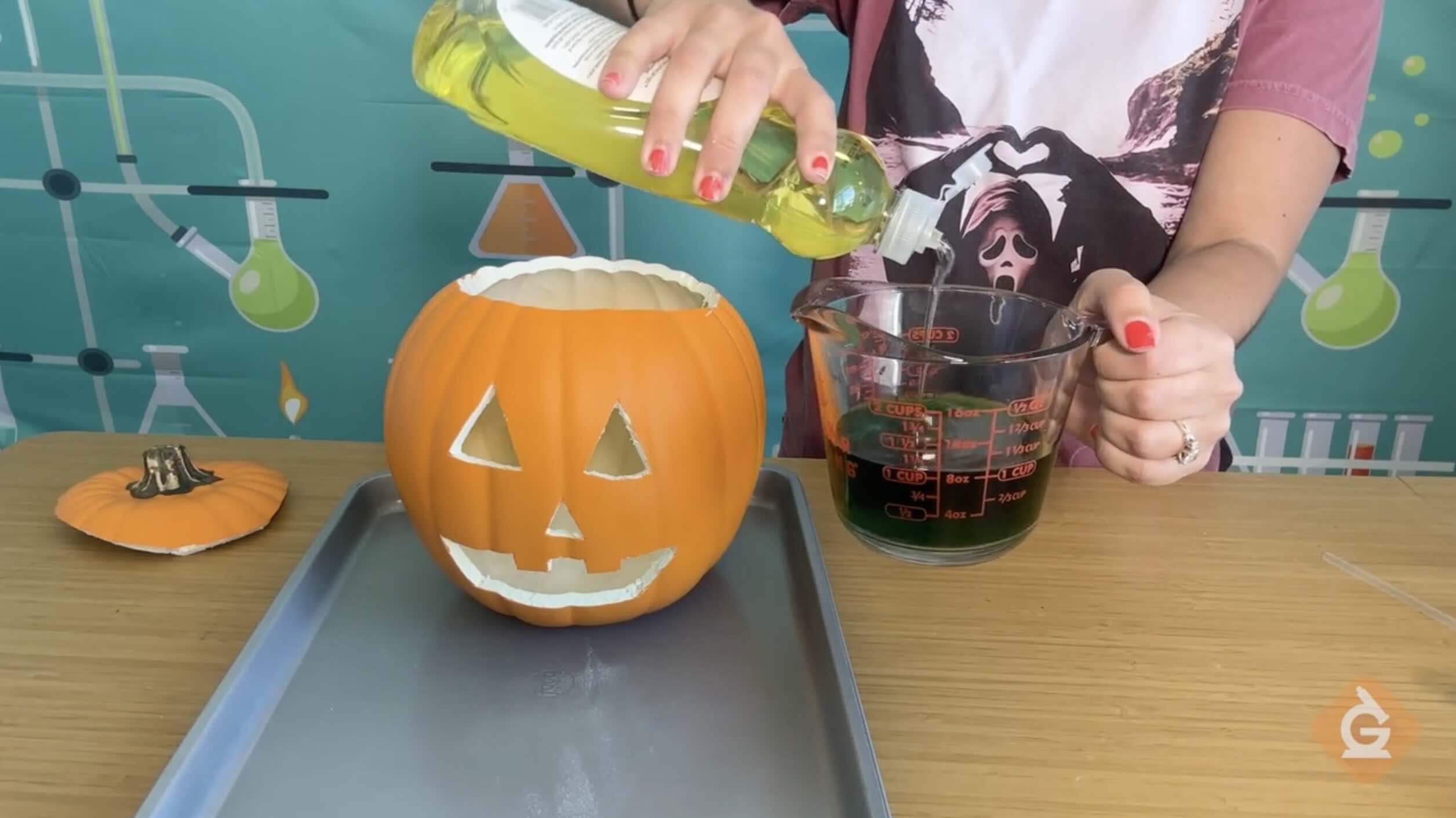
STEP 5

Add a couple of squirts of dish soap to the vinegar mixture.
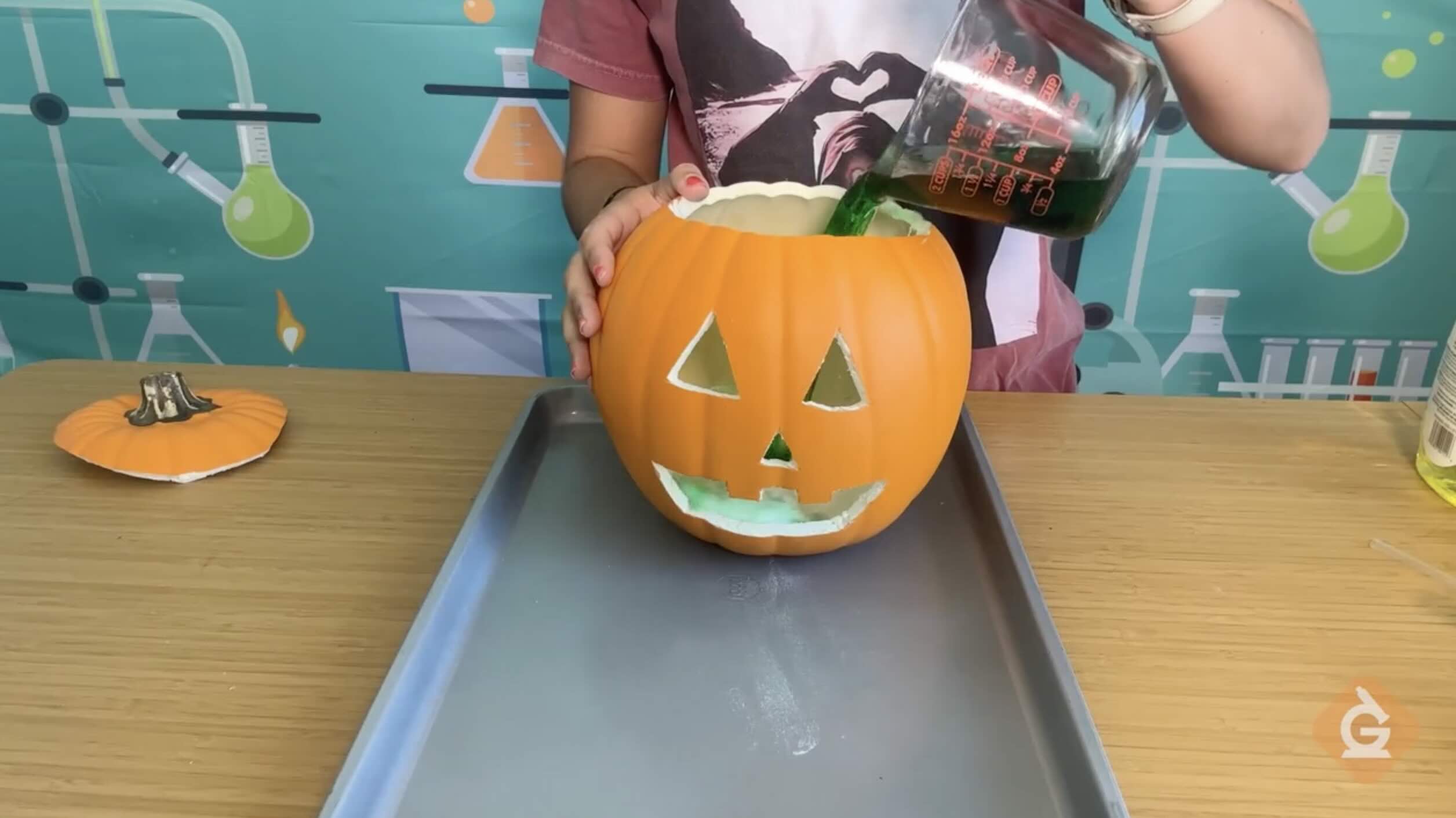
STEP 6

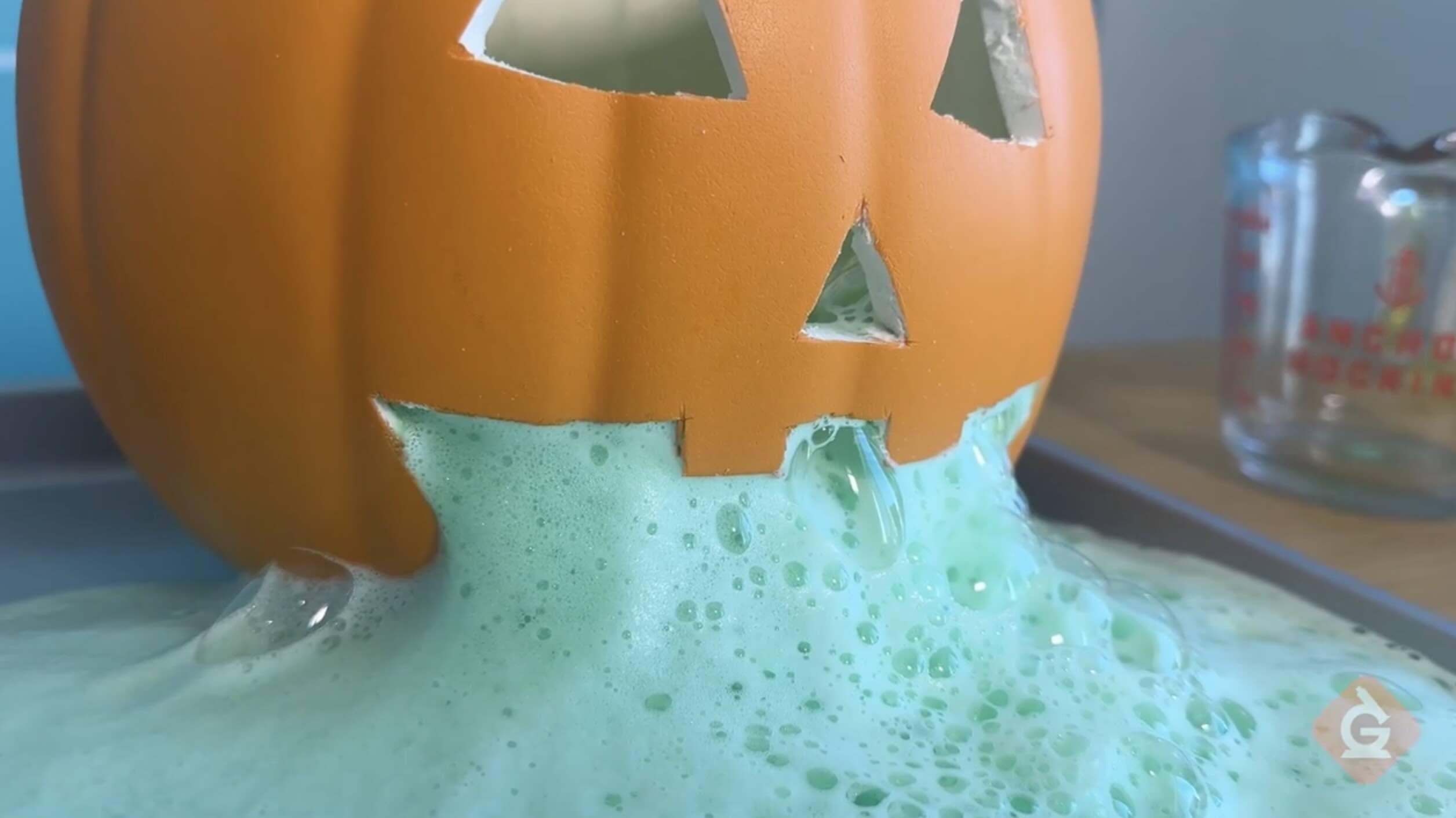
Pour the vinegar mixture into the pumpkin with the baking soda, and watch what happens. Observe: As the carbon dioxide gas is produced, what happens to the bubbles? Does the foam stay inside the pumpkin, or does it find its way out through the face?
STEP 7

Once it settles down, scientists don’t stop after one try. Test it again, but only change one variable at a time, more vinegar, more baking soda, or a bigger pumpkin, and see how the reaction changes.

How It Works

Mixing baking soda and vinegar is a classic acid-base chemical reaction. The vinegar (an acid) and the baking soda (a base) react to form carbon dioxide gas, which expands rapidly and creates millions of tiny bubbles. You can't usually see a gas, but here you can: the more carbon dioxide that's produced, the more the bubbles grow. That's evidence a chemical reaction really happened, a brand new substance, carbon dioxide gas, was formed. It's no longer just baking soda and vinegar.

On its own, that reaction would just fizz and pop away in a few seconds. The dish soap is what turns it into ooze: it traps the carbon dioxide inside thick, soapy bubbles instead of letting them burst right away, so instead of a quick fizz, you get a slow, heavy foam that keeps growing and spilling out of the pumpkin's face.

This same acid-base reaction shows up in plenty of familiar places. Fizzy soda, the glow inside a glow stick, and the fizz when a sour candy hits your tongue are all chemical reactions too, evidence that new substances are forming all around you, not just inside your pumpkin.

Try it yourself: Run the experiment again, but change only one variable at a time, more vinegar, more baking soda, or a bigger pumpkin, and predict how each change will affect how much the pumpkin oozes before you test it.
X
Success
We’ve sent you an email with instructions how to reset your password.
Ok
x
Choose Your Free Trial Period
3 Days

3 days to access to all of our teaching resources for free.

Continue to Lessons
14 Days

Get 14 days free by inviting other teachers to try it too.

Share with Teachers
Get 14 Days Free
By inviting 4 other teachers to try it too.
4 required

*only school emails accepted.

Skip, I will use a 3 day free trial

Thank You!

Enjoy your free 14 days trial