


1%
Processing, please wait...
It was processed successfully!
Login Create Free Account
en | es

Football Throw Stability STEM Activities

Autopause

Materials

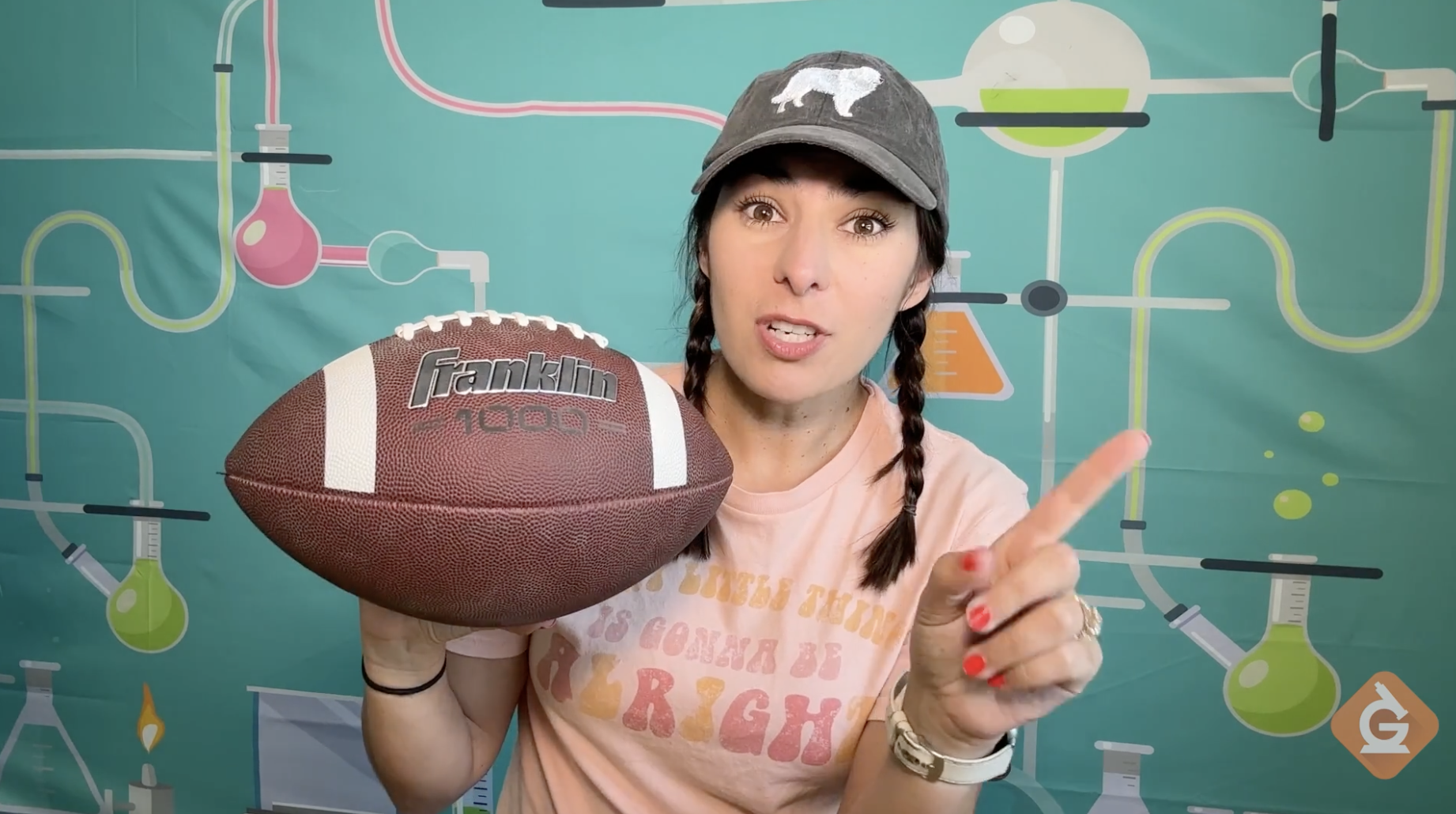
Football
Football
Measuring tape
Measuring tape
Outdoor space with room to throw
Paper and pencil
Paper and pencil
A grown-up or partner to help measure and record

Instructions

STEP 1

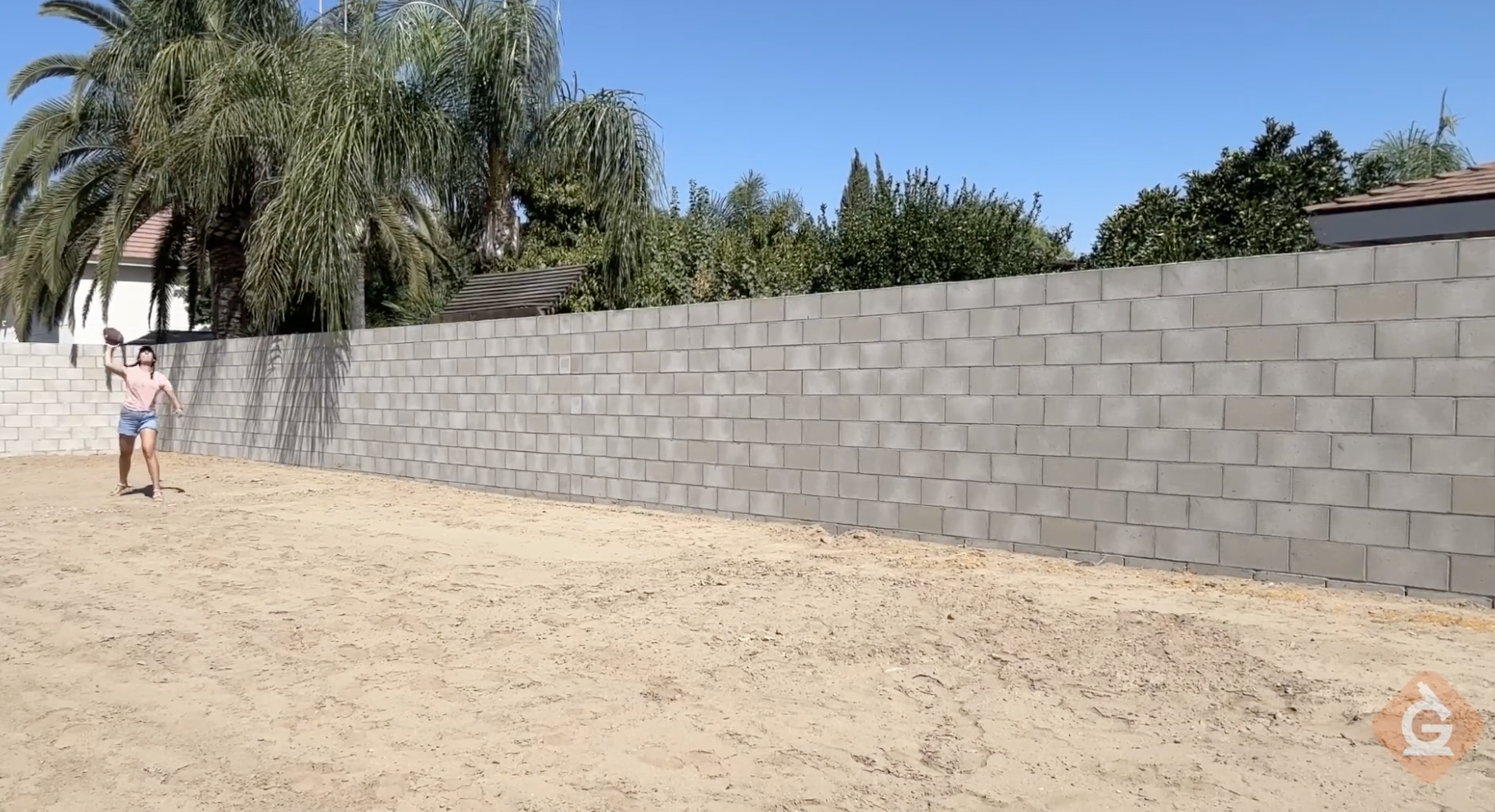
Set up a controlled experiment. Find an open outdoor space, pick a throwing line, and draw a data table with two columns: Type of Throw and Distance. Keep everything the same except your grip: same thrower, same football, and the same amount of force for each throw.
STEP 2

Before you start, make a prediction: you will throw the football three ways, with no spin, a wobbly spin, and a tight spiral. Which do you think will go the farthest, and why?
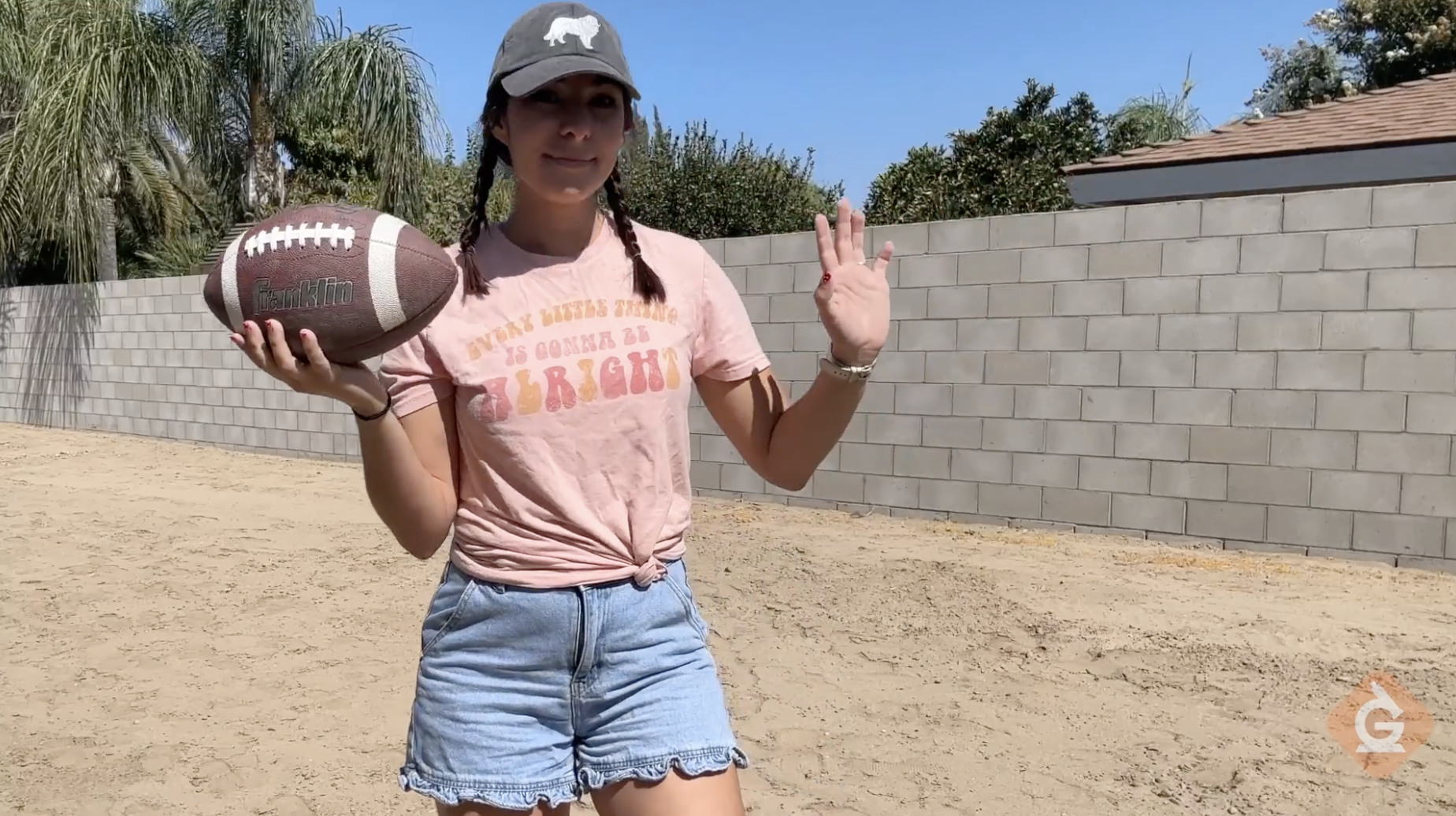
STEP 3

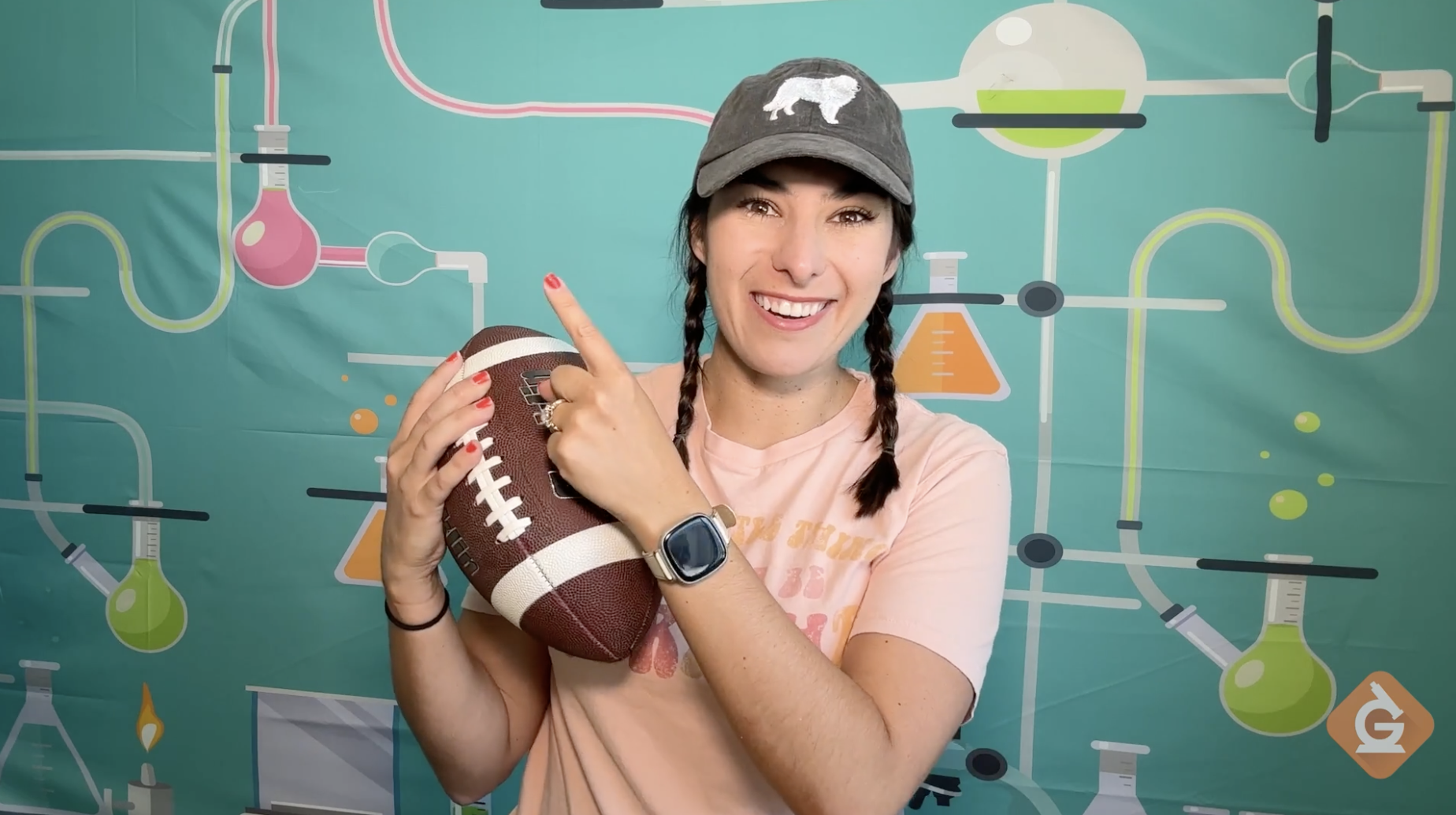
Throw 1, No spin. Hold the football toward the back of the ball along the underbelly, with no fingers on the laces. This makes it hard to create spin when you let go. Throw, then measure the distance and record it
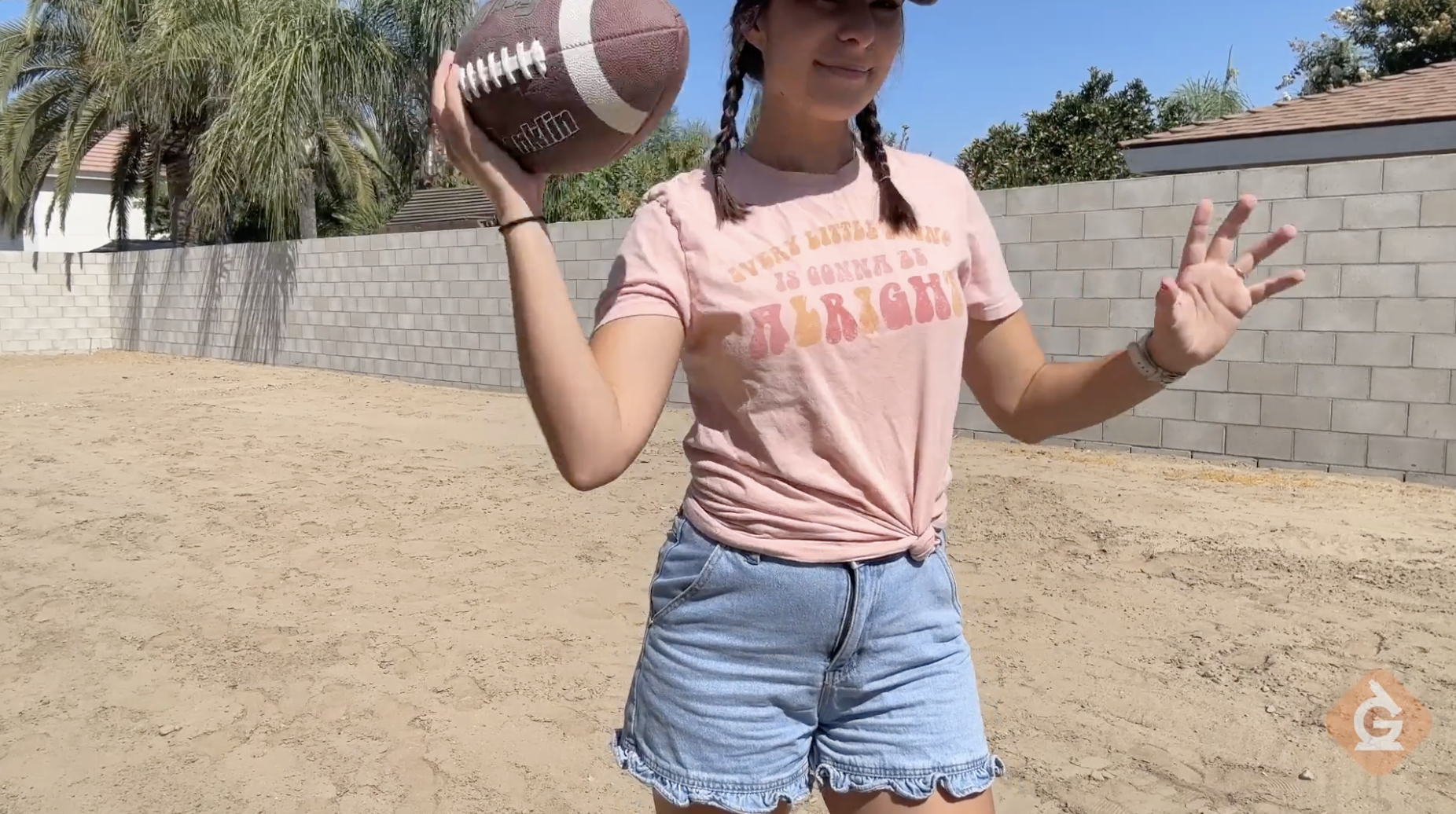
STEP 4

Throw 2, Wobbly spin. Place your fingers toward the front or back of the laces, using a little bit of the laces but not a true spiral grip. Throw, watch how the ball moves through the air, then measure and record the distance.
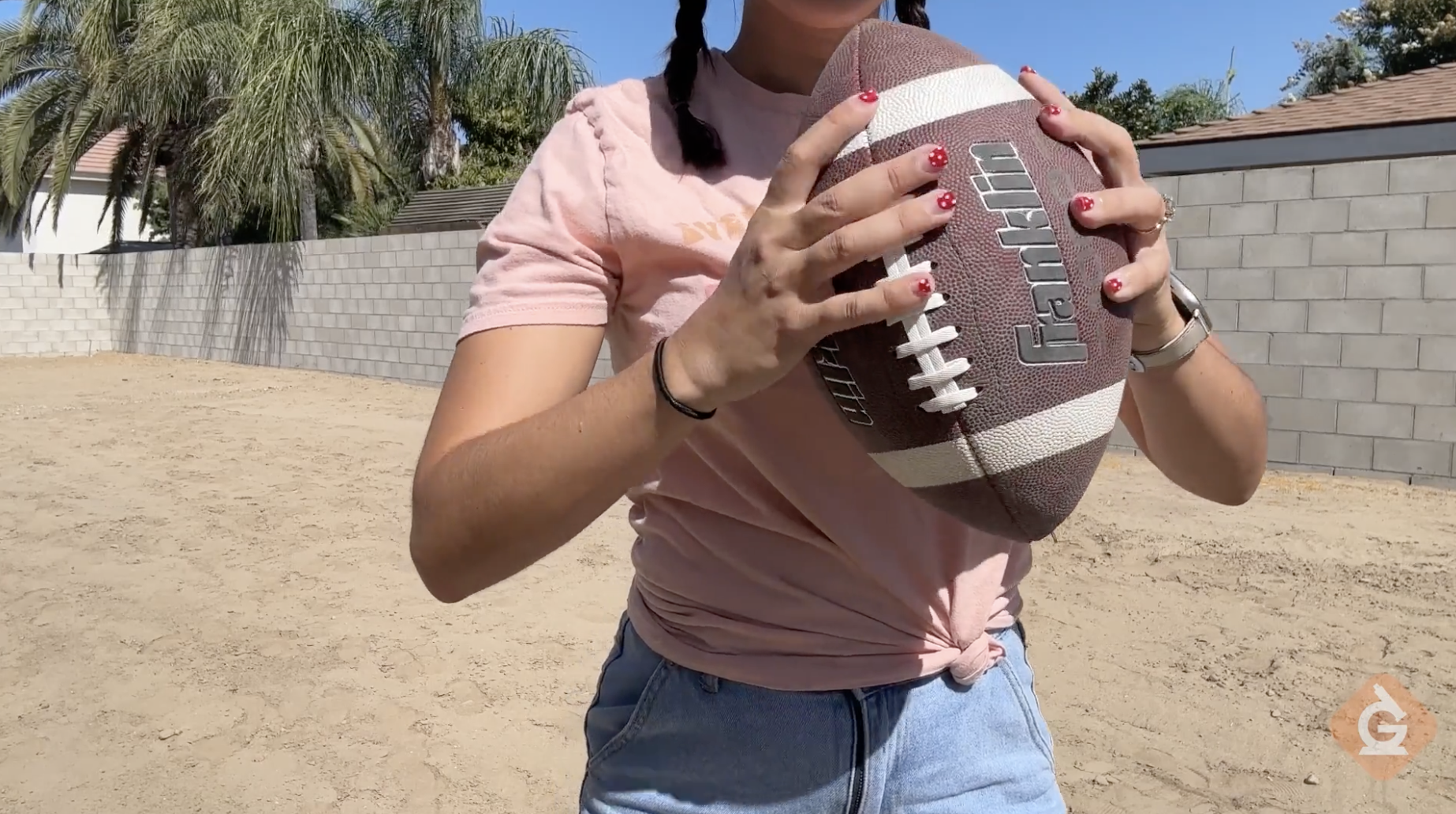
STEP 5

Throw 3, Tight spiral. Place your fingers on the laces and roll your fingers off the ball as you let go to make it spin. Throw, then measure and record the distance. (Hold the ball a little toward the back and skip the first couple of laces. Find the grip that works for your hands.)
STEP 6

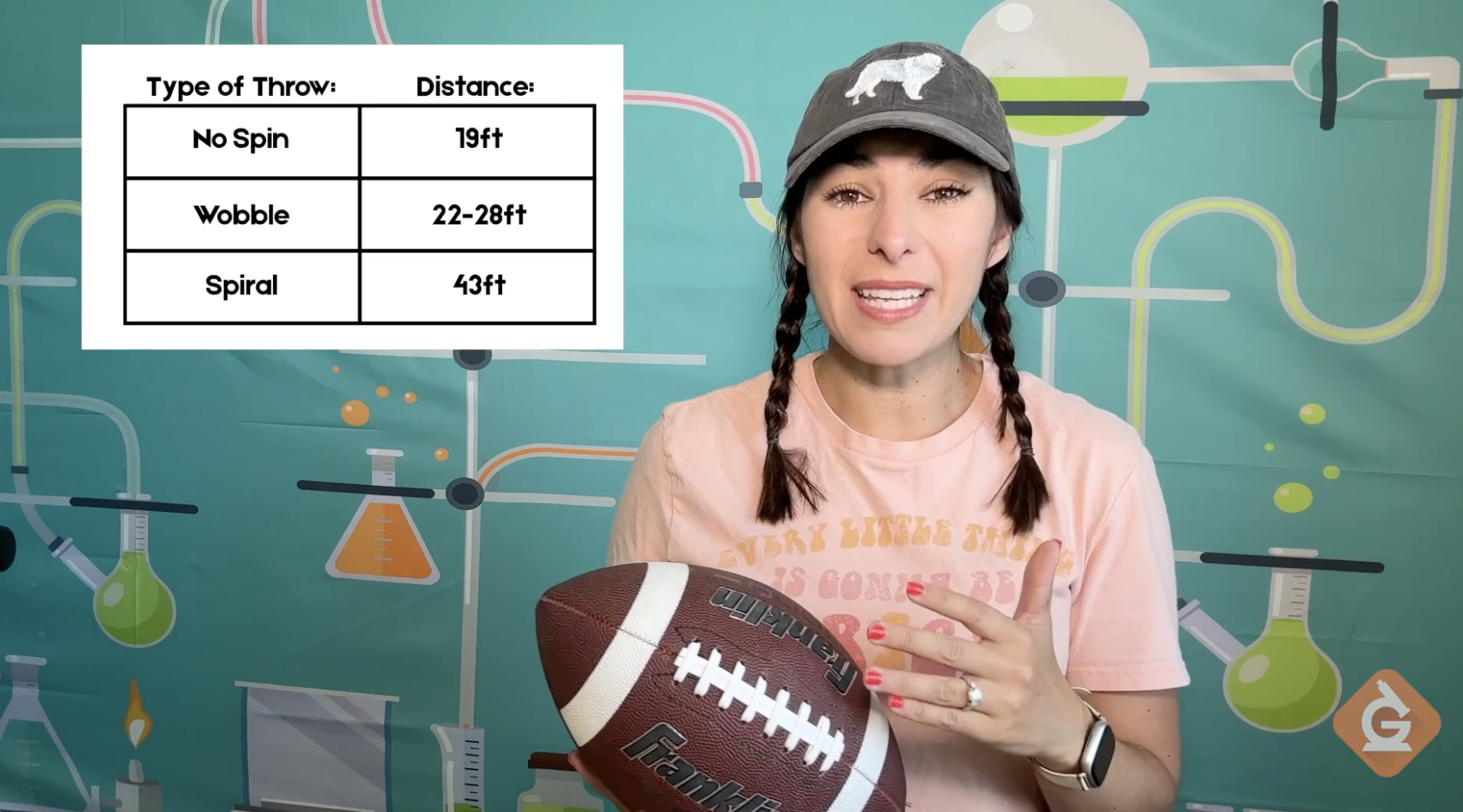
Compare your three distances. Observe: how did each football move through the air? Did it tip and turn, wobble, or fly straight? Which one went the farthest?
STEP 7

Scientists don’t stop after one try. Repeat all three throws for a second round to see how much your results change, then change only one variable at a time, like a different football size, to test
again.

How It Works

How you grip the football changes how it spins, and how it spins changes how it moves through the air. With no spin, a football isn’t stable. The air pushes on it from different directions, so it tips and turns instead of flying straight. With a wobbly spin, the ball rocks back and forth and catches more air. That increases air resistance, or drag, which slows the ball down, and it makes the throw inconsistent and harder to keep on its true path.

A tight spiral makes the biggest difference. Scientists call this gyroscopic stability, which is a fancy way of saying that spinning helps the football stay balanced. A spiraling football keeps its nose pointed forward, so it meets less air, creates less drag, and is less likely to be pushed off course by something like wind. That is why it traveled much farther than the other throws.

This is why quarterbacks work so hard to throw a tight spiral. The same science helps explain why other spinning objects, like a thrown frisbee or a kicked football, stay steady in flight. Every throw and kick tells a science story.

Try it yourself: Run the experiment again, but change only one variable at a time, like football size or how hard you throw. Predict how each change will affect the distance and stability before you test it.
X
Success
We’ve sent you an email with instructions how to reset your password.
Ok
x
Choose Your Free Trial Period
3 Days

3 days to access to all of our teaching resources for free.

Continue to Lessons
14 Days

Get 14 days free by inviting other teachers to try it too.

Share with Teachers
Get 14 Days Free
By inviting 4 other teachers to try it too.
4 required

*only school emails accepted.

Skip, I will use a 3 day free trial

Thank You!

Enjoy your free 14 days trial