

1%
Processing, please wait...
It was processed successfully!
Login Create Free Account
en | es

Football Grip Test STEM Activities

Autopause

Materials

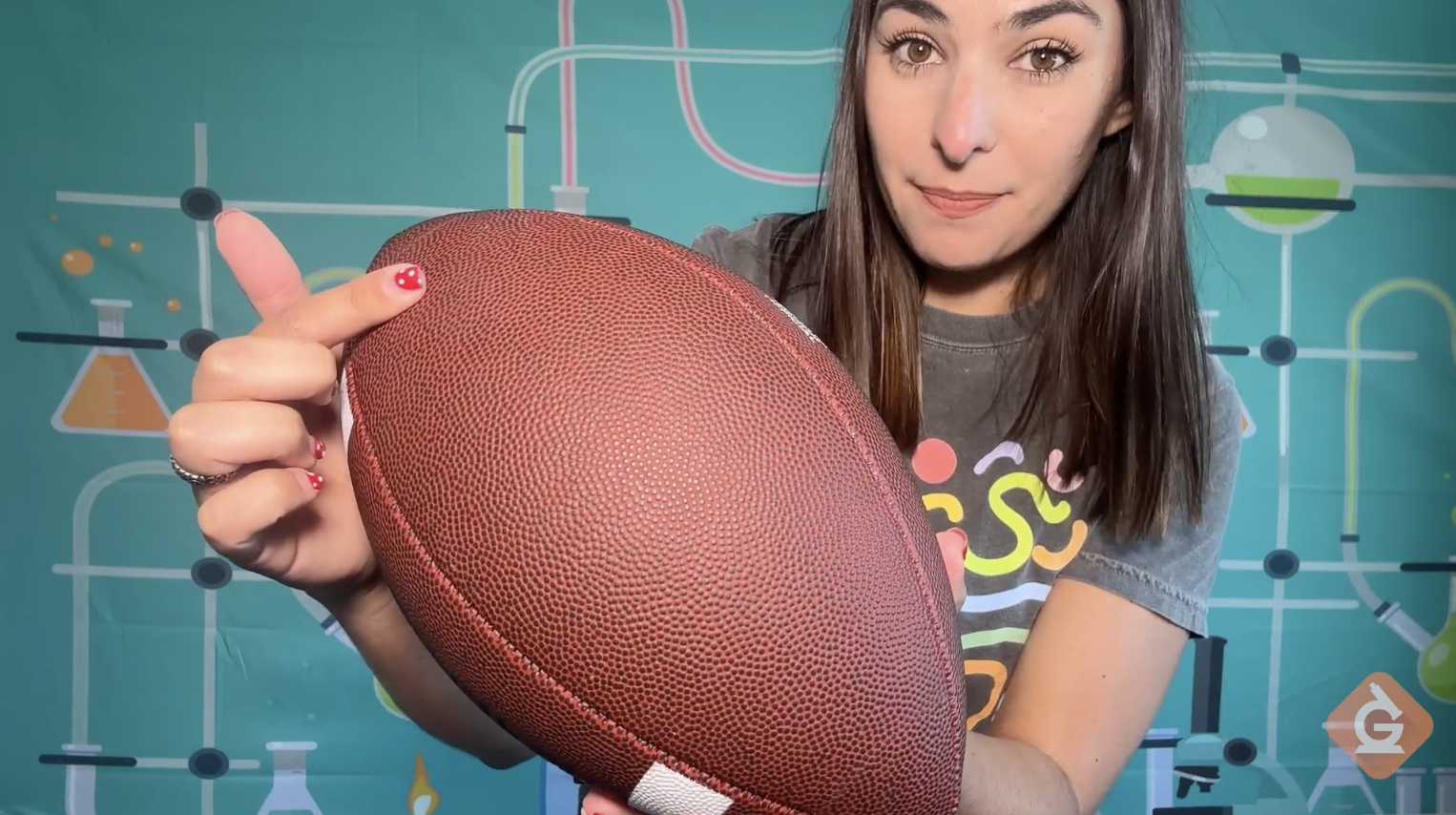
Football
Football
Water (in a spray bottle)
Soap or lotion
Soap or lotion
Chalk
Chalk
Timer or stopwatch
Timer or stopwatch
*Optional: football gloves

Instructions

STEP 1

Choose your test. Go solo and time how long you can hold the football, or grab a partner and
toss it back and forth, counting catches and drops. Pick a football that fits your hands and do the
test over grass or a soft surface.

STEP 2

Before you start, make a prediction: rank bare hands, wet hands, soapy or lotion hands, and
chalky hands from best grip to worst grip. Which one do you think will hold on the longest?
STEP 3

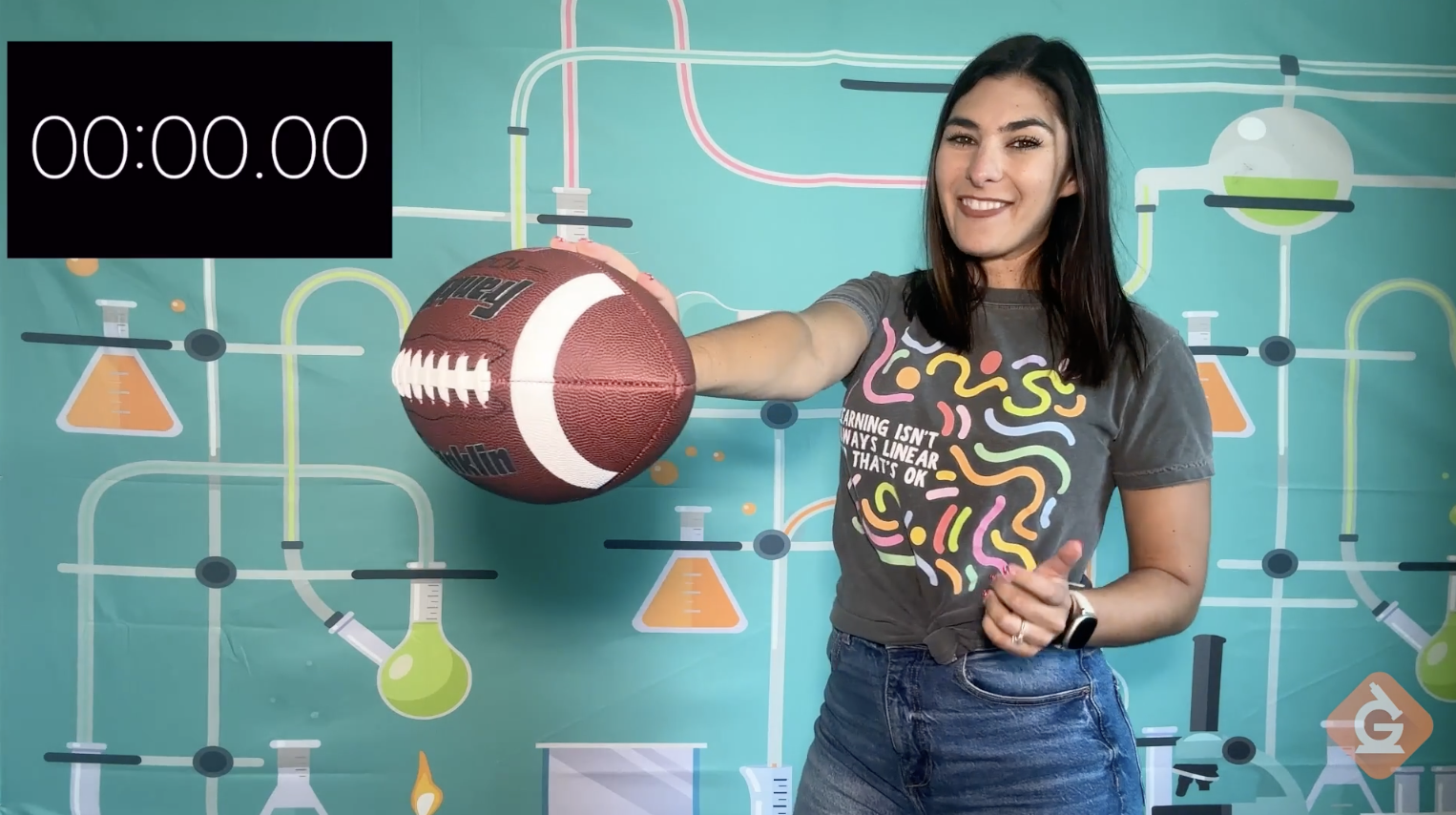
Round 1, Bare hands (baseline). Hold the football at arm’s length by gripping the pebbled
leather, with the laces facing forward and your fingers off the laces. Start the timer and hold until
the ball drops. Record the time. Hold the ball the exact same way in every round.
STEP 4

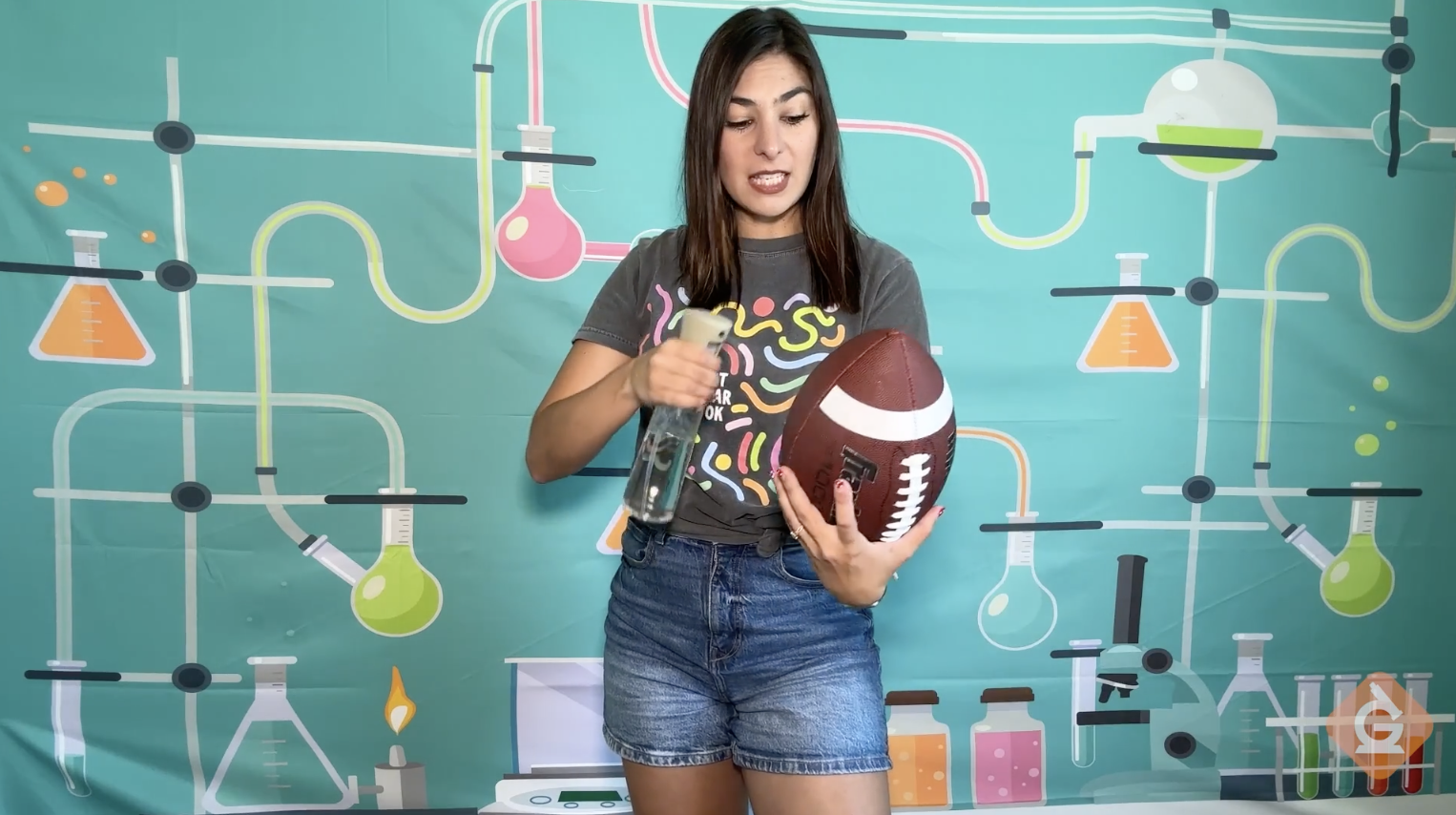
Round 2, Rainy day game. Dry the ball. Spritz your hand with water, then grip and time again.
Record the time.
STEP 5

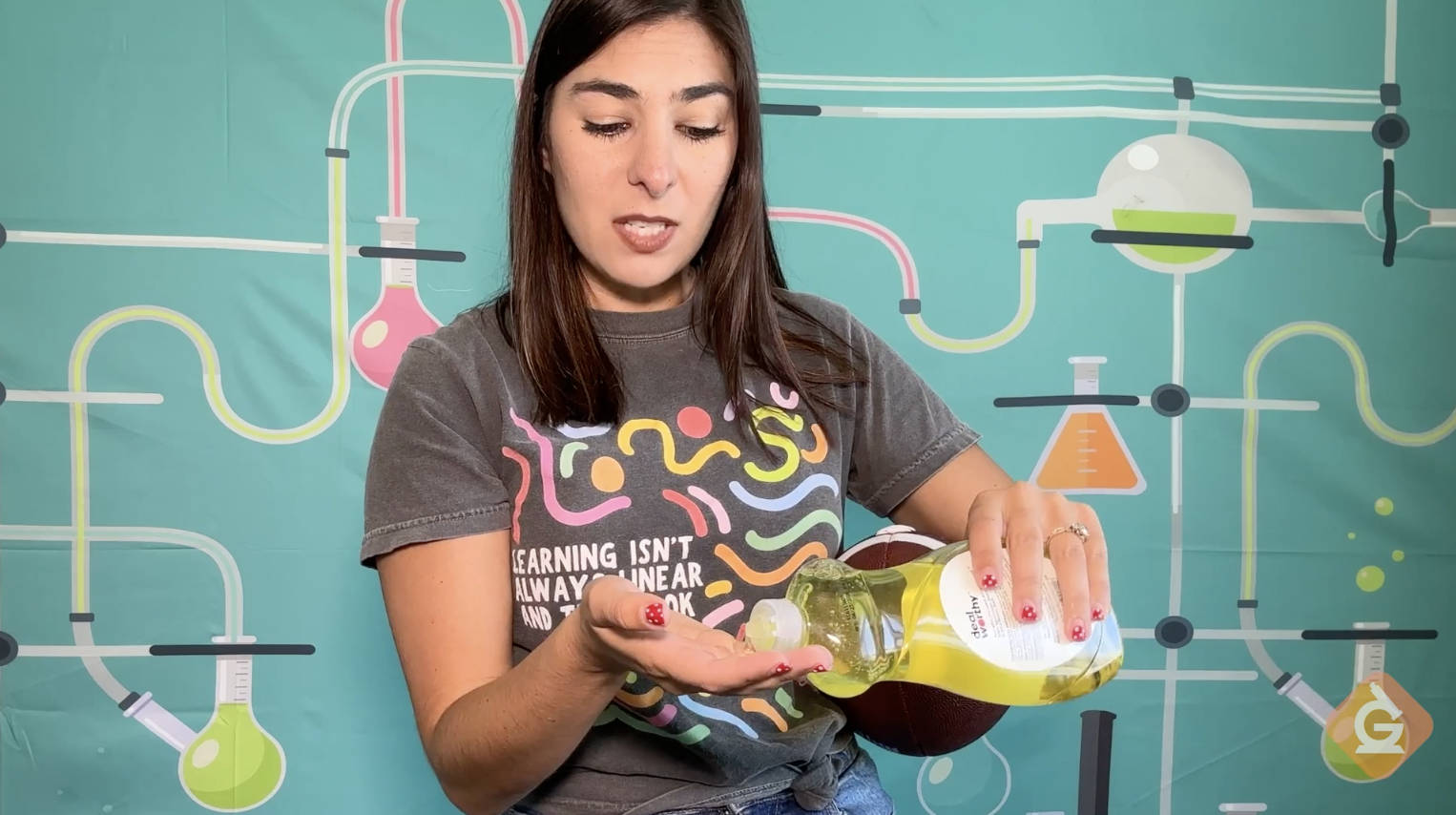
Round 3, Sweaty palms. Dry the ball and your hands. Rub a small dab of soap or lotion on
your palm and fingers to act like sweat. Grip and time again. Record the time.
STEP 6

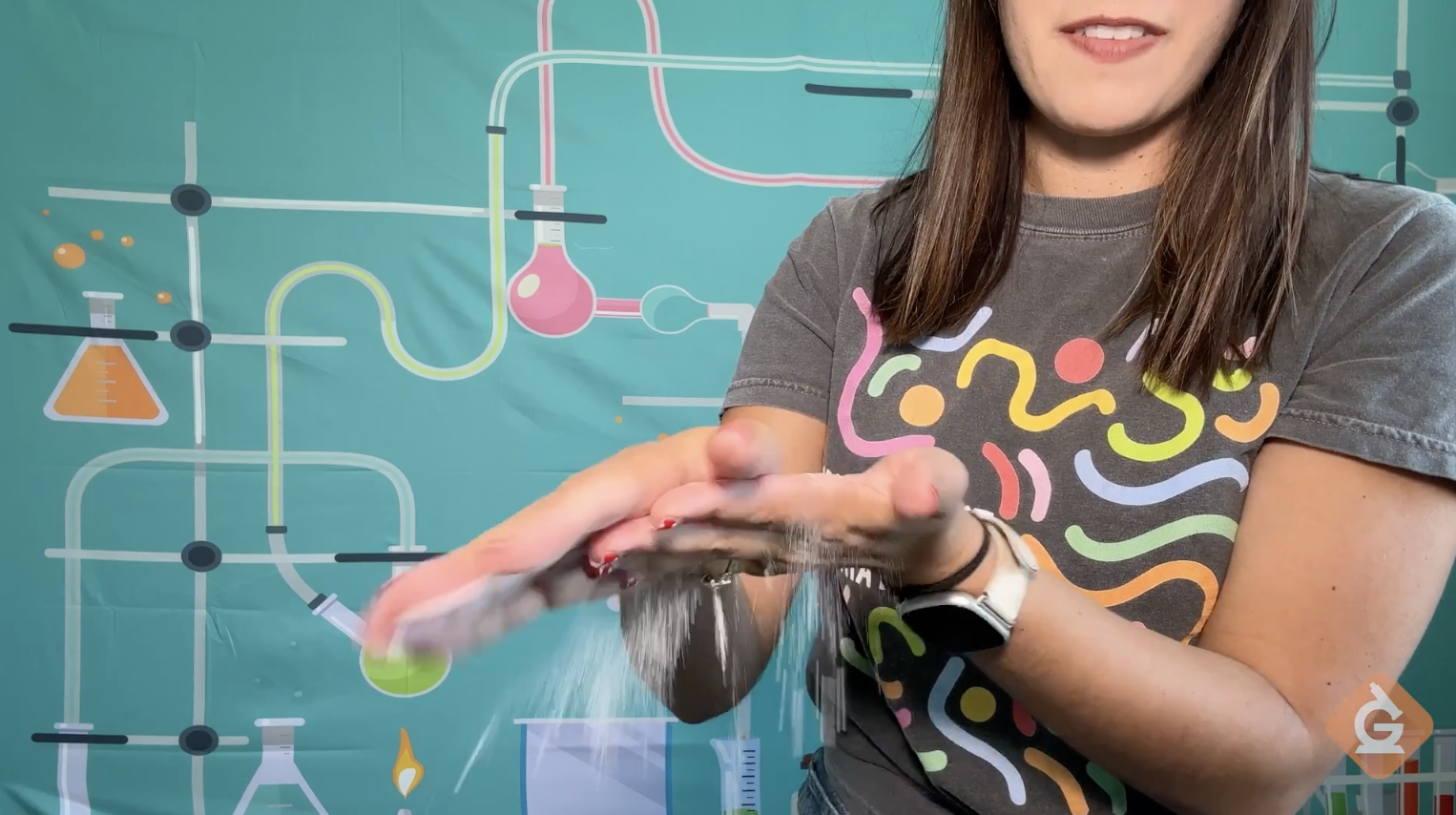
Round 4, Chalk. Dry the ball and rub chalk on your hands. Grip and time again. Record the
time. Observe: how do your hand and forearm muscles feel compared to the other rounds?

STEP 7

Compare your four times. Scientists don’t stop after one try, so repeat a round and change only
one variable at a time, such as grip on the laces or football gloves, and see how the results
change

How It Works

Friction is the resistance created when two surfaces press against each other. High friction means a sticky grip, and low friction means a fumble. A football is covered in pebbled leather, a surface with tiny bumps that give your fingers something to grab. Your fingerprints are tiny ridges that also create friction, so when the two surfaces meet, they lock together. That’s why bare hands made a solid baseline grip.

Water and sweat change the game. Water creates a liquid barrier between your skin and the pebbled leather, which lowers friction, so your hand and forearm muscles have to work much harder to hold on. Sweat is not just water. It also releases oils from your skin, and oils make surfaces slippery. Soap or lotion acts like sweat, covering your fingerprints so they can’t dig into the leather. With less friction, the ball slides away fast.

Chalk fixes the problem. Chalk is magnesium carbonate, which absorbs moisture and dries up sweat. Once your hands are dry, the chalk leaves a rough, gritty layer that hooks into the grooves of the pebbled leather. That increases friction, so you can hold on longer with less muscle fatigue. This is why gymnasts, weightlifters, rock climbers, and football players use chalk. Many players also wear grip gloves, which are designed for even more friction.

Try it yourself: Run the experiment again, but change only one variable at a time, like gripping the laces, wearing football gloves, or using a different football size. Predict how each change will affect your grip before you test it.
X
Success
We’ve sent you an email with instructions how to reset your password.
Ok
x
Choose Your Free Trial Period
3 Days

3 days to access to all of our teaching resources for free.

Continue to Lessons
14 Days

Get 14 days free by inviting other teachers to try it too.

Share with Teachers
Get 14 Days Free
By inviting 4 other teachers to try it too.
4 required

*only school emails accepted.

Skip, I will use a 3 day free trial

Thank You!

Enjoy your free 14 days trial