


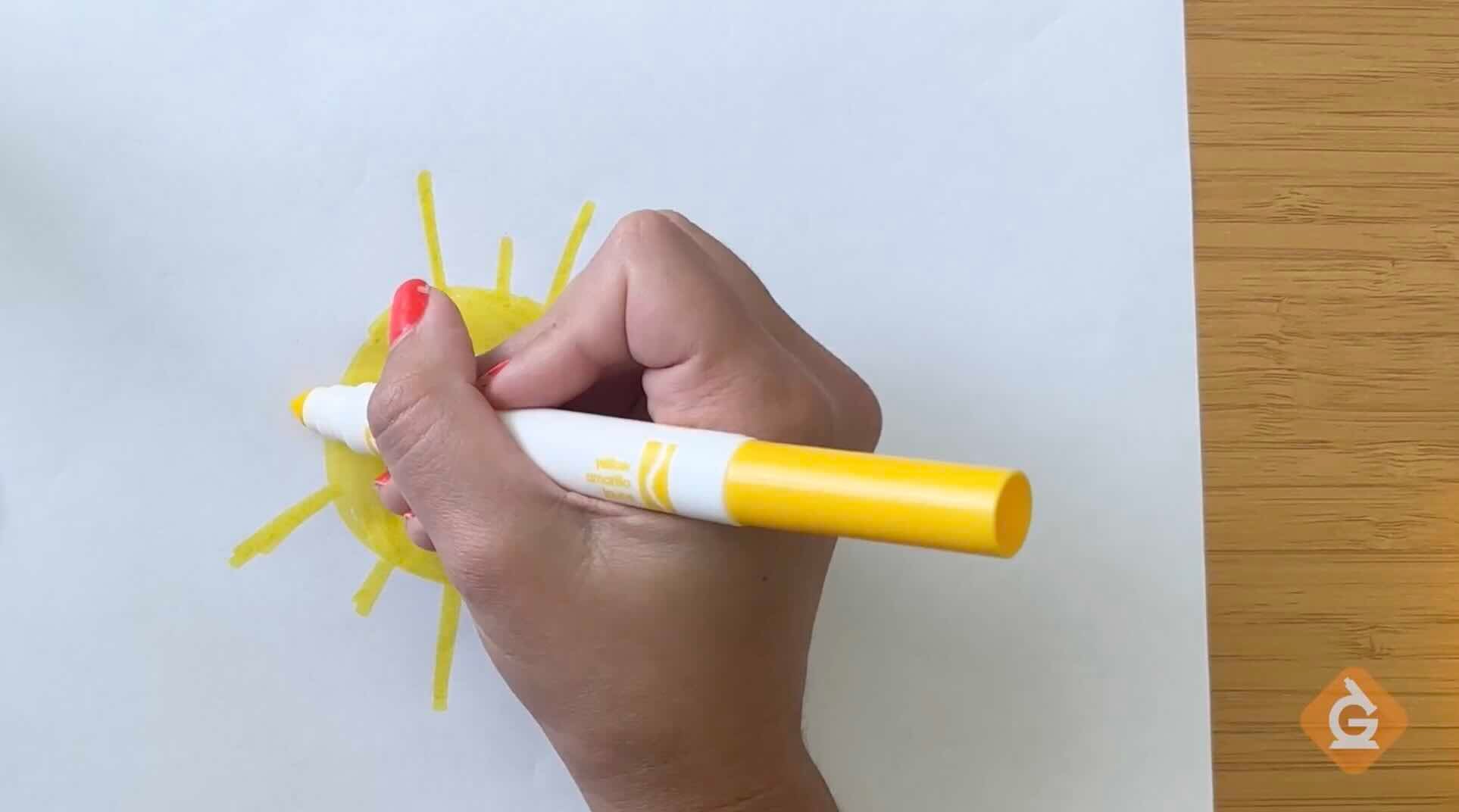
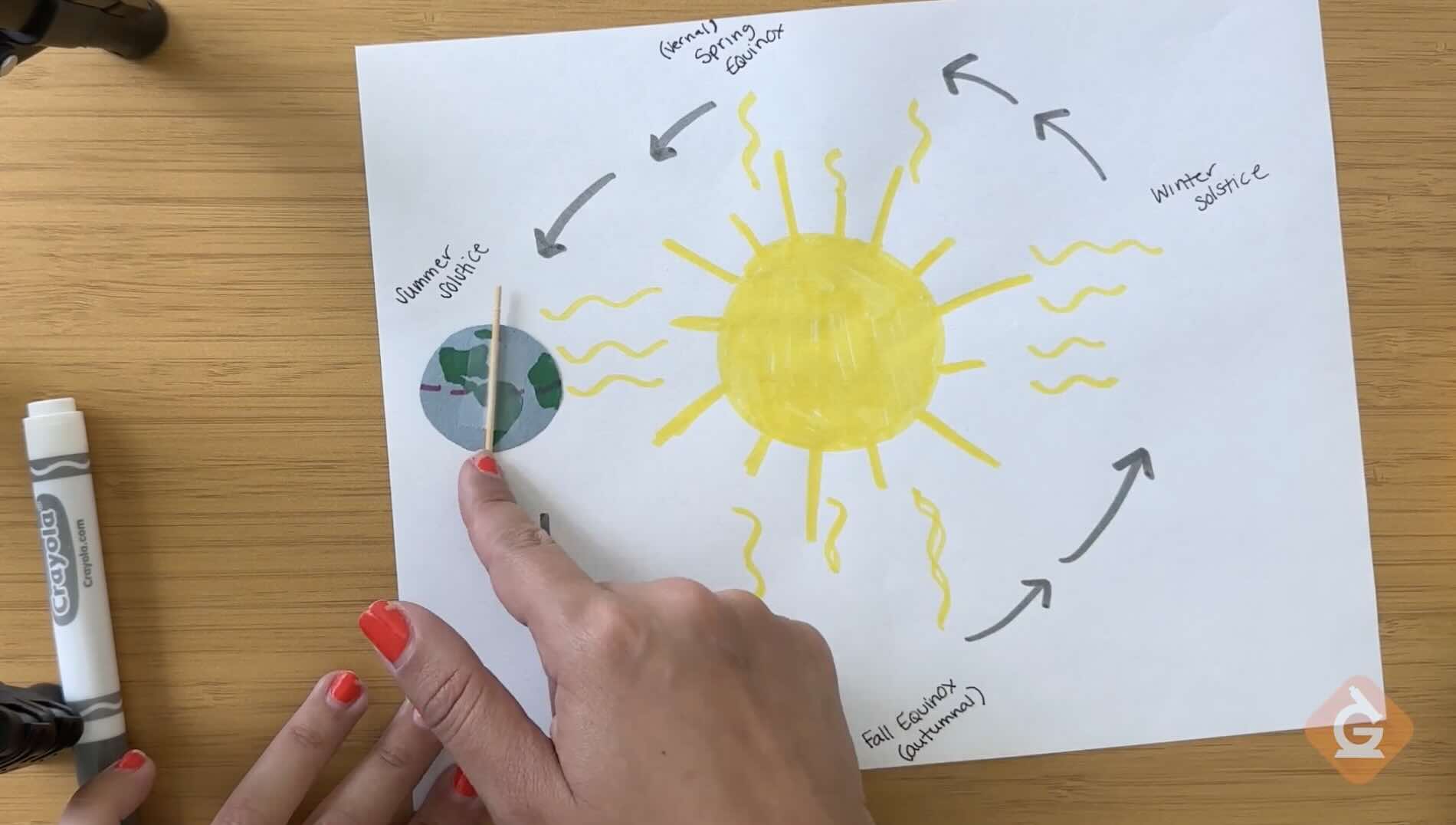
On a blank sheet of paper, draw a sun in the middle. Keep it on the smaller side so there’s room to go around the outside of it (in real life the sun is massive compared to Earth, but on this page we need the space).
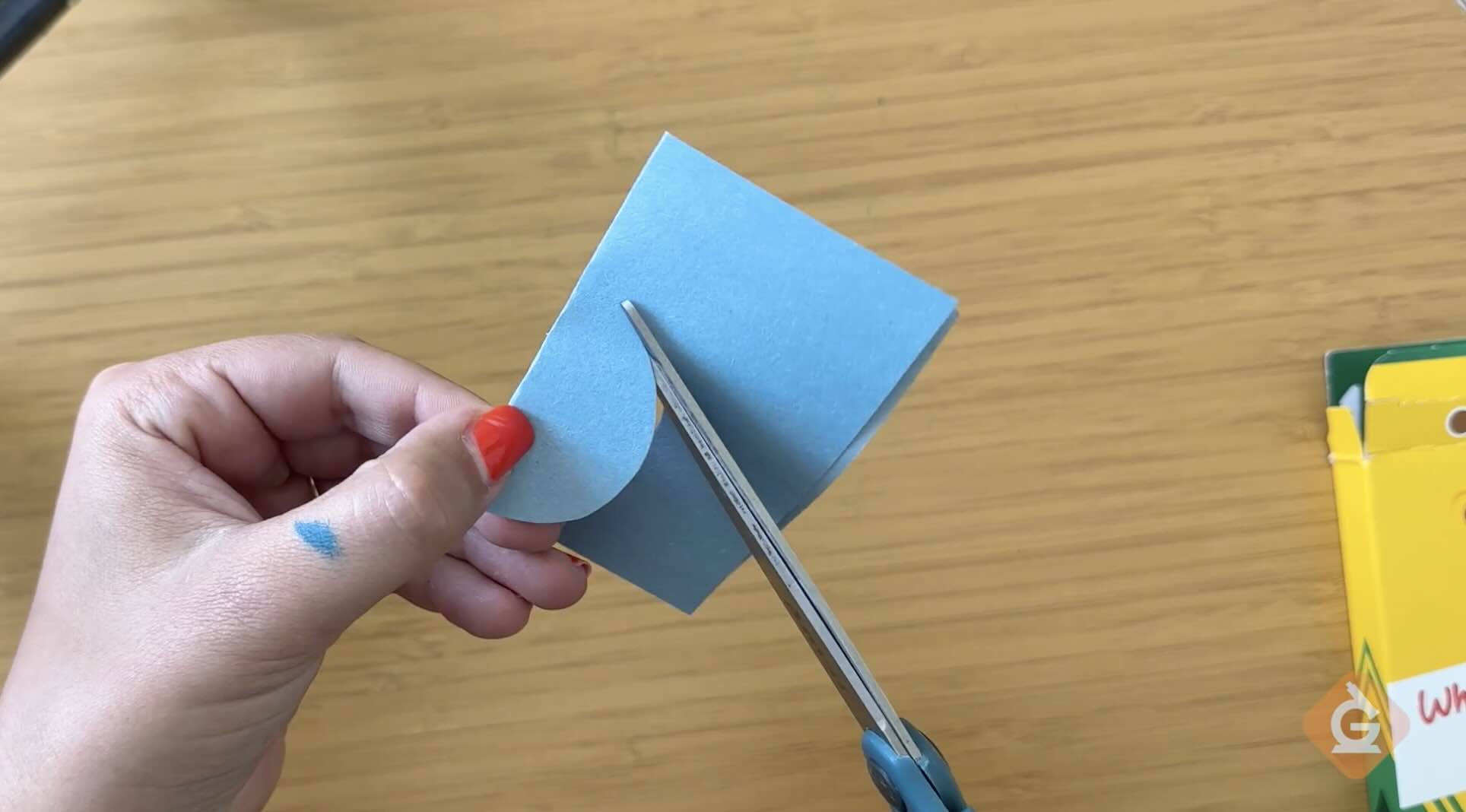
Grab your blue paper (or plain paper colored blue) and fold it in half to help you cut a circle, this is Earth. It doesn’t need to be perfect.
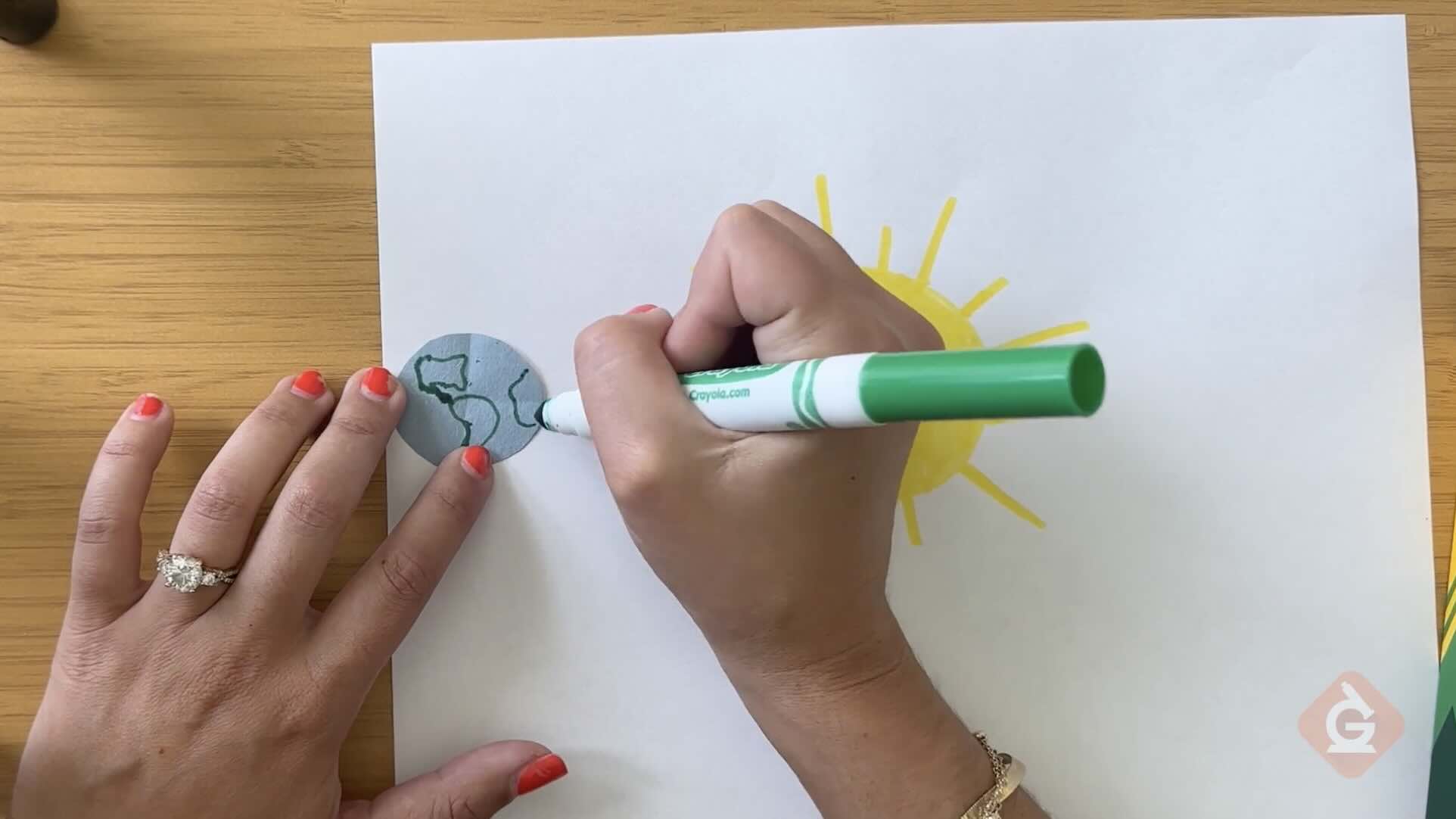
Fold your Earth circle in half, then in half again. When you unfold it, you should see four quadrants. Use those fold lines to sketch in continents (for example, Africa on one side, North and South America on the other) and color in the land and ocean.
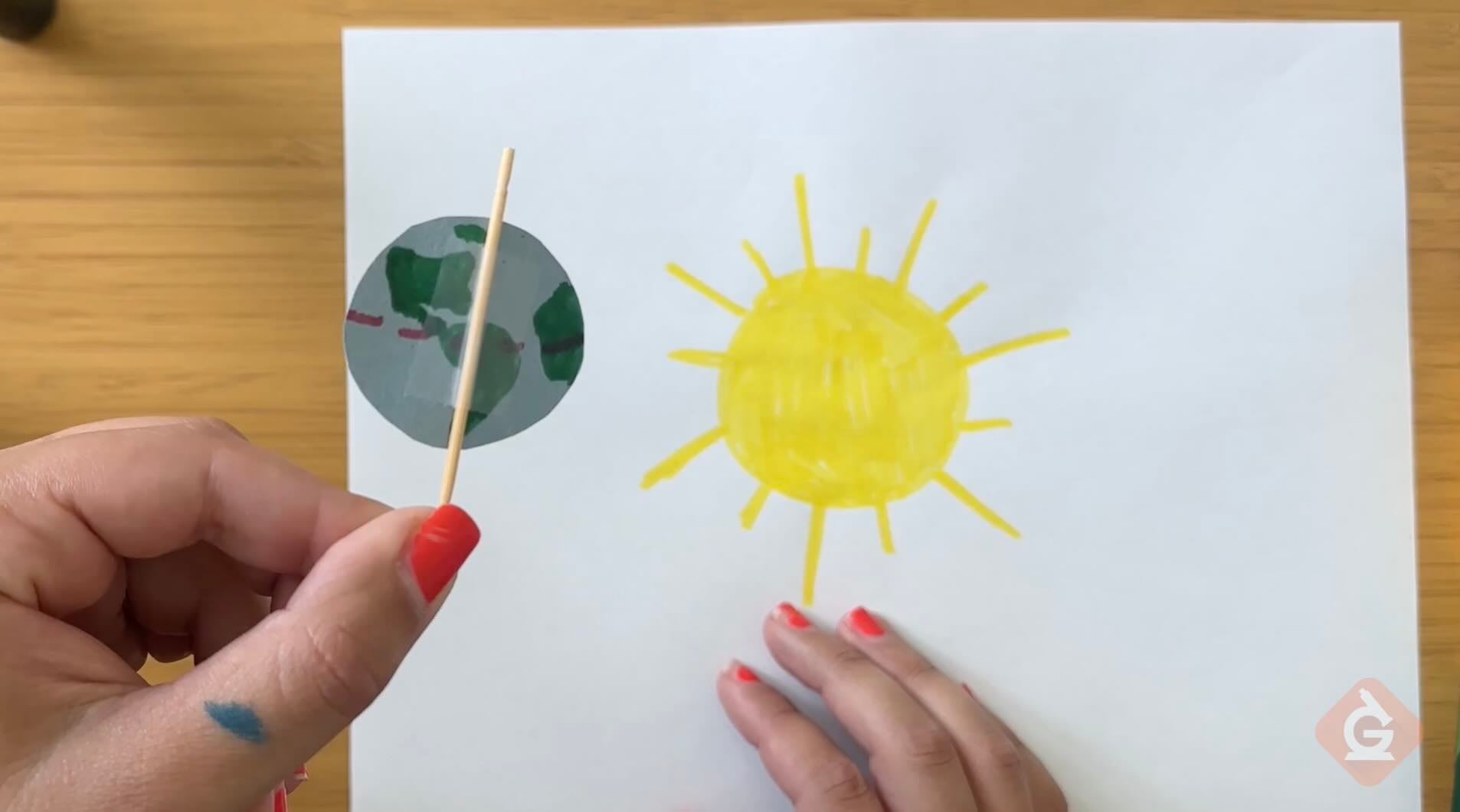
Push a toothpick along the vertical fold line and tape it in place. This toothpick is Earth’s axis.
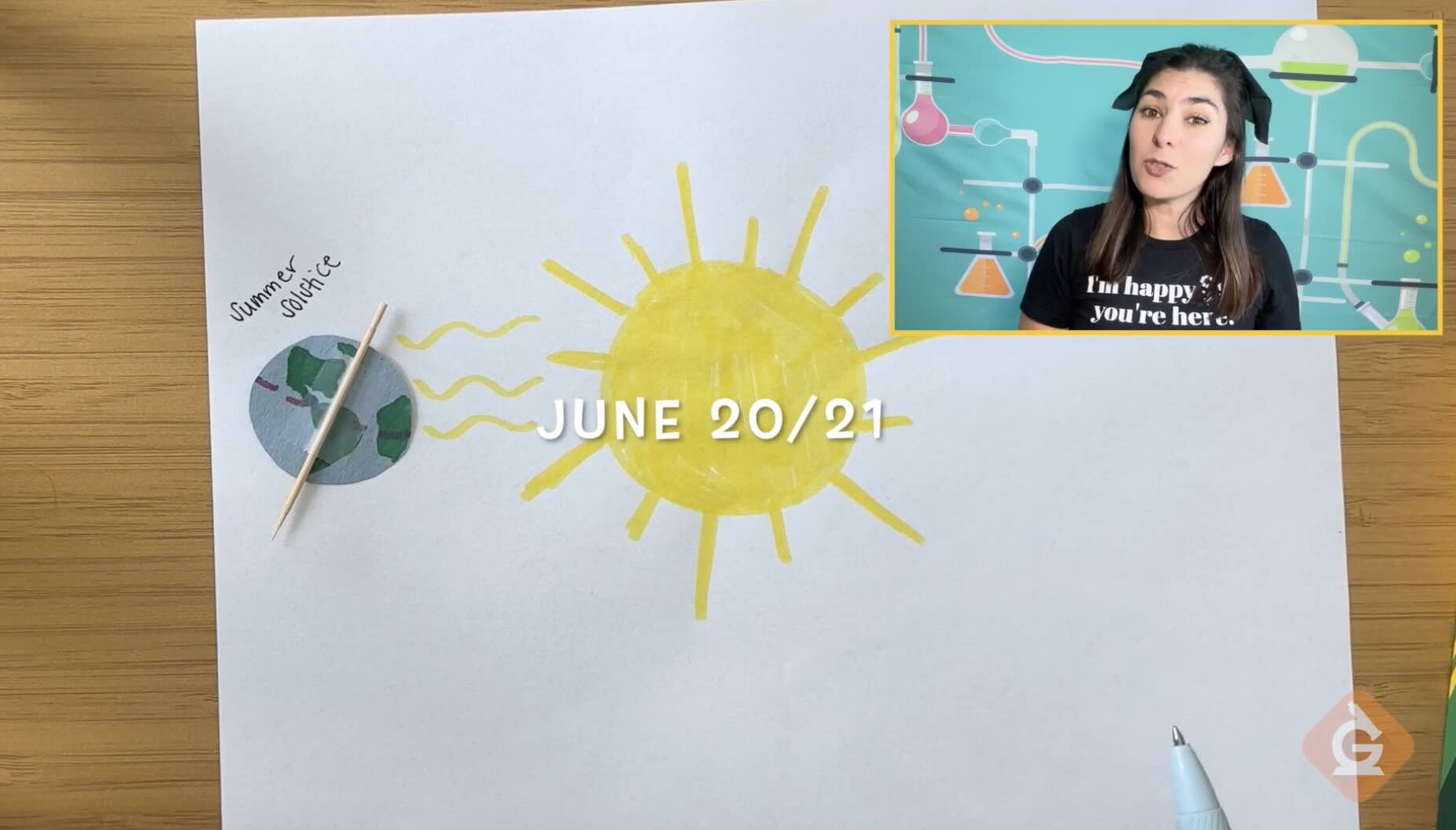
Place your Earth next to the sun with the axis tilted toward the sun. This position represents the summer solstice (around June 20/21), when the North Pole is tilted closest to the sun, giving the Northern Hemisphere its longest day and most direct sunlight of the year.
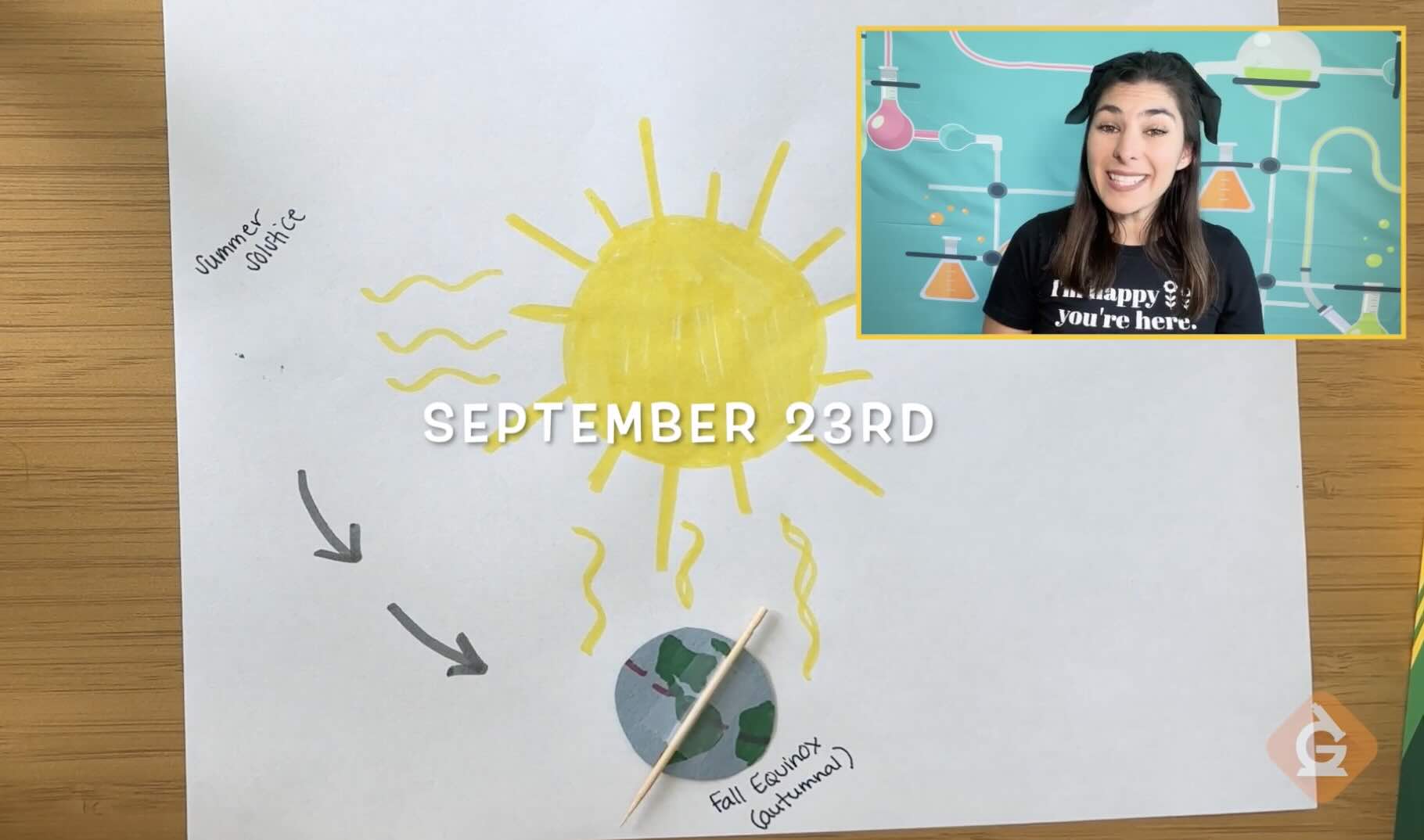
Move Earth along its orbit to the next position, keeping the axis tilted the same direction in space (don’t rotate it), so now it’s tilted neither toward nor away from the sun. This is the fall equinox, also called the autumnal equinox, around September 23. Both hemispheres get roughly equal sunlight, so most places on Earth get close to 12 hours of daylight and 12 hours of night.
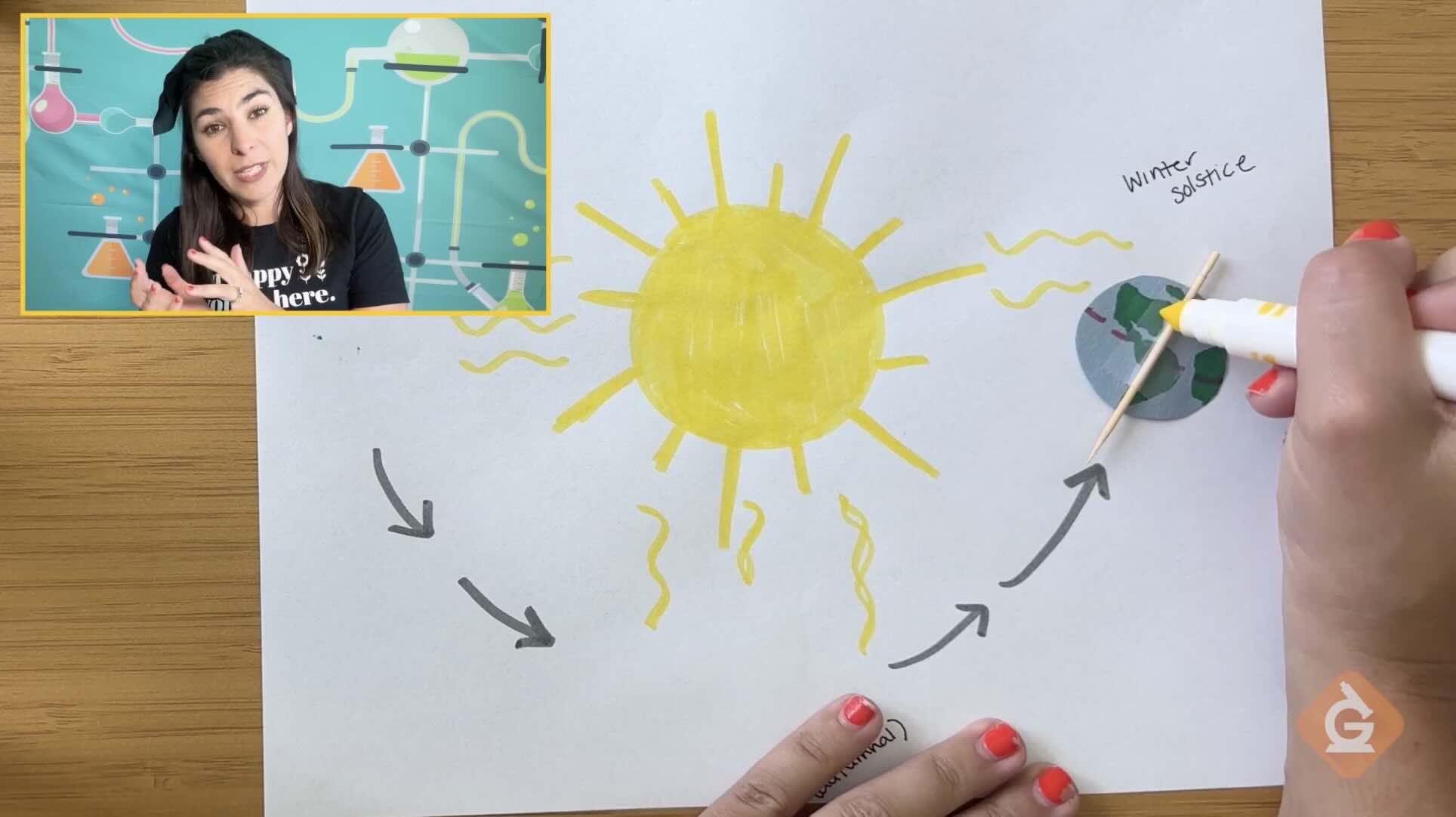
Continue Earth around its orbit to the next position. The axis, still tilted the same way, now points the Northern Hemisphere away from the sun. This is the winter solstice (around December 20/21), the shortest day of the year in the Northern Hemisphere, since sunlight and heat have to travel farther.
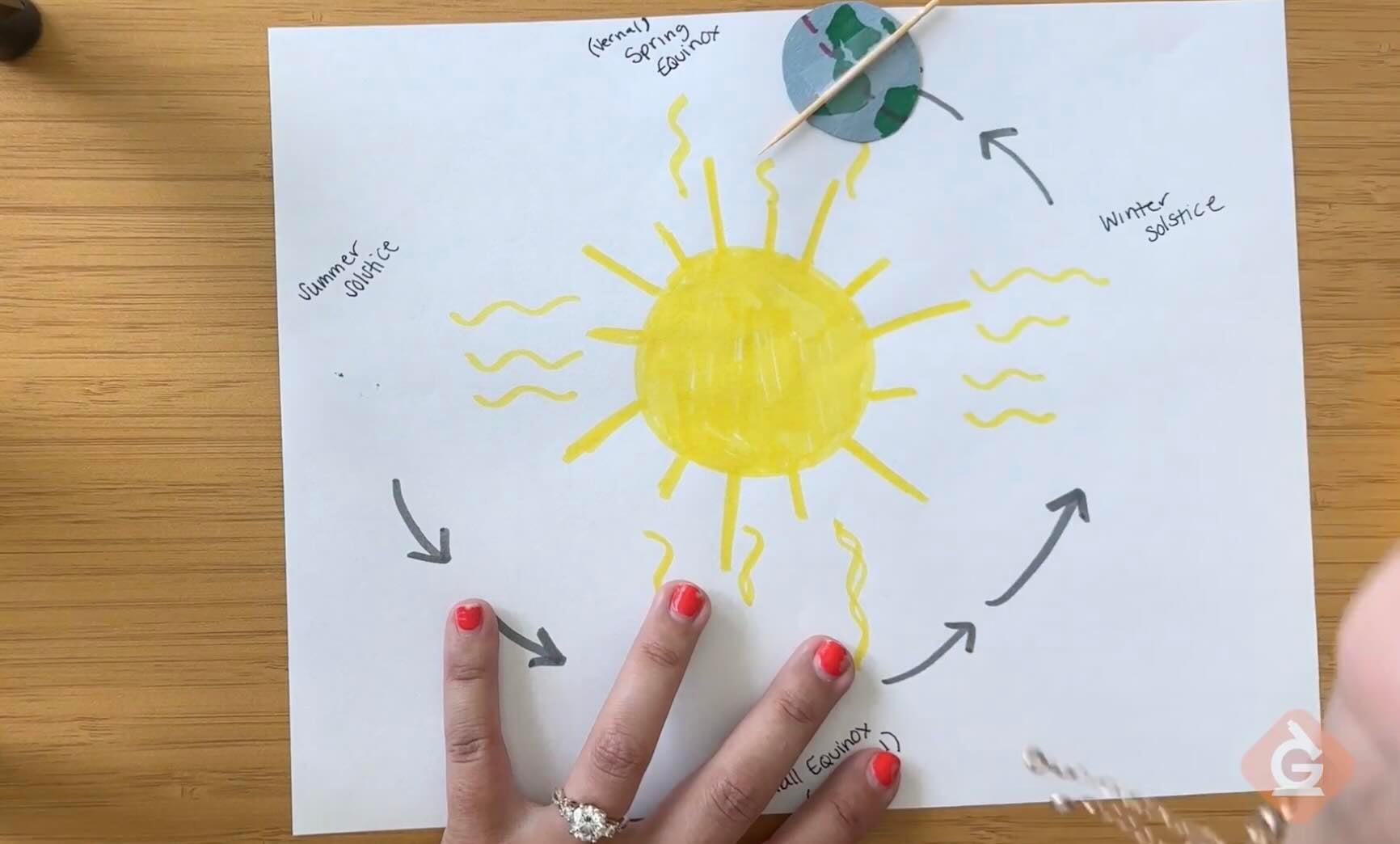
Finish the loop by moving Earth to the last position. The axis is tilted neither toward nor away from the sun again, this is the spring (vernal) equinox, around March 20/21, marking equal day and night and the start of spring.
Keep going, the cycle repeats every year as Earth continues its orbit around the sun.


Skip, I will use a 3 day free trial
Enjoy your free 14 days trial



 GENERATION GENIUS