


1%
Processing, please wait...
It was processed successfully!
Login Create Free Account
en | es

Classroom Balloon Rocket Race

Autopause

Materials

1 Balloon per Rocket
1 Straw per Rocket
1 Straw per Rocket
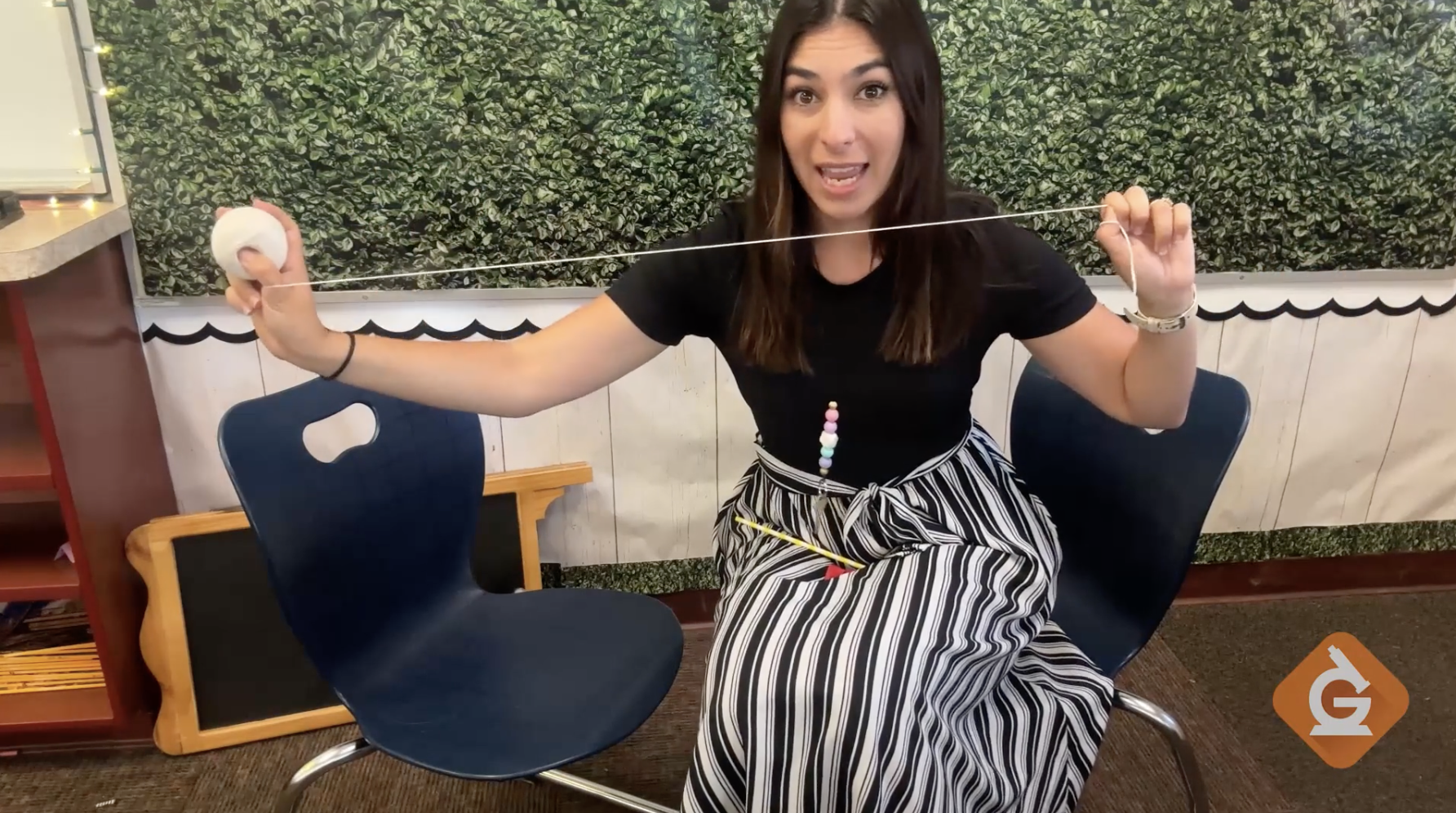
10-15 ft. String or Yarn
Two Chairs
Two Chairs
A few pieces of Tape

Instructions

STEP 1
0:17

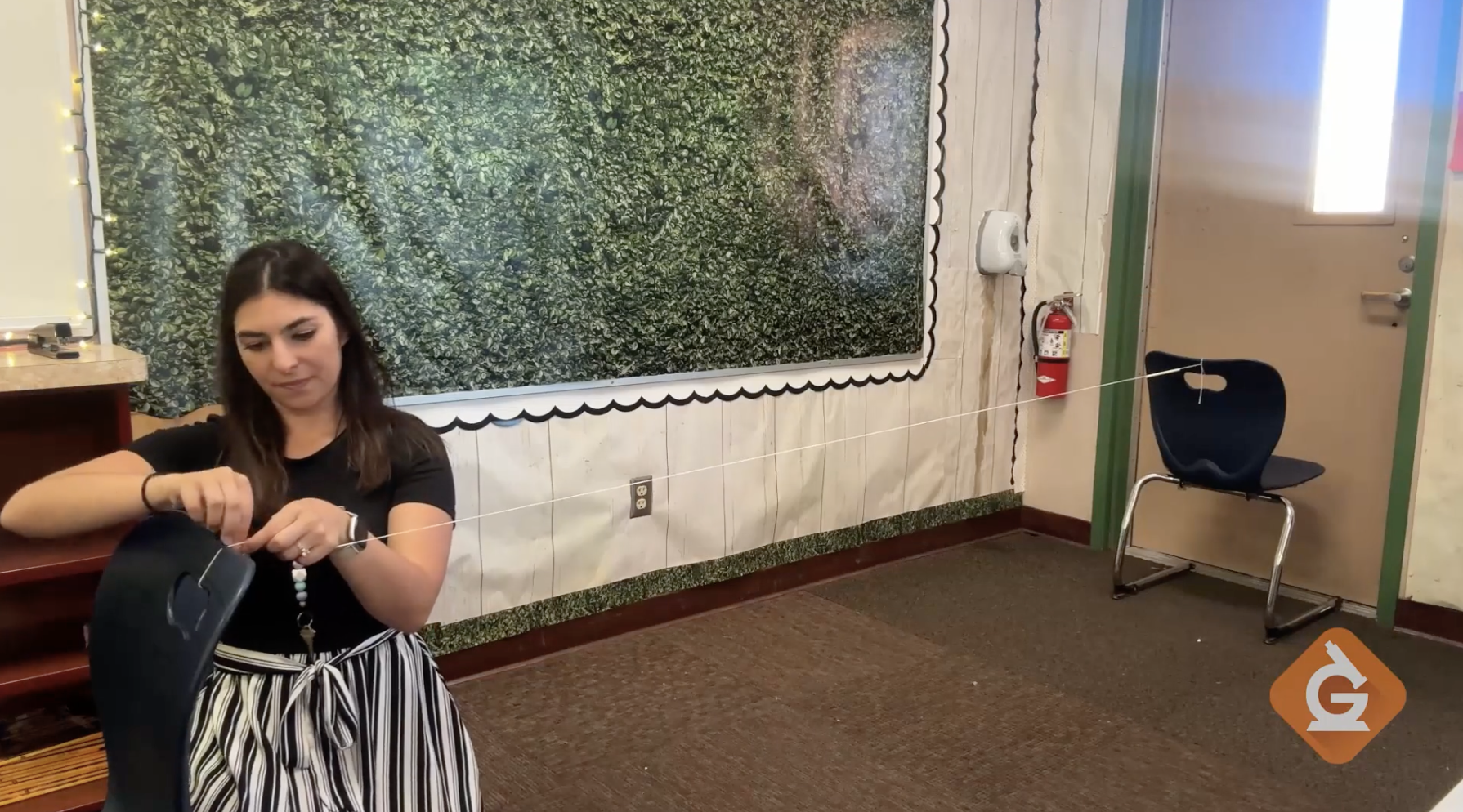
Set up your launch track. Place two chairs about 10–15 feet apart. Tie one end of your string to the back of one chair — the tighter and straighter the line, the smoother your rocket will fly.
STEP 2
0:30

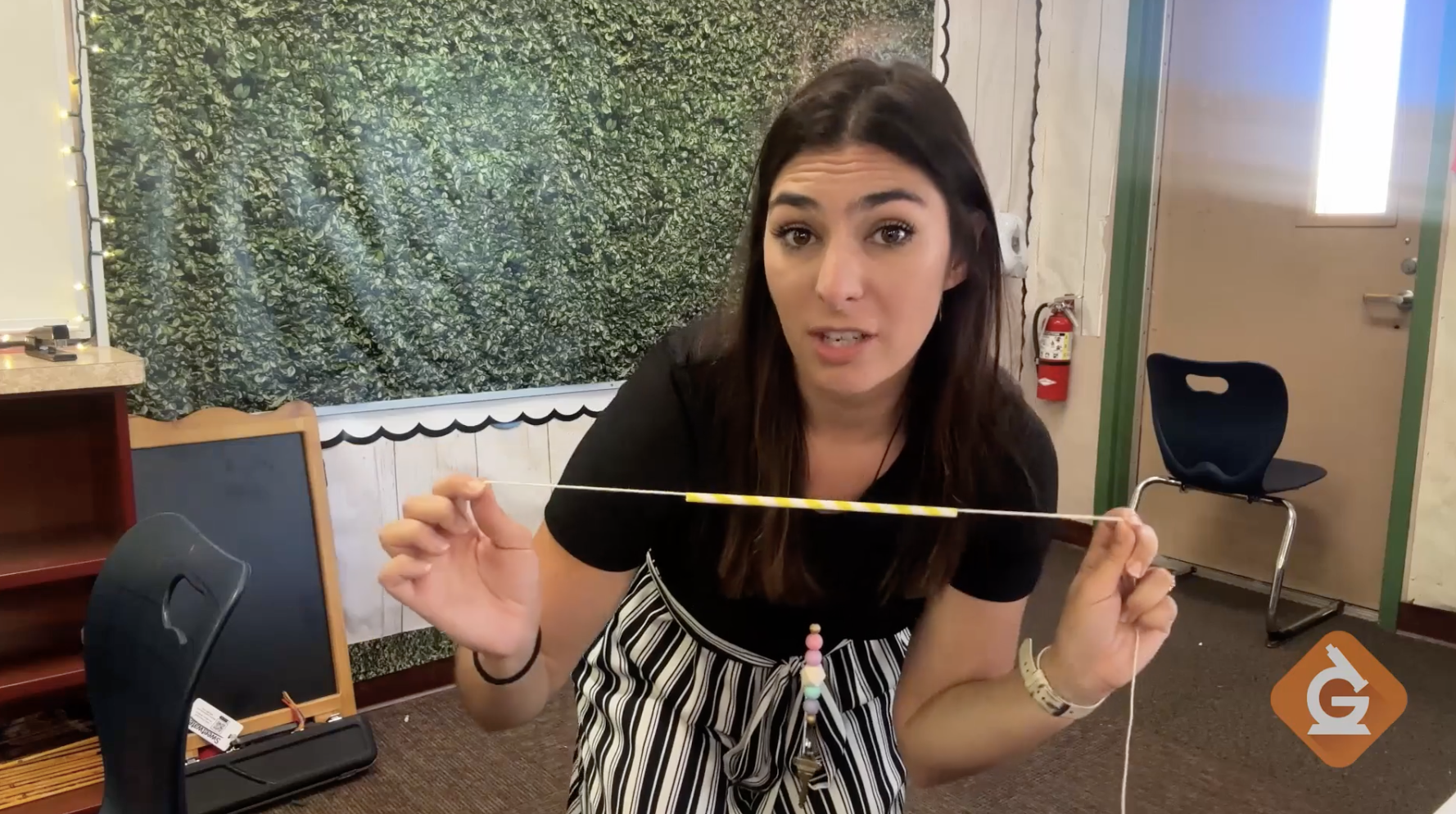
Thread the straw onto the string. Before tying off the second end, slide your straw along the string so it can travel freely from one end to the other.
STEP 3
0:49

Tie off the other end. Pull the string taut and tie it securely to the second chair. A tight, level line gives your balloon rocket the best run.
STEP 4
0:53

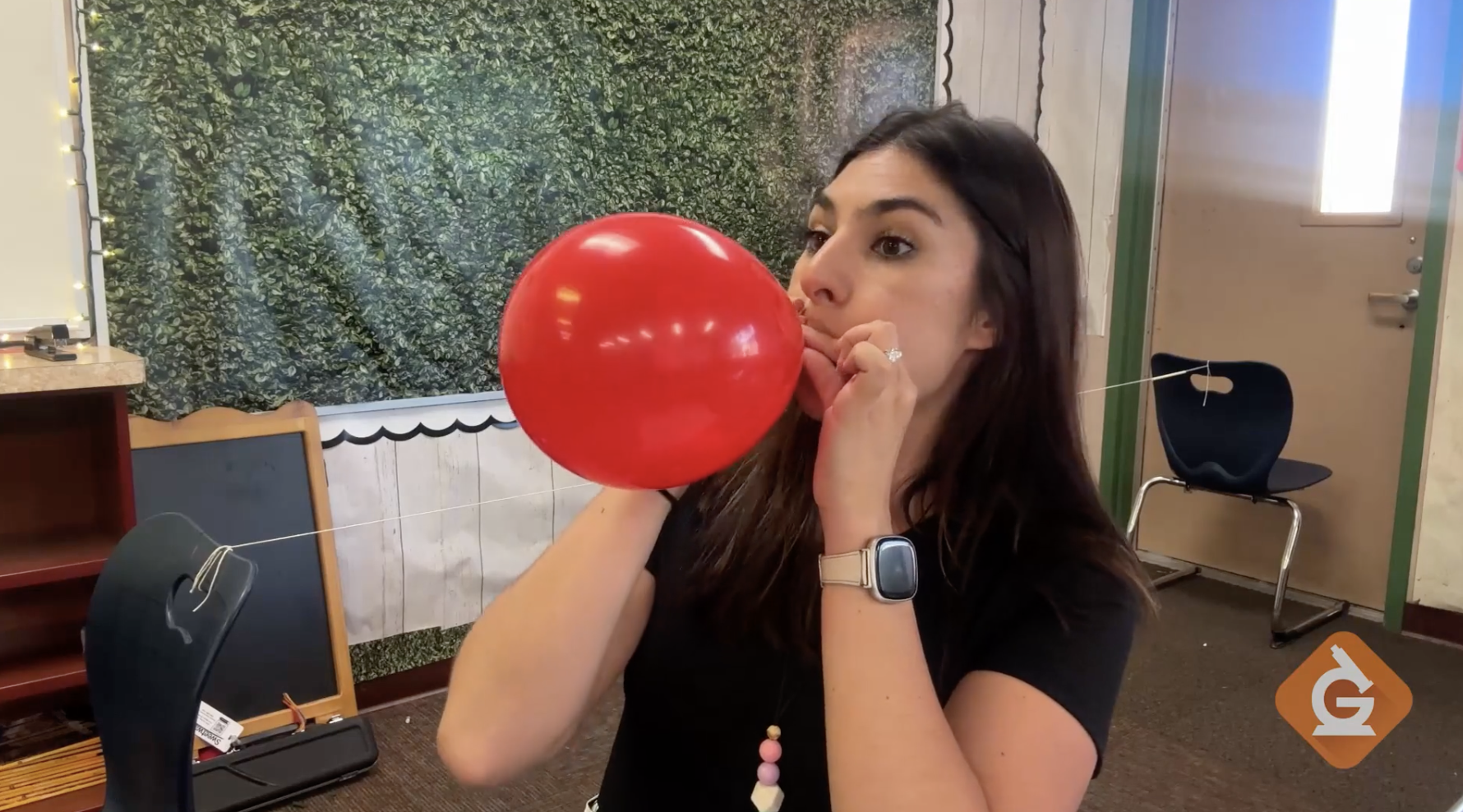
Blow up the balloon — but don’t tie it. Inflate your balloon fully, then pinch the end shut with your fingers to keep the air inside. This is your stored potential energy — the balloon is ready to go, it just hasn’t launched yet.
STEP 5
1:33

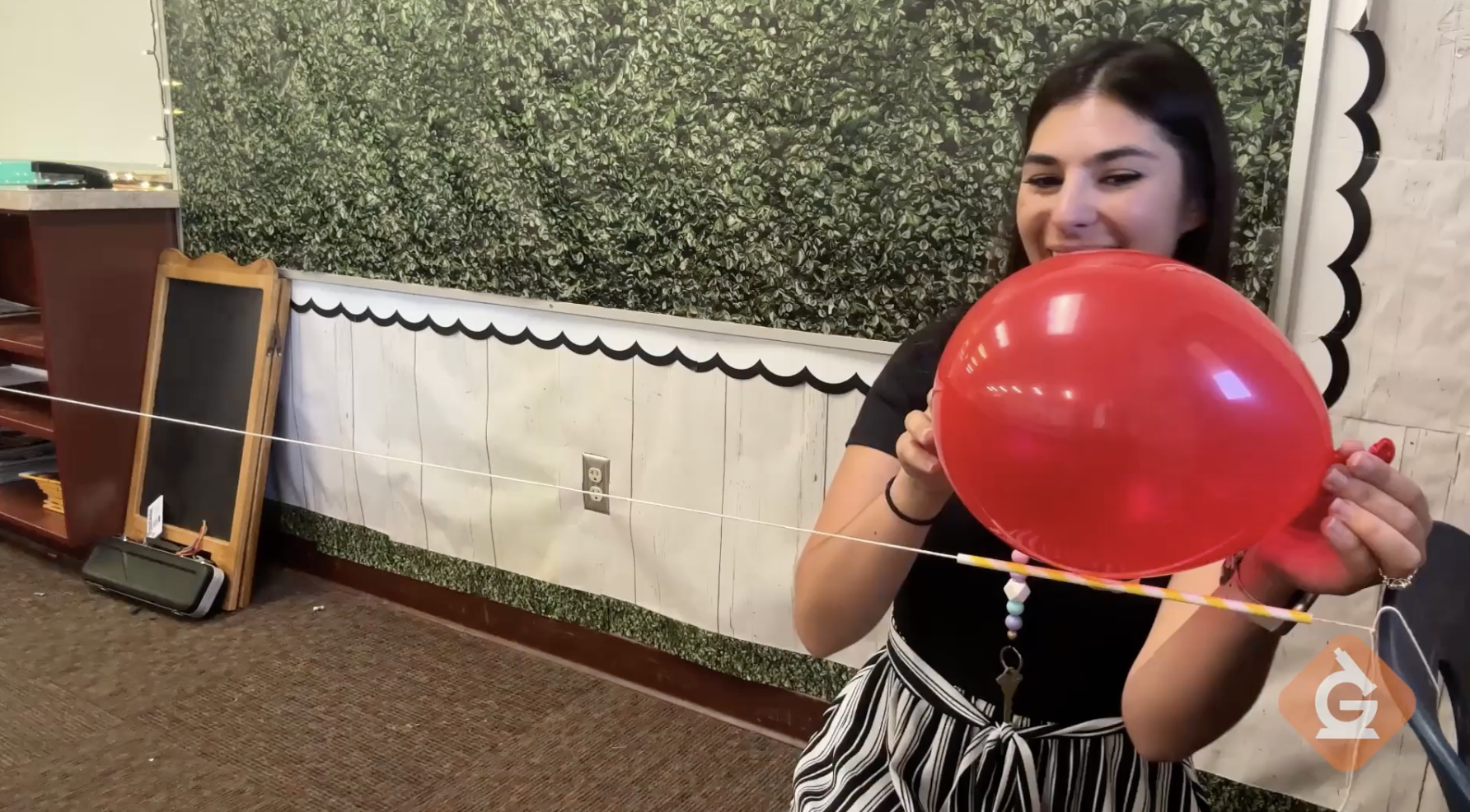
Tape the balloon to the straw. While keeping the balloon pinched shut, use a few strips of tape to attach it to the straw on the string. Make sure it’s secure before you let go.
STEP 6
1:46

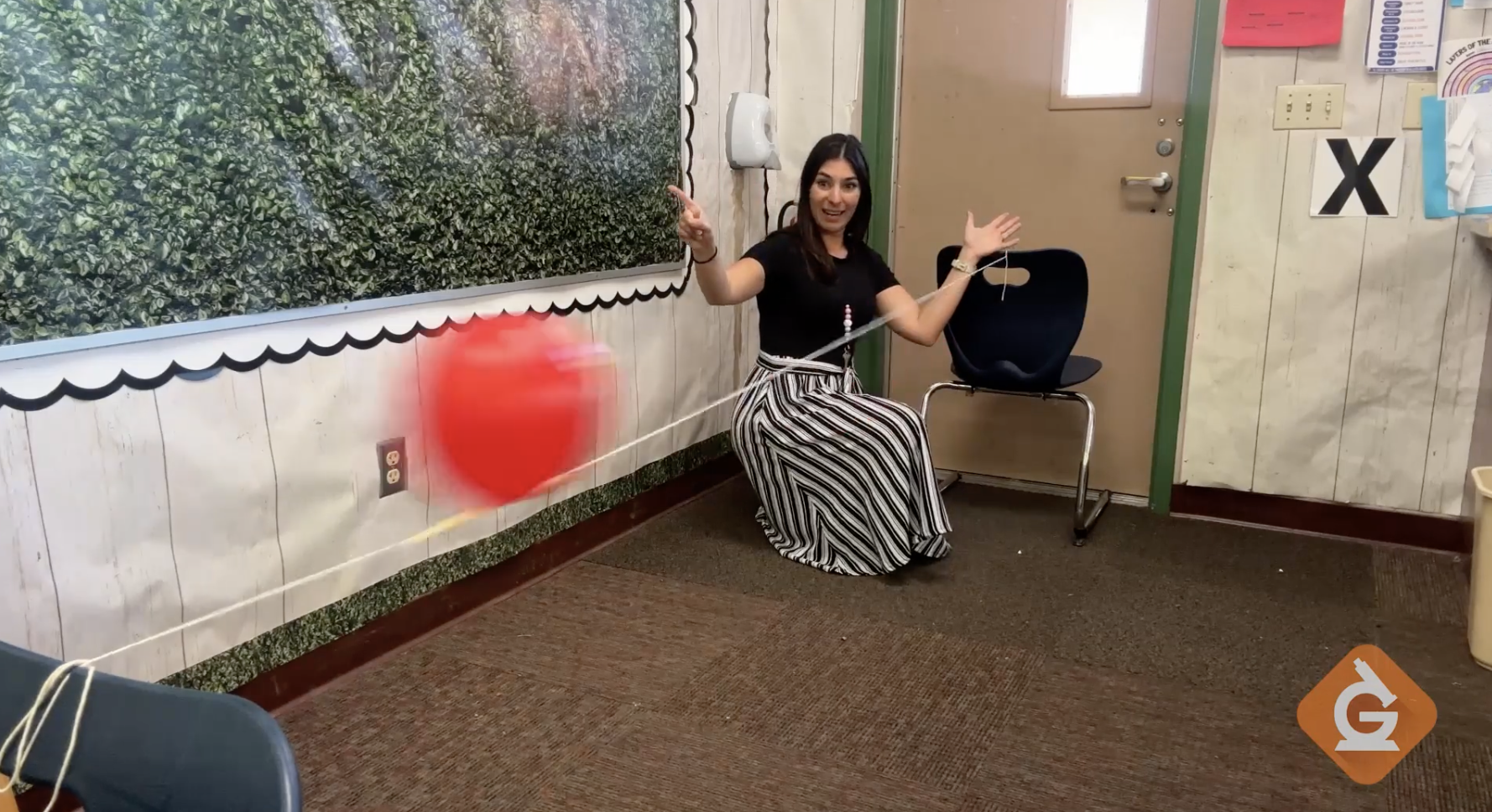
3, 2, 1 — launch! Slide the straw to one end of the string, then release the balloon. Watch your rocket zoom! The air shooting backward out of the balloon propels it forward along the track.

How It Works

When you blow air into a balloon, you're doing work. You're forcing air into a stretchy, elastic container that really wants to spring back to its original shape. All that pent-up pressure is stored as potential energy: energy that exists but isn't moving yet.

The moment you let go, that potential energy converts instantly into kinetic energy, the energy of motion. Air rushes out of the open end of the balloon in one direction, and by Newton's Third Law of Motion, the balloon shoots forward in the equal and opposite direction.

That's the same basic principle that powers real rockets: exhaust blasts out the back, and the rocket surges forward. As the balloon travels along the string, it gradually runs out of air and slows down, a reminder that the balloon can only release as much energy as was stored inside it.

Friction between the straw and the string also plays a role, adding resistance that eventually brings the rocket to a stop. The tighter the string, the less friction, and the farther your balloon rocket will fly.

Pro tip: Want to race? Set up two parallel tracks side by side and have two students launch at the same time. Try varying the amount of air in each balloon to see how it affects speed and distance — that's Newton's Third Law in action.
X
Success
We’ve sent you an email with instructions how to reset your password.
Ok
x
Choose Your Free Trial Period
3 Days

3 days to access to all of our teaching resources for free.

Continue to Lessons
30 Days

Get 30 days free by inviting other teachers to try it too.

Share with Teachers
Get 30 Days Free
By inviting 4 other teachers to try it too.
4 required

*only school emails accepted.

Skip, I will use a 3 day free trial

Thank You!

Enjoy your free 30 days trial