
1%
Processing, please wait...
It was processed successfully!
Login Create Free Account
en | es

Dancing Raisins: Thanksgiving DIY Activity

Autopause

Materials

Raisins (smaller ones dance best)
2 clear glasses
2 clear glasses
Plain tap water
Plain tap water
Soda water, such as sparkling water
Optional: cranberries, carrots, or apple slices to test other foods

Instructions

STEP 1

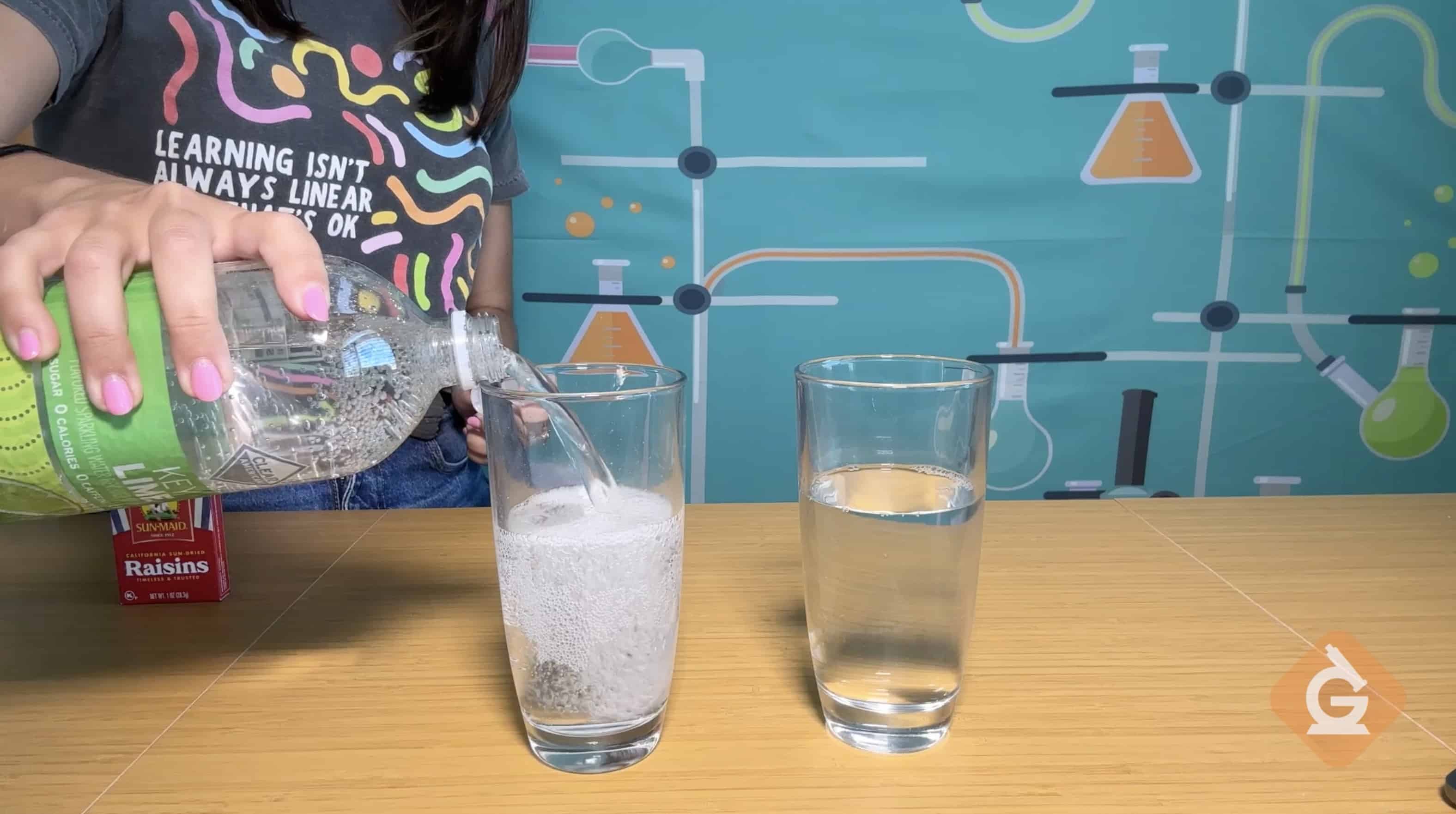
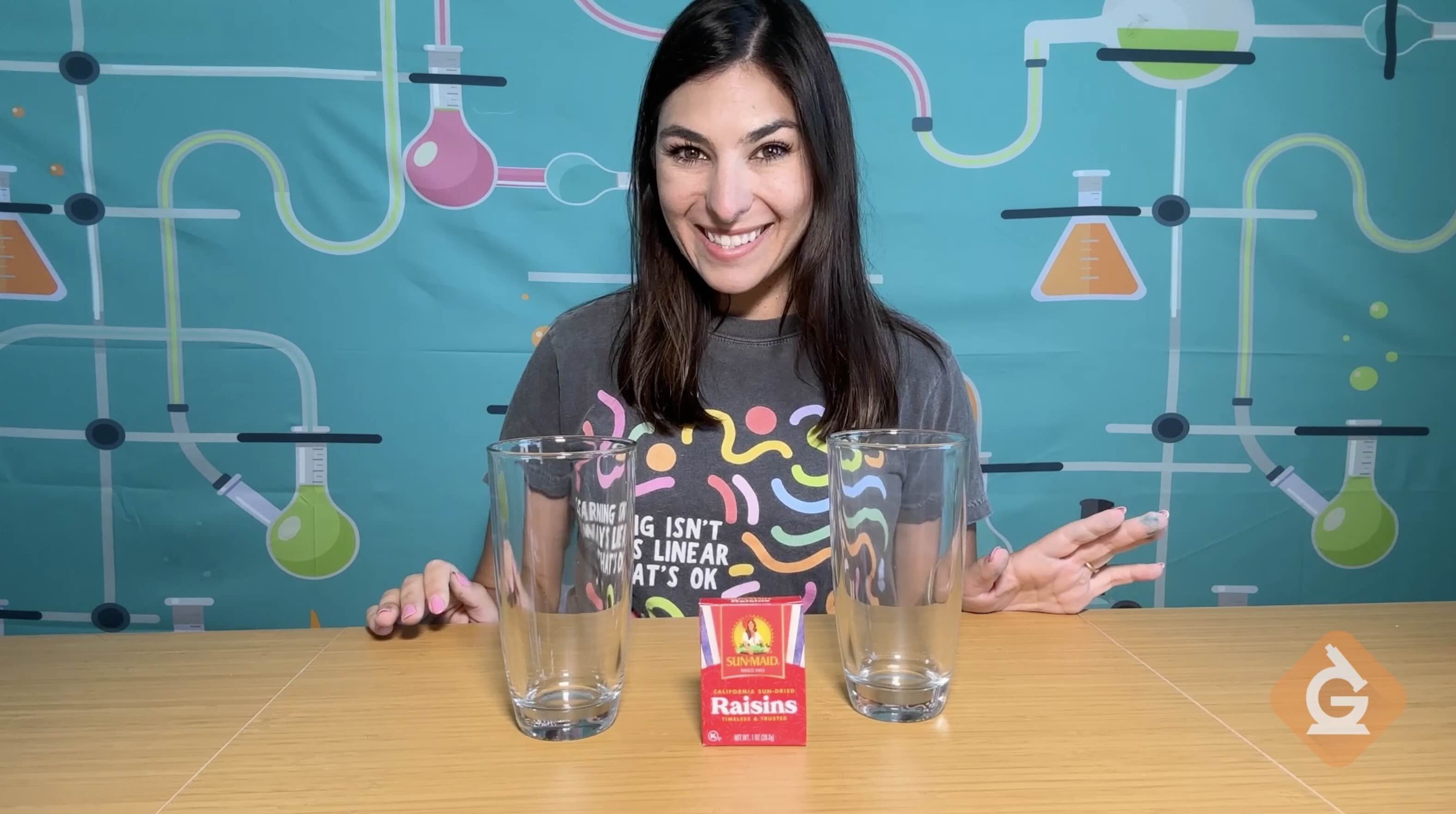
Set up two clear glasses side by side. Fill one with plain tap water and the other with soda water. Use the same kind of glass and the same amount of liquid in each so the only difference is the water
STEP 2

Before you start, make a prediction: what will the raisins do in plain water? What will they do in soda water? Will they sink, float, or dance?
STEP 3

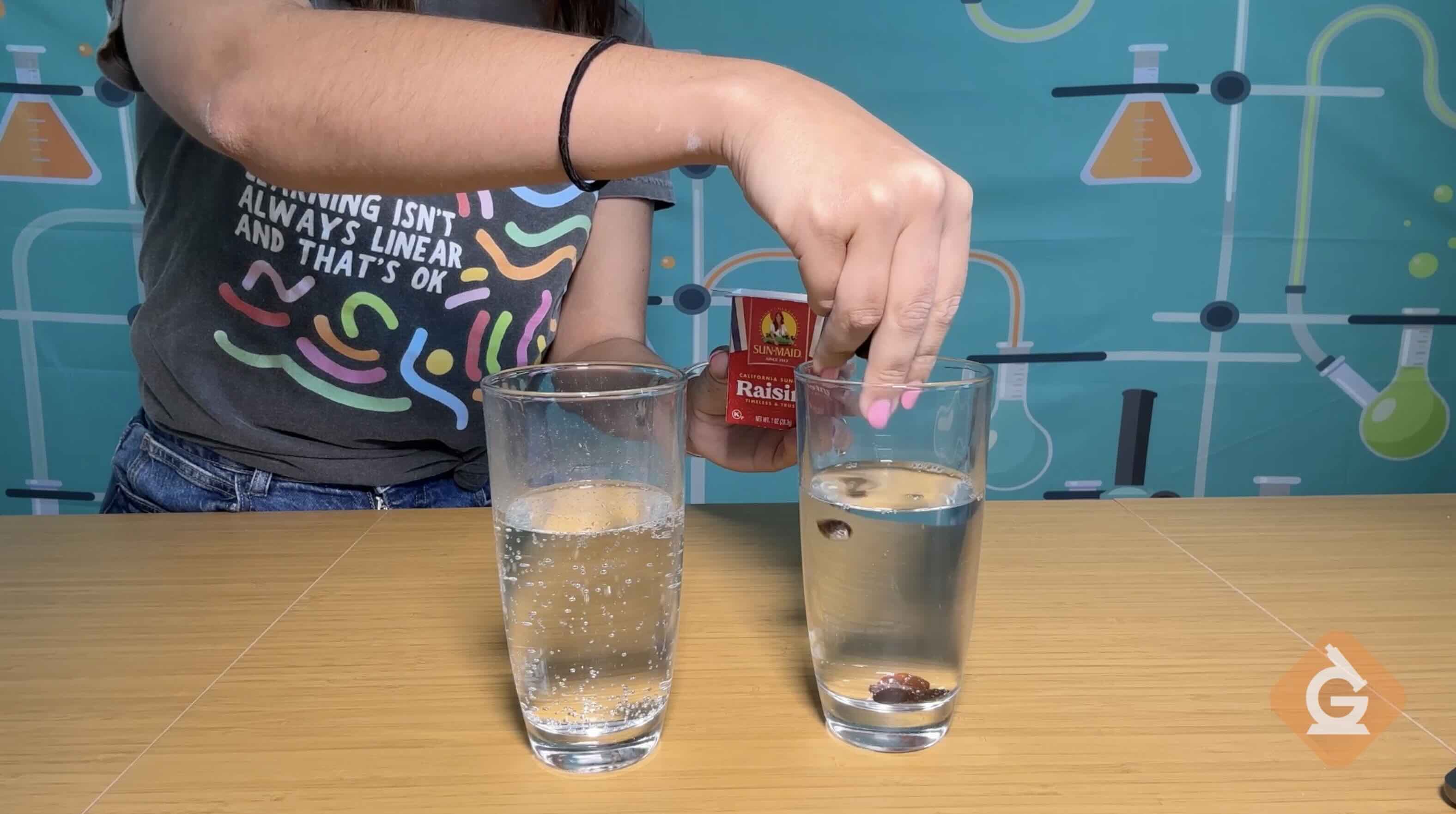
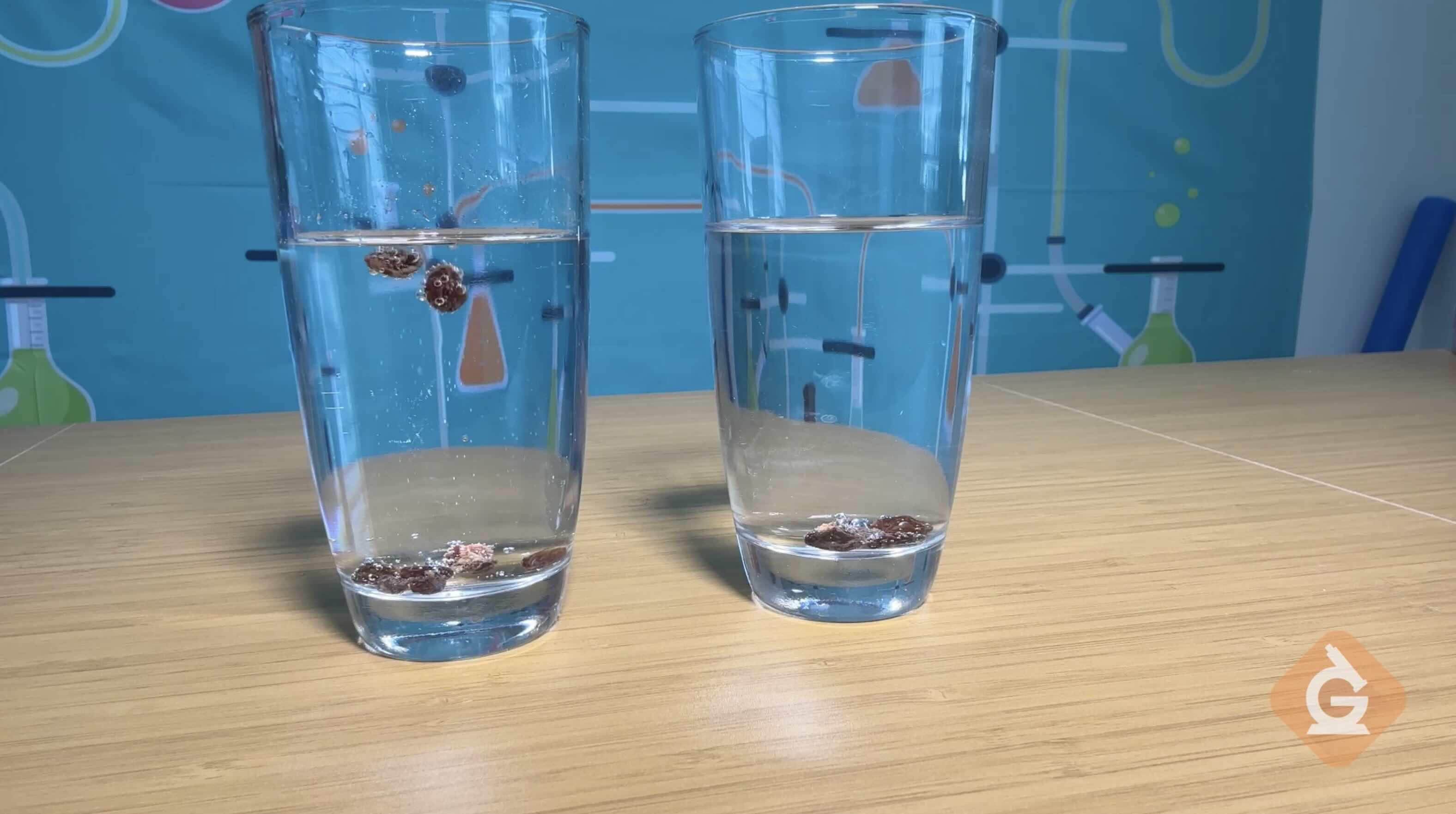
Drop a few raisins into the glass of plain tap water. Observe: what do the raisins do? Do any bubbles form on them?
STEP 4

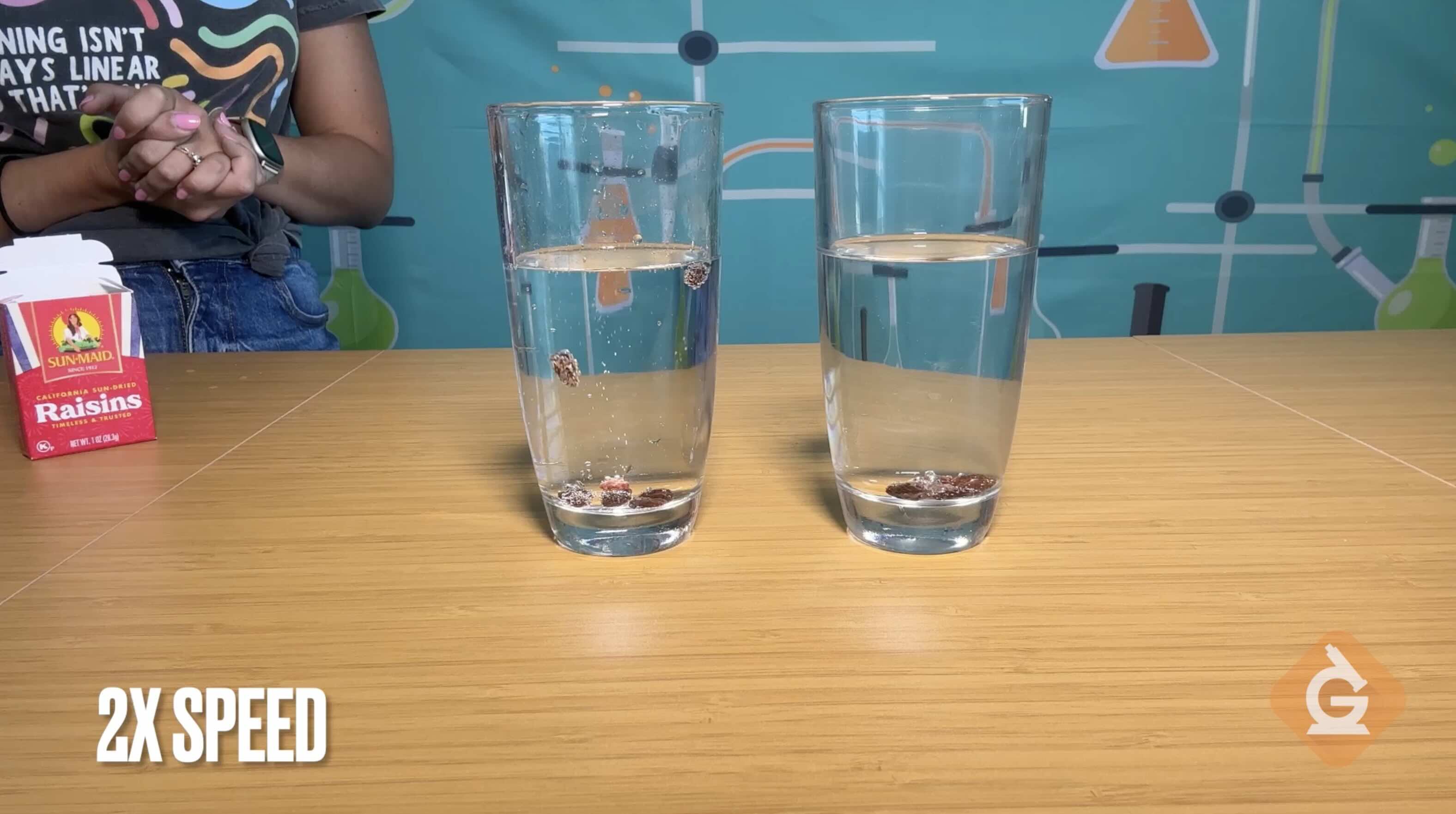
Drop the same number of raisins into the glass of soda water. Watch closely for a minute or two.
STEP 5

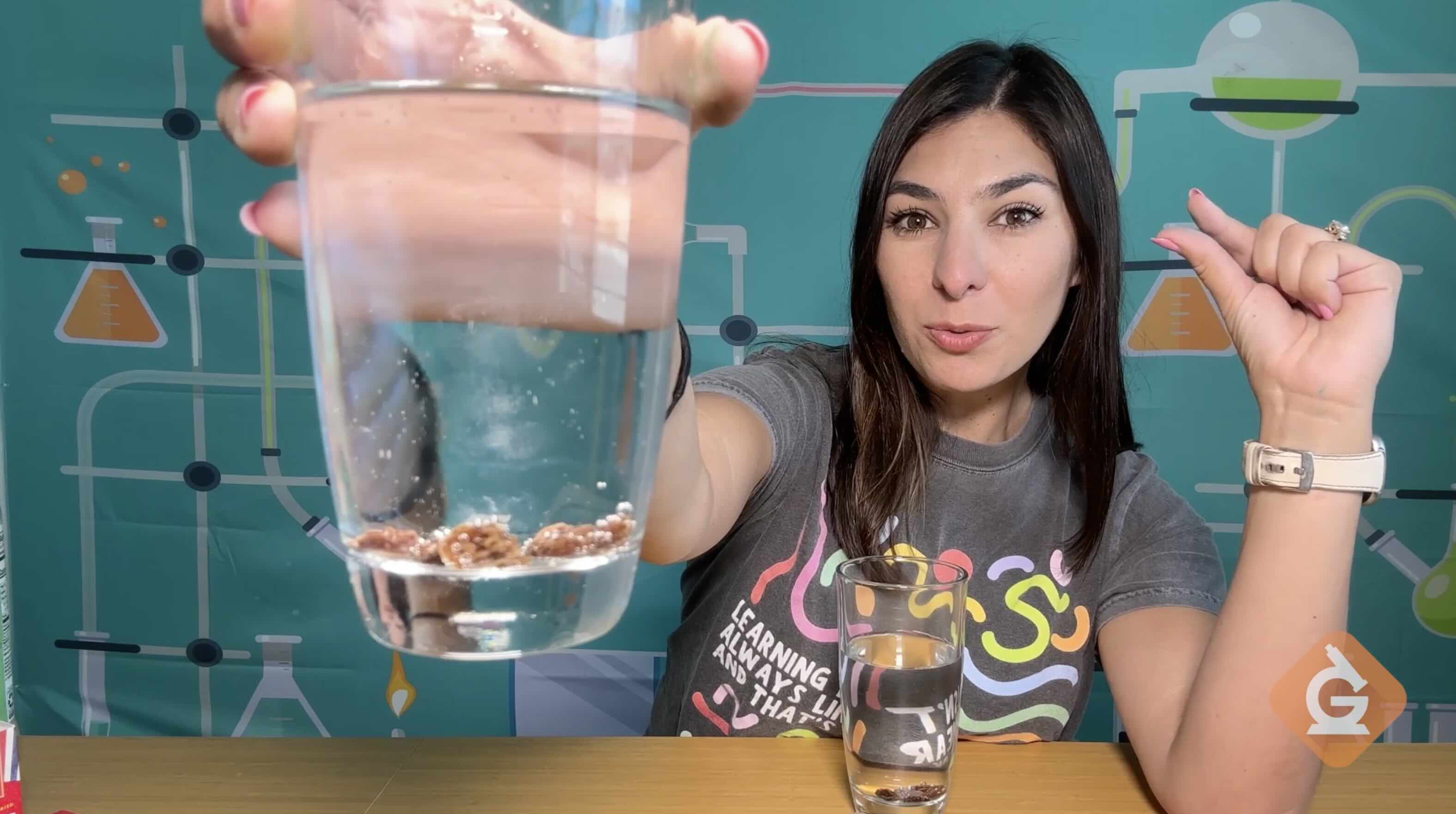
Look at the raisins in the soda water. Tiny carbon dioxide bubbles gather on them. What happens as the bubbles build up? What happens when the raisins reach the surface?
STEP 6

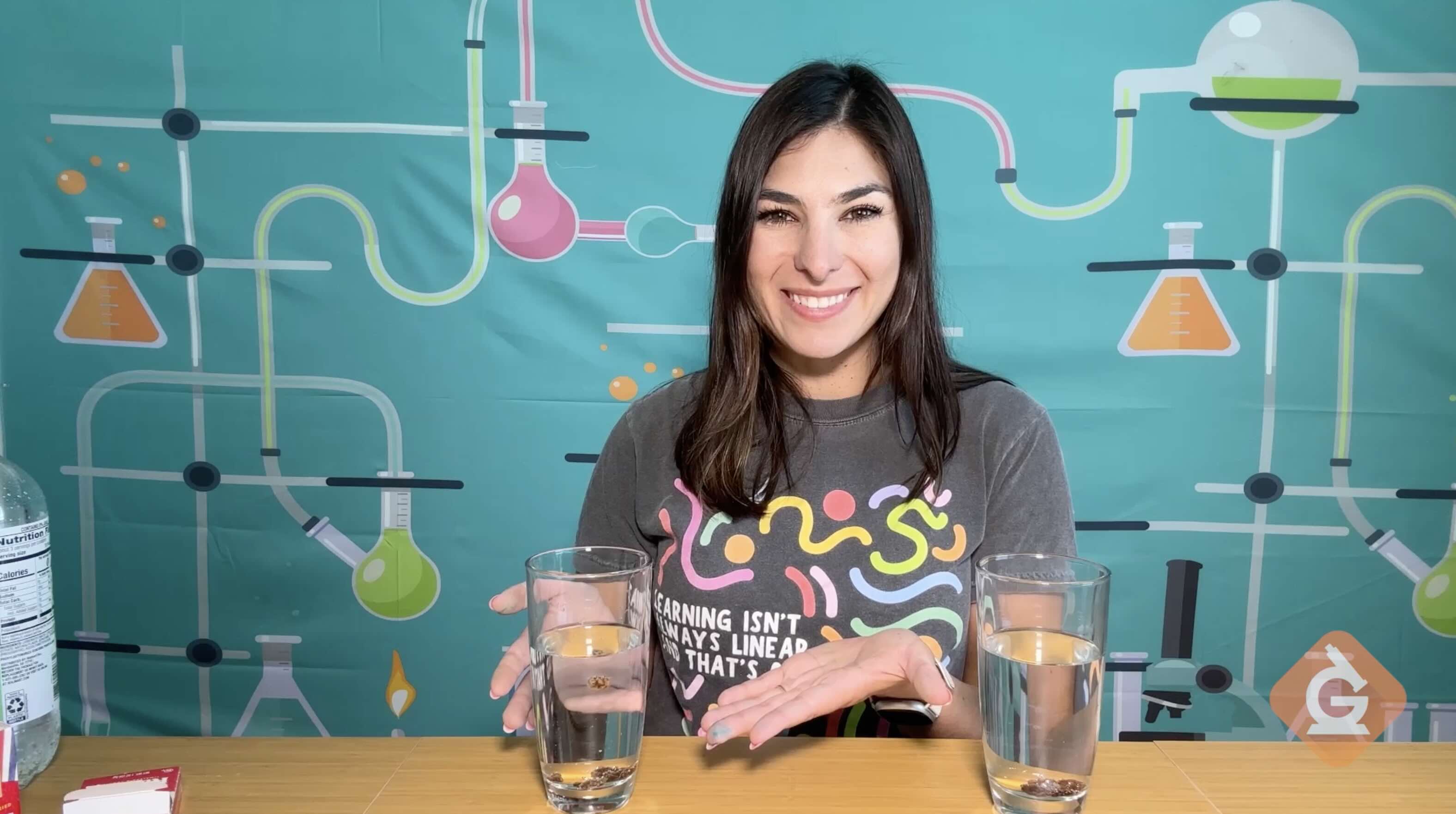
Compare the two glasses. Both sets of raisins started the same way, so what changed? Use the How It Works section below to explain why the raisins in soda water dance and the raisins in plain water don’t.
STEP 7

Scientists don’t stop after one try. Test it again, but change only one variable at a time. Try smaller or larger raisins, or swap the raisins for cranberries, carrots, or apple slices, and find out which food has the most dancing skills.

How It Works

This experiment is all about density and buoyancy. Soda water contains carbon dioxide (CO2) gas that has been dissolved under pressure. When you pour it into a glass, the gas starts to escape as tiny bubbles. Those bubbles attach to the raisins, and a raisin with bubbles stuck to it is less dense than the water around it. Buoyancy is the upward force from a fluid that makes things rise or float, so the raisin floats to the top.

Once a raisin reaches the surface, the bubbles pop. Without the CO2 bubbles holding it up, the raisin becomes more dense than the water again and sinks to the bottom. Then new bubbles attach, and the whole process repeats. The raisins keep switching between floating and sinking, and that's what makes them dance.

In plain tap water, no gas is coming out of solution, so no CO2 bubbles form. Any bubbles that cling to the raisins don't lift them, so gravity keeps them at the bottom. Smaller raisins tend to dance better.

If something as simple as gas bubbles can make raisins dance, what else around you is moving because of invisible forces? Science is always happening, even in a glass of soda water.

Try it yourself: Run the experiment again, but change only one variable at a time, like the size of the raisin or the food you drop in, such as cranberries, carrots, or apple slices. Predict which food will dance the best before you test it.
X
Success
We’ve sent you an email with instructions how to reset your password.
Ok
x
Choose Your Free Trial Period
3 Days

3 days to access to all of our teaching resources for free.

Continue to Lessons
14 Days

Get 14 days free by inviting other teachers to try it too.

Share with Teachers
Get 14 Days Free
By inviting 4 other teachers to try it too.
4 required

*only school emails accepted.

Skip, I will use a 3 day free trial

Thank You!

Enjoy your free 14 days trial