

1%
Processing, please wait...
It was processed successfully!
Login Create Free Account
en | es

Create Unpoppable Bubbles

Autopause

Materials

1/2 cup of water
1/2 cup of water
2 tablespoons of dish soap
1 tablespoon of corn syrup
Straw for bubble wand
1 glove, plastic or cotton

Instructions

STEP 1
1:29

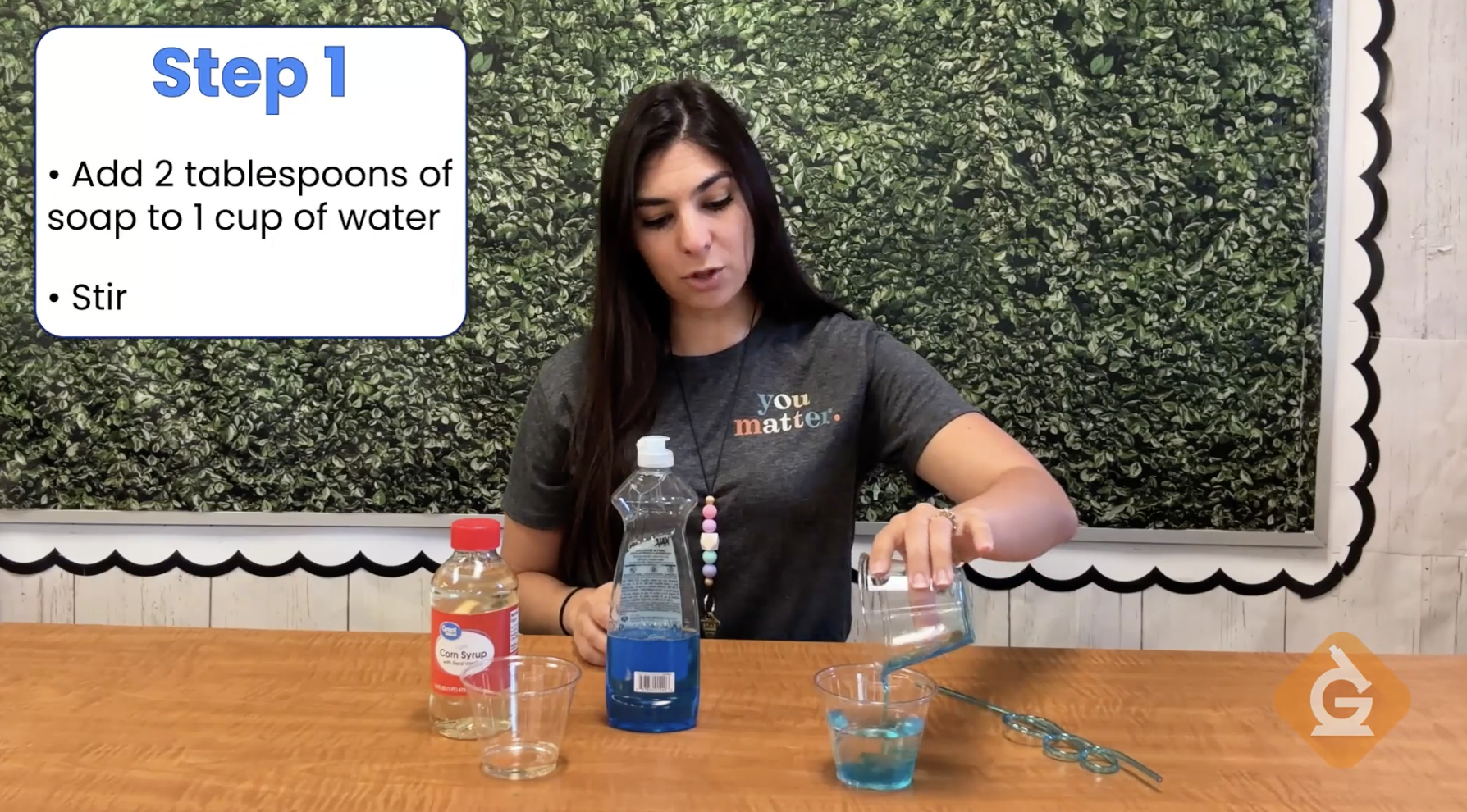
Pour 2 tablespoons of dish soap into ½ cup of water. Stir gently to combine — this is your basic bubble solution.
STEP 2
1:57

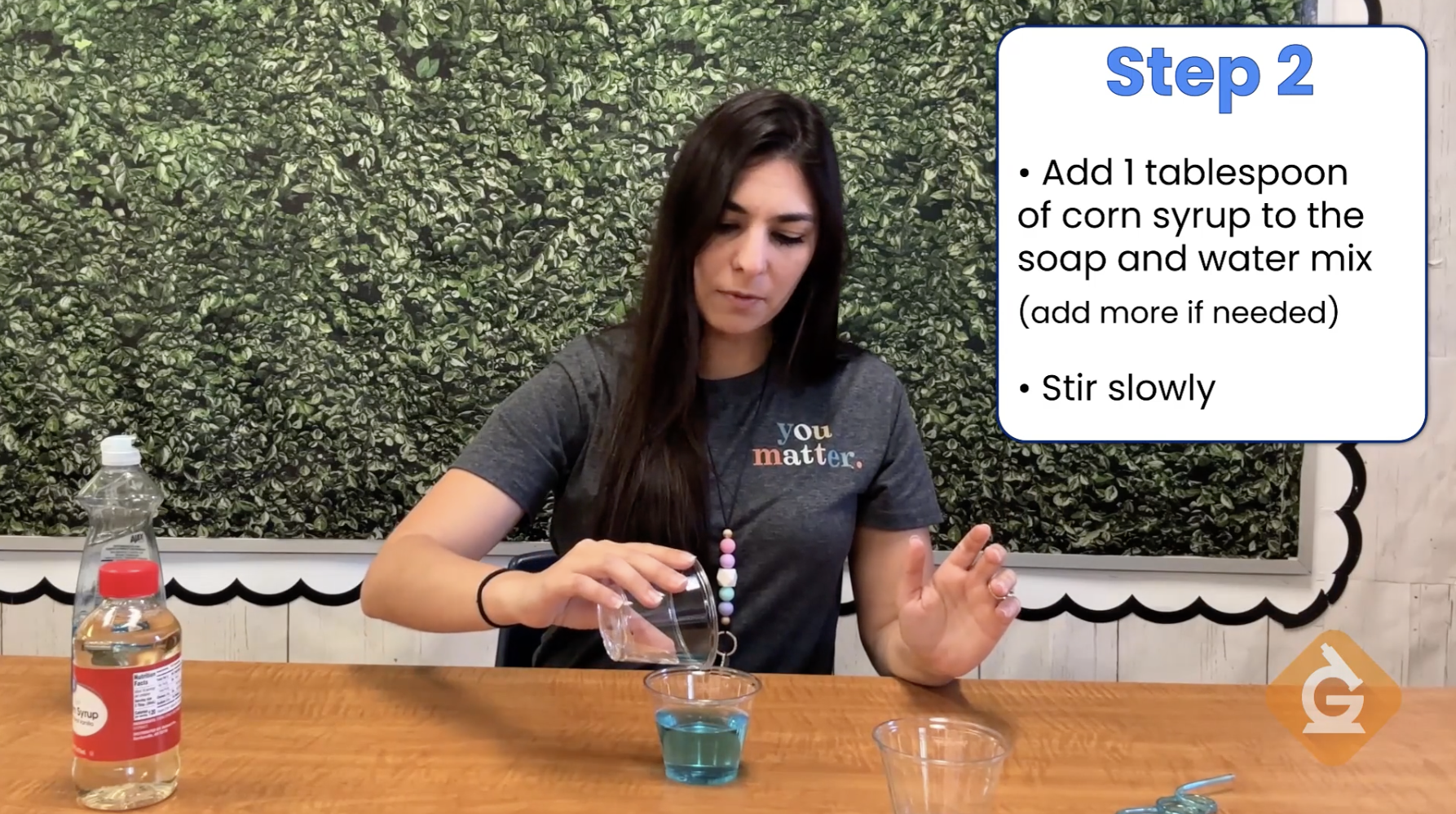
Add 1 tablespoon of corn syrup (or glycerin) to the solution. Stir slowly — you want it evenly mixed, but avoid creating lots of foam
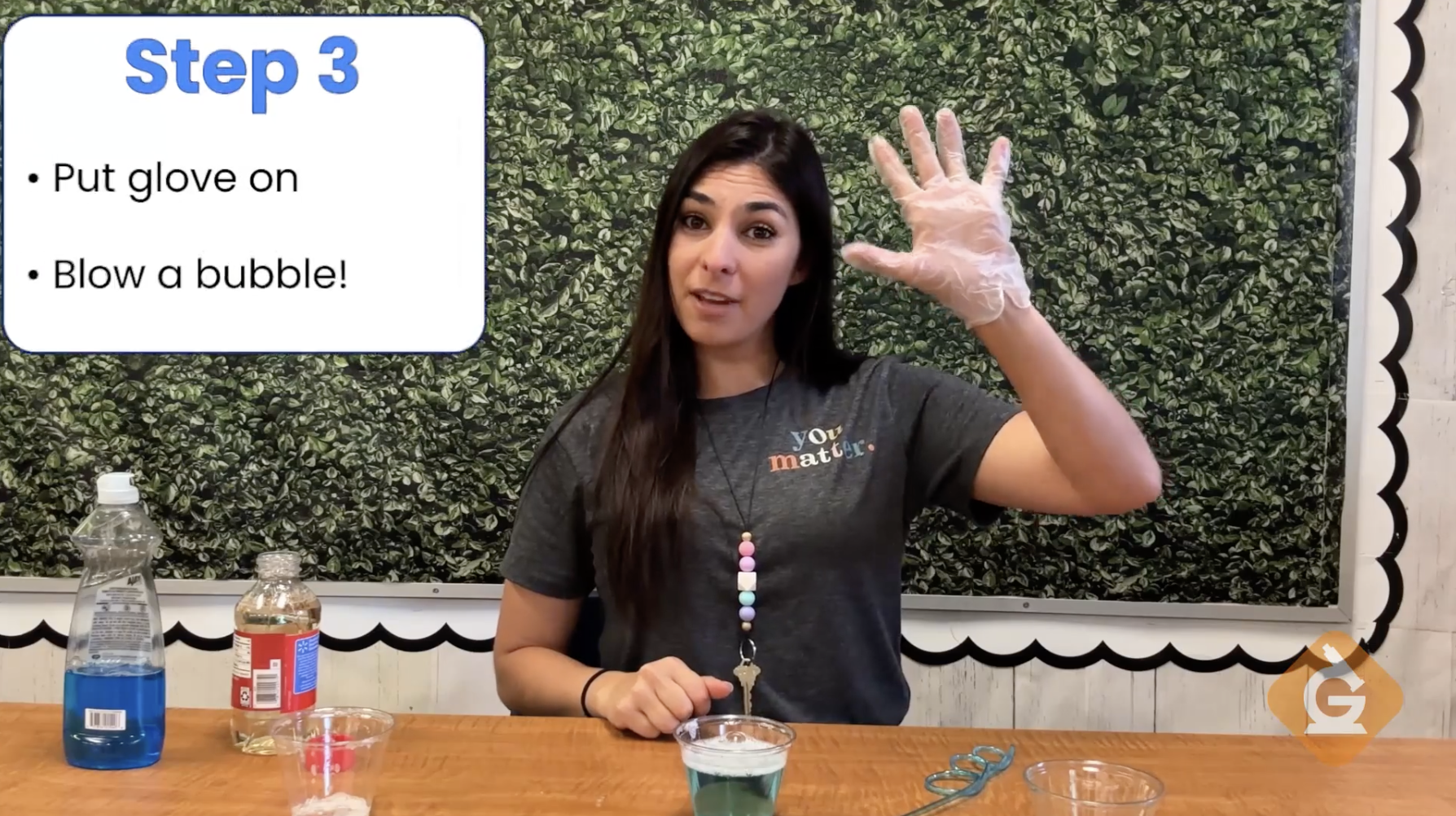
STEP 3
3:02

Slip on a latex or cotton glove before blowing bubbles. The oils on your bare hands break the surface tension and will pop the bubble — the glove keeps things clean.
STEP 4
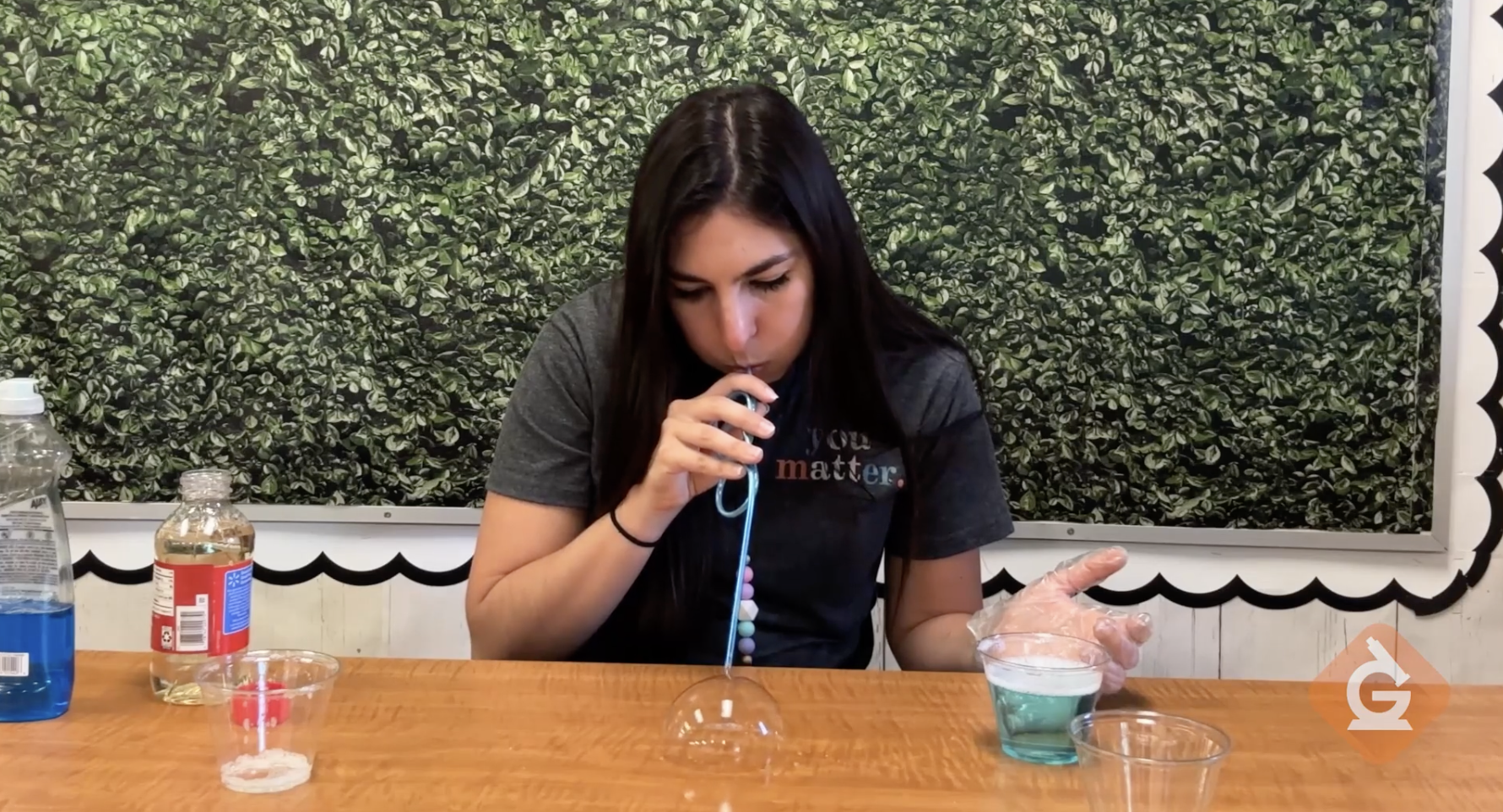
3:33

Dip the end of your straw into the solution, then gently blow a slow, steady breath to form a bubble. Let it rest on a surface or float freely.
STEP 5
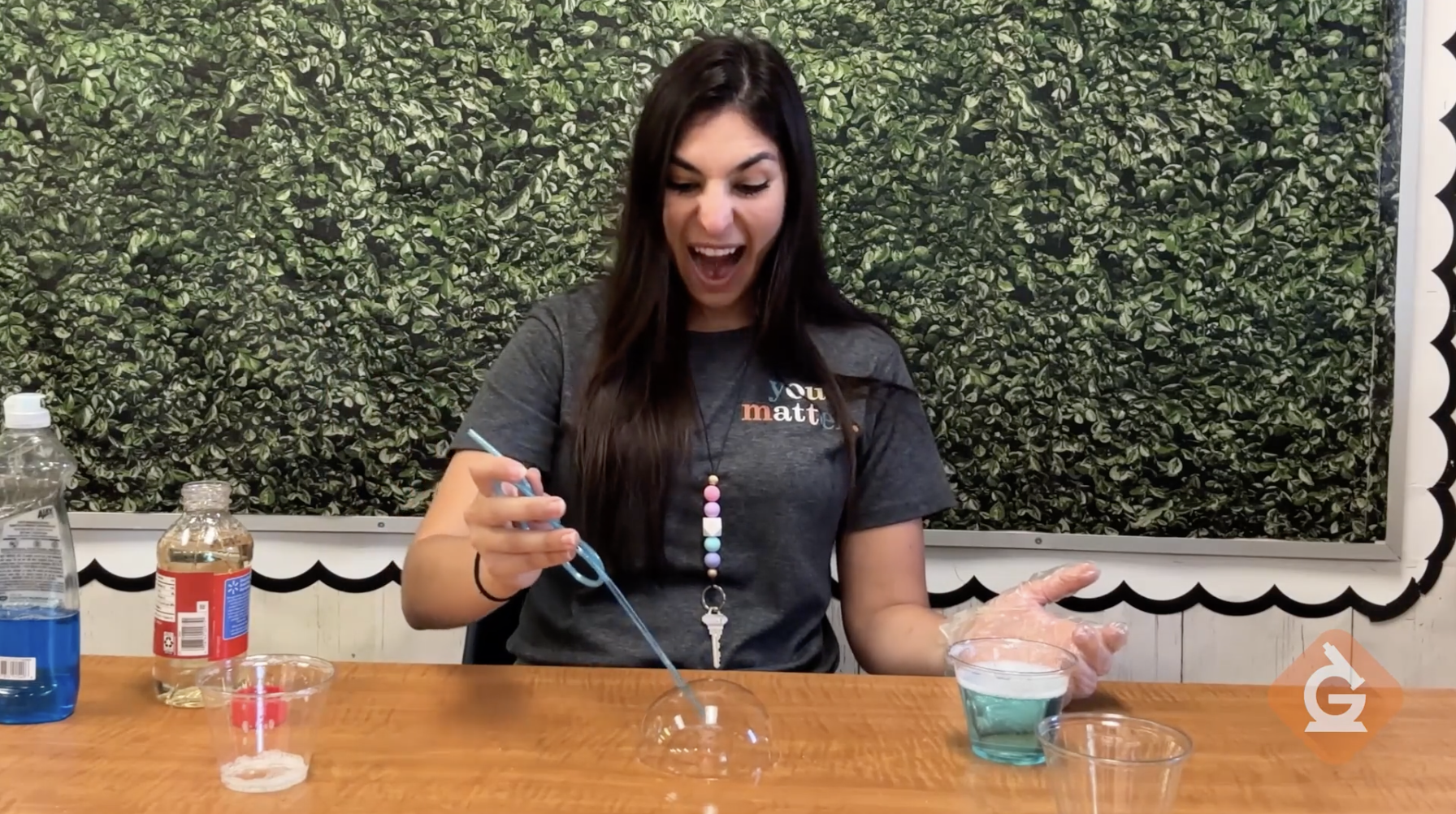
3:39

Gently press or poke the bubble with your gloved finger. Because the molecules in the solution recognize the soap on the glove as one of their own, the bubble won’t pop!
STEP 6
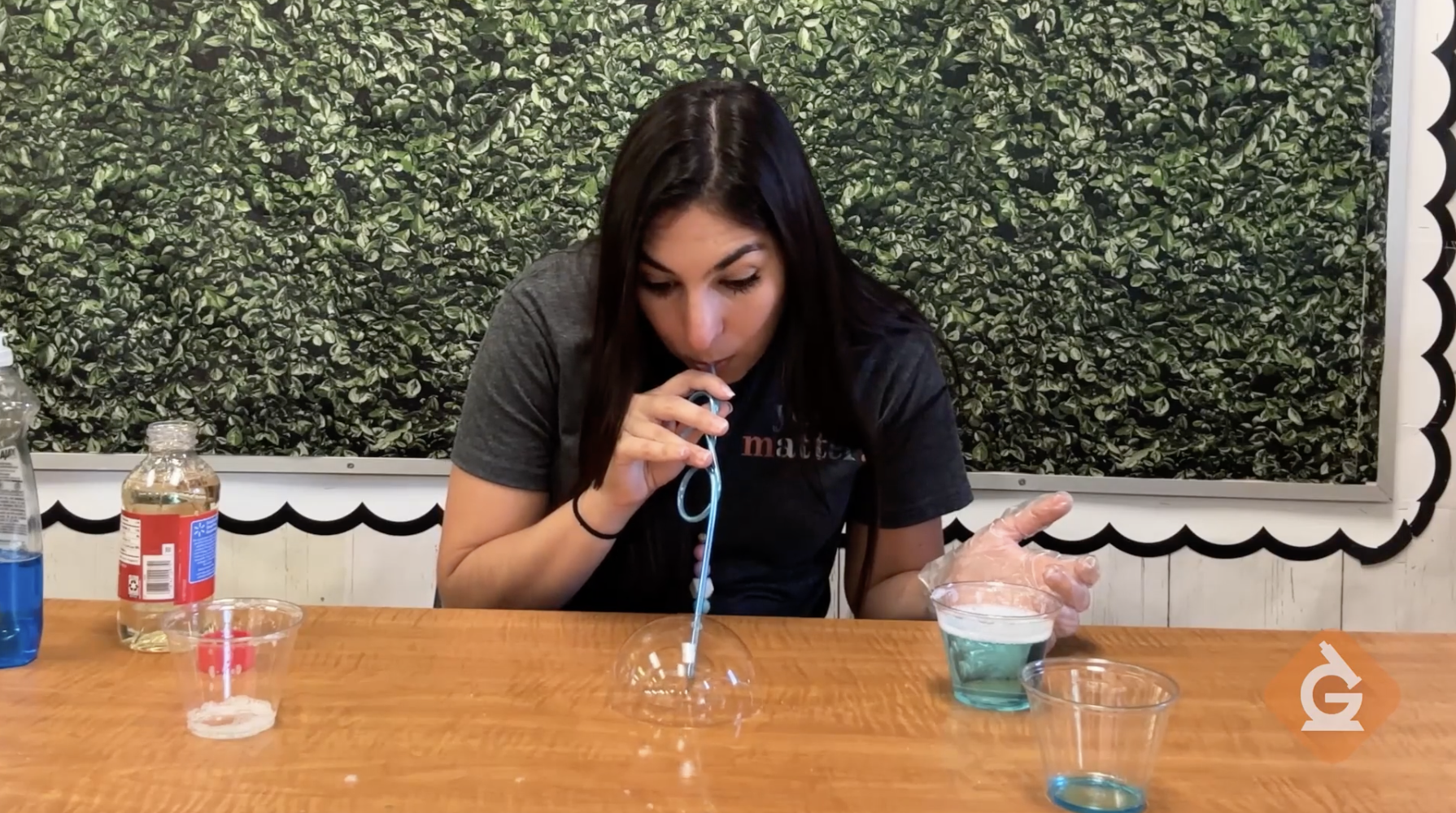
3:51

Dip your straw into the solution again, poke it gently into the existing bubble, and blow to create a second bubble inside the first. Double bubbles!

How It Works

Bubbles are made of three things: water, soap, and air. Water molecules are polar, they have a positive side and a negative side, and they cling tightly to each other through a force called surface tension.

Soap is a double-sided molecule: one end is attracted to water (hydrophilic) and one end repels it (hydrophobic). When soap slips between water molecules, it lowers that surface tension just enough to give the water film a little stretch, letting air get trapped inside and a bubble form.

Normally, a bubble pops when water evaporates from its thin film, weakening it until it collapses. That's where corn syrup, or glycerin, saves the day. Glycerin slows evaporation, letting the bubble hold onto its water far longer. It also reduces surface tension even more, giving the bubble extra elasticity and making it much harder to pop.

The final trick is the glove: the natural oils on skin are enough to break the surface tension barrier the moment they touch the bubble. By wearing a glove, you remove that obstacle entirely, and the soap molecules in the solution actually recognize the soap residue on the glove as "one of their own," allowing contact without popping. The result? A bubble that can be touched, poked, and even nested inside another bubble, all thanks to a little chemistry.
X
Success
We’ve sent you an email with instructions how to reset your password.
Ok
x
Choose Your Free Trial Period
3 Days

3 days to access to all of our teaching resources for free.

Continue to Lessons
30 Days

Get 30 days free by inviting other teachers to try it too.

Share with Teachers
Get 30 Days Free
By inviting 4 other teachers to try it too.
4 required

*only school emails accepted.

Skip, I will use a 3 day free trial

Thank You!

Enjoy your free 30 days trial