

1%
Processing, please wait...
It was processed successfully!
Login Create Free Account
en | es

Earth Day Oil Spill Clean-up STEM Activity

Autopause

Materials

1 Large Container
1 Large Container
1 Pitcher of Water
1 Pitcher of Water
2 Cups of Vegetable Oil
2 Drops of Blue Food Color
2-3 Feathers
2-3 Feathers
1 Plastic Spoon
1 Plastic Spoon
1 Plastic Cup
1 Plastic Cup
2-3 Paper Towels
2-3 Paper Towels
2-3 Pipe Cleaners
2-3 Pipe Cleaners
1 Small Bag of Sand
1 Small Bag of Sand
1 Tablespoon of Soap
1 Paper Bowl
1 Paper Bowl

Instructions

STEP 1
0:00

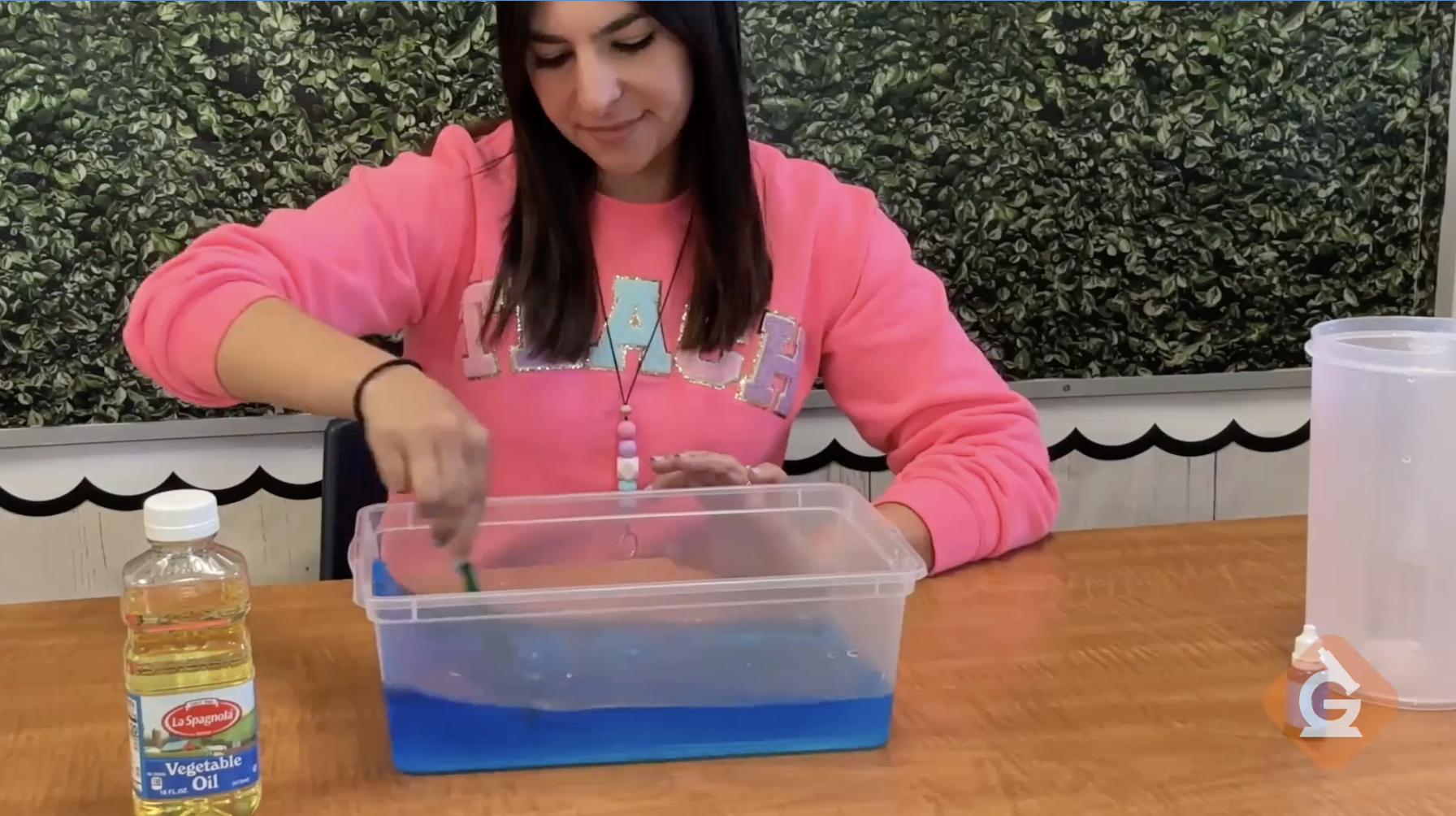
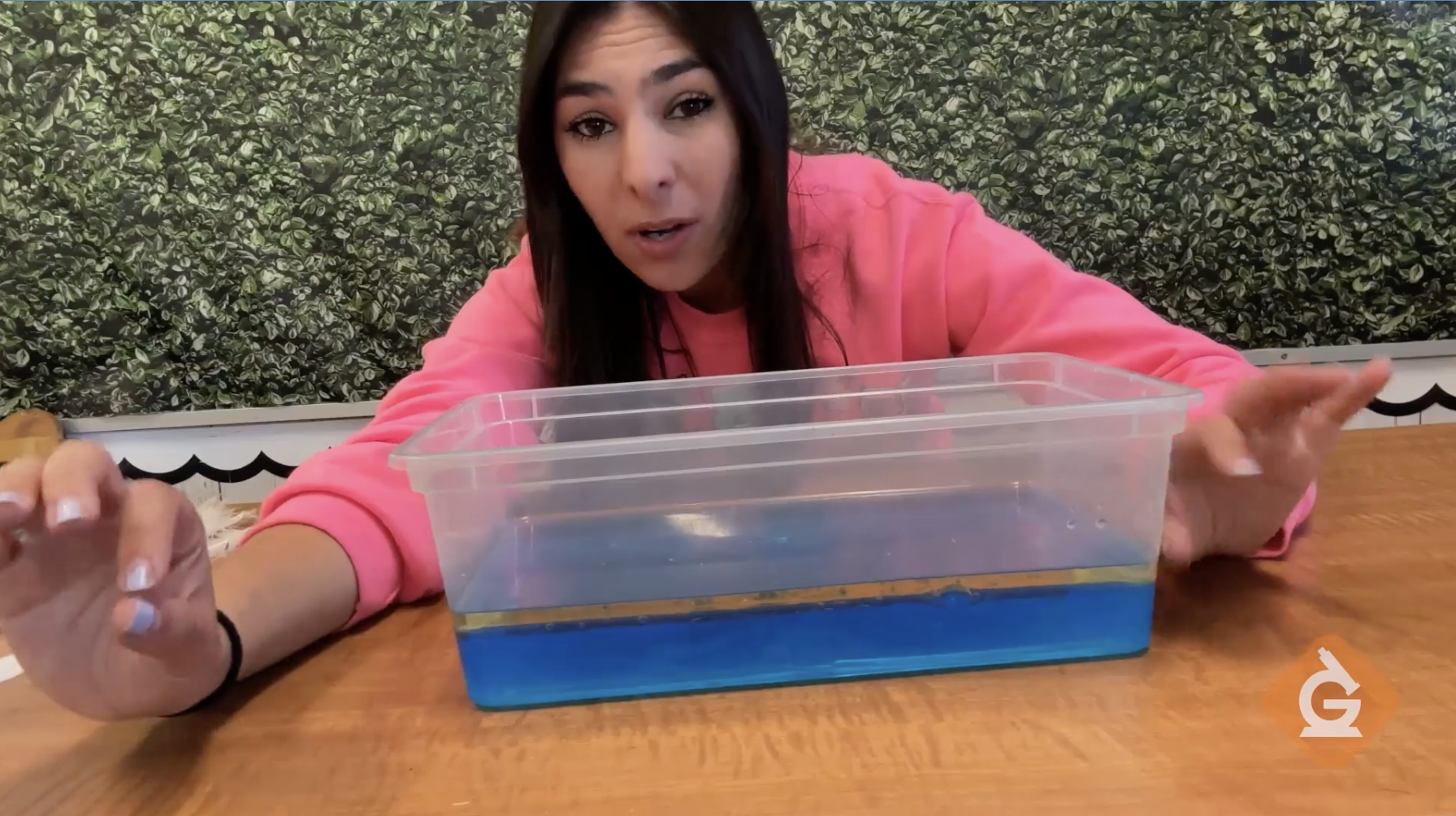
Set Up Your Ocean: Fill your shallow tray about halfway with water. Add a few drops of blue food coloring and gently stir — this is your “ocean.”
STEP 2
0:19

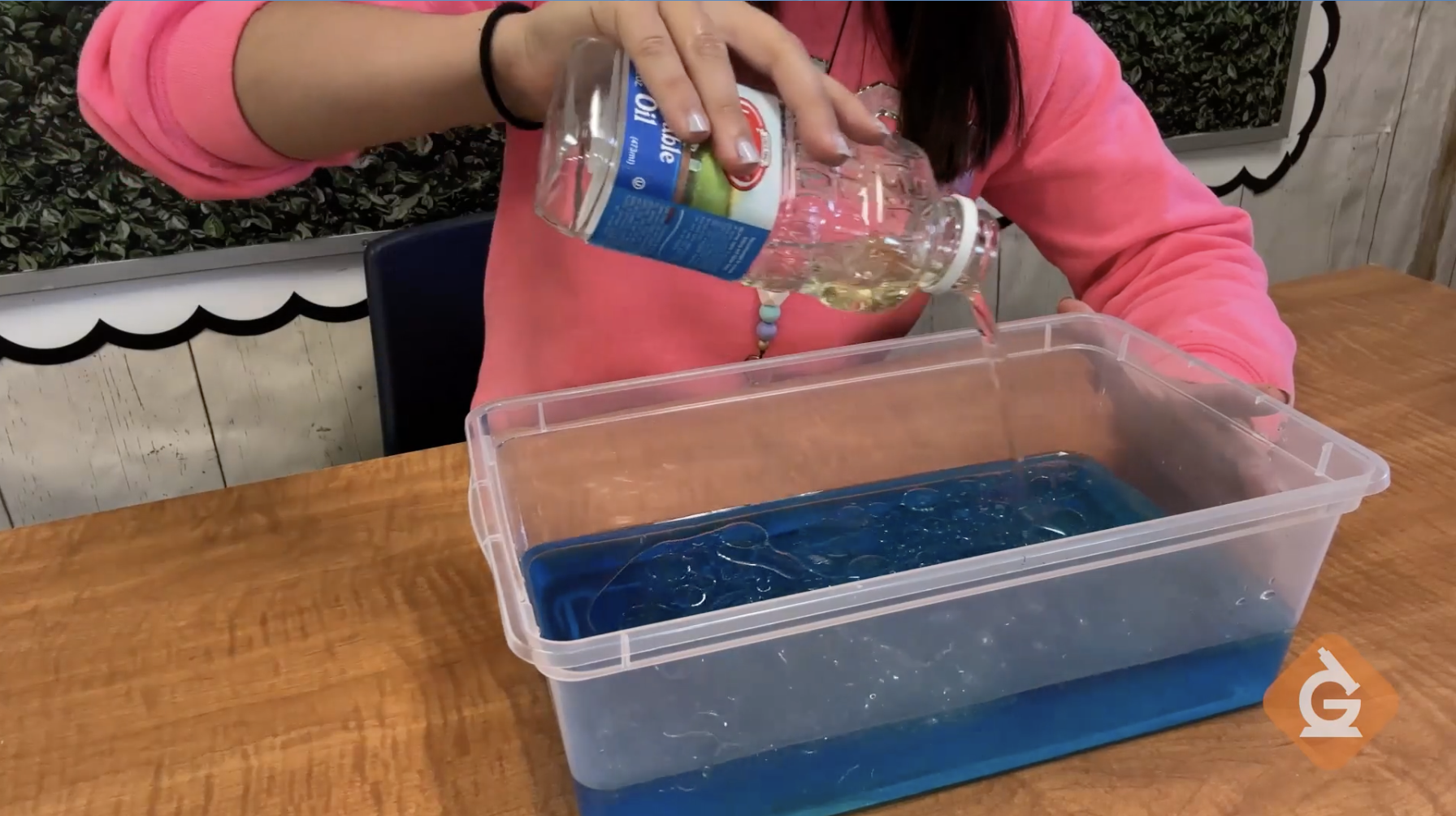
Slowly pour about ¼ cup of vegetable oil onto the surface of the water. Watch what happens! The oil will spread and float on top. This is your simulated oil spill.
STEP 3
0:27

Before trying anything, take a moment to observe. Where is the oil going? Does it mix with the water? What happens if you gently stir?
STEP 4
0:38

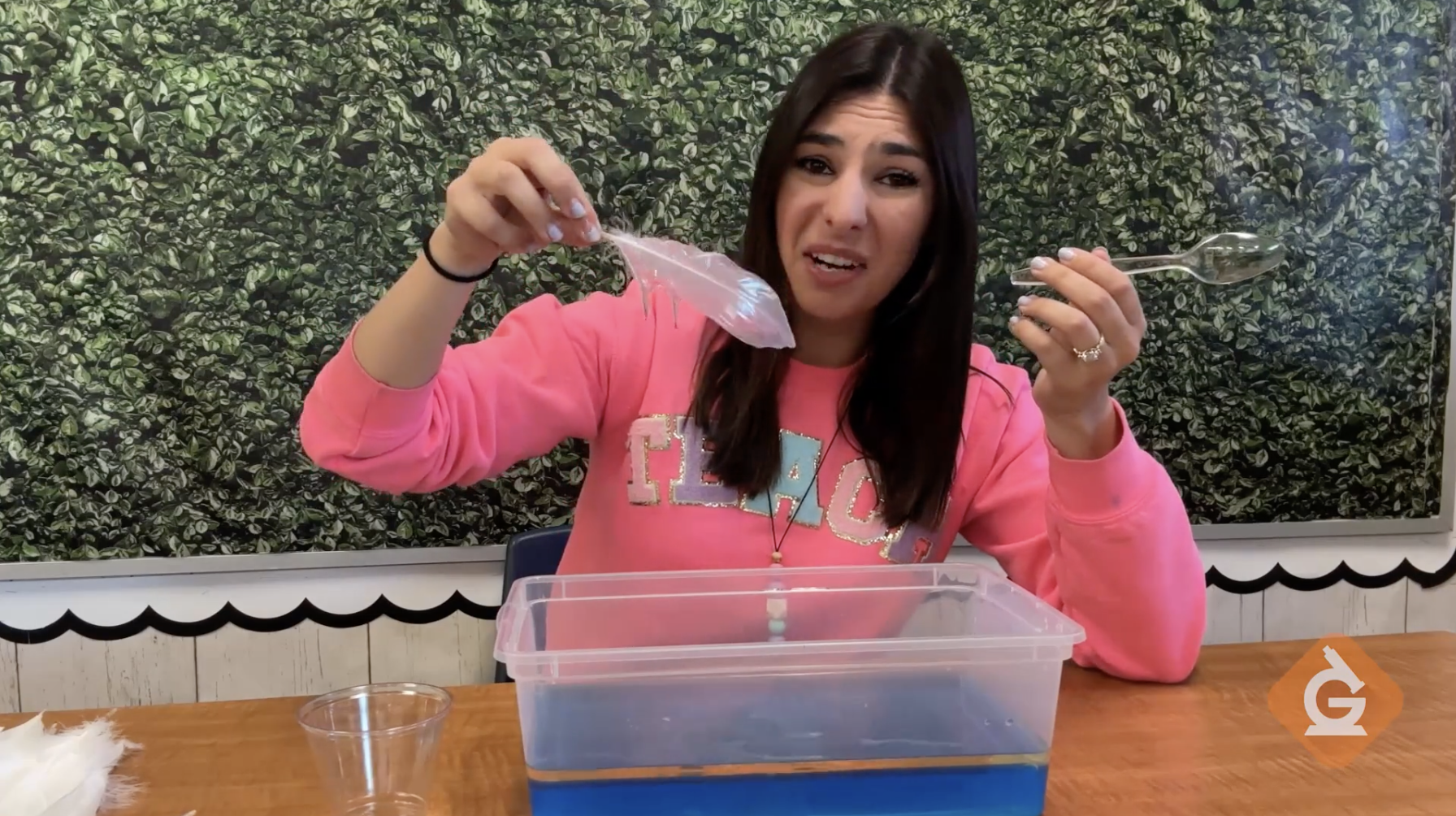
Dip a feather into the oily water and see how it affects the feather — this shows how birds are harmed by real oil spills.
STEP 5
0:58

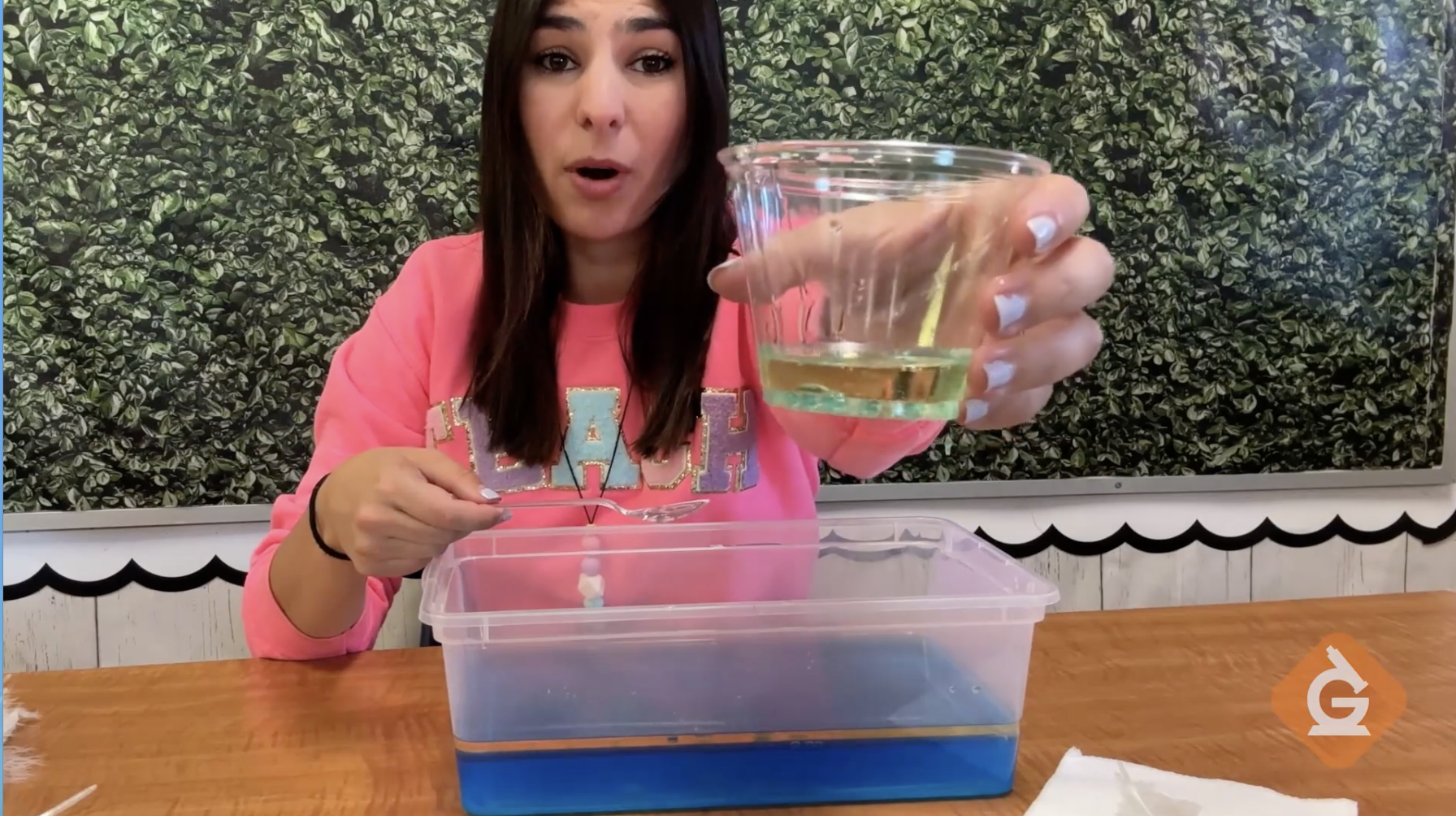
First use a spoon to try to scoop the oil off the surface and putting it into a separate cup or container. This method is called skimming.
STEP 6
1:36

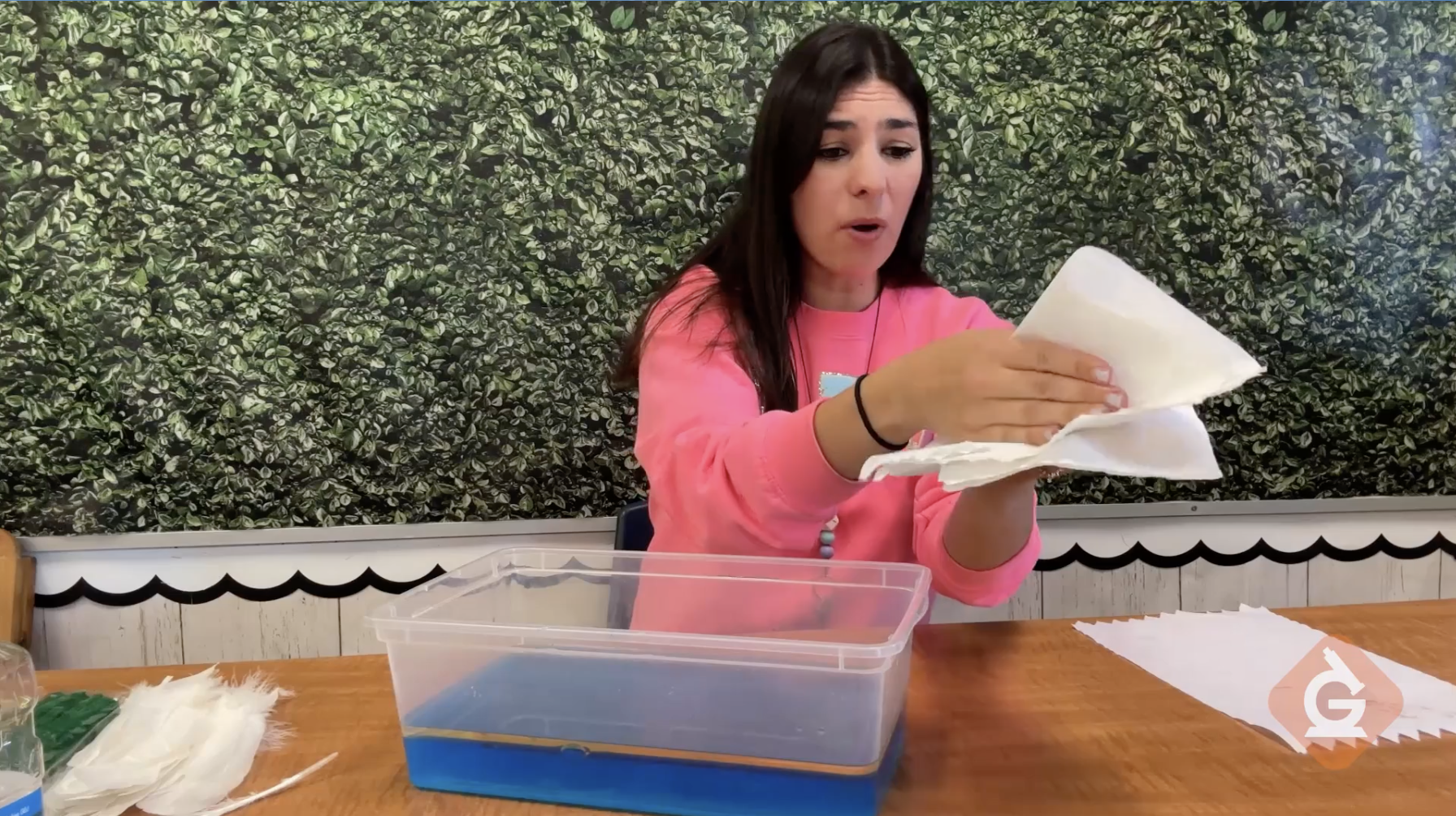
For our next method, Try placing the oily feather onto a paper towel and use a second one to absorb the oil from the surface. Gently touch the paper towel to the feather and watch what happens.
STEP 7
2:33

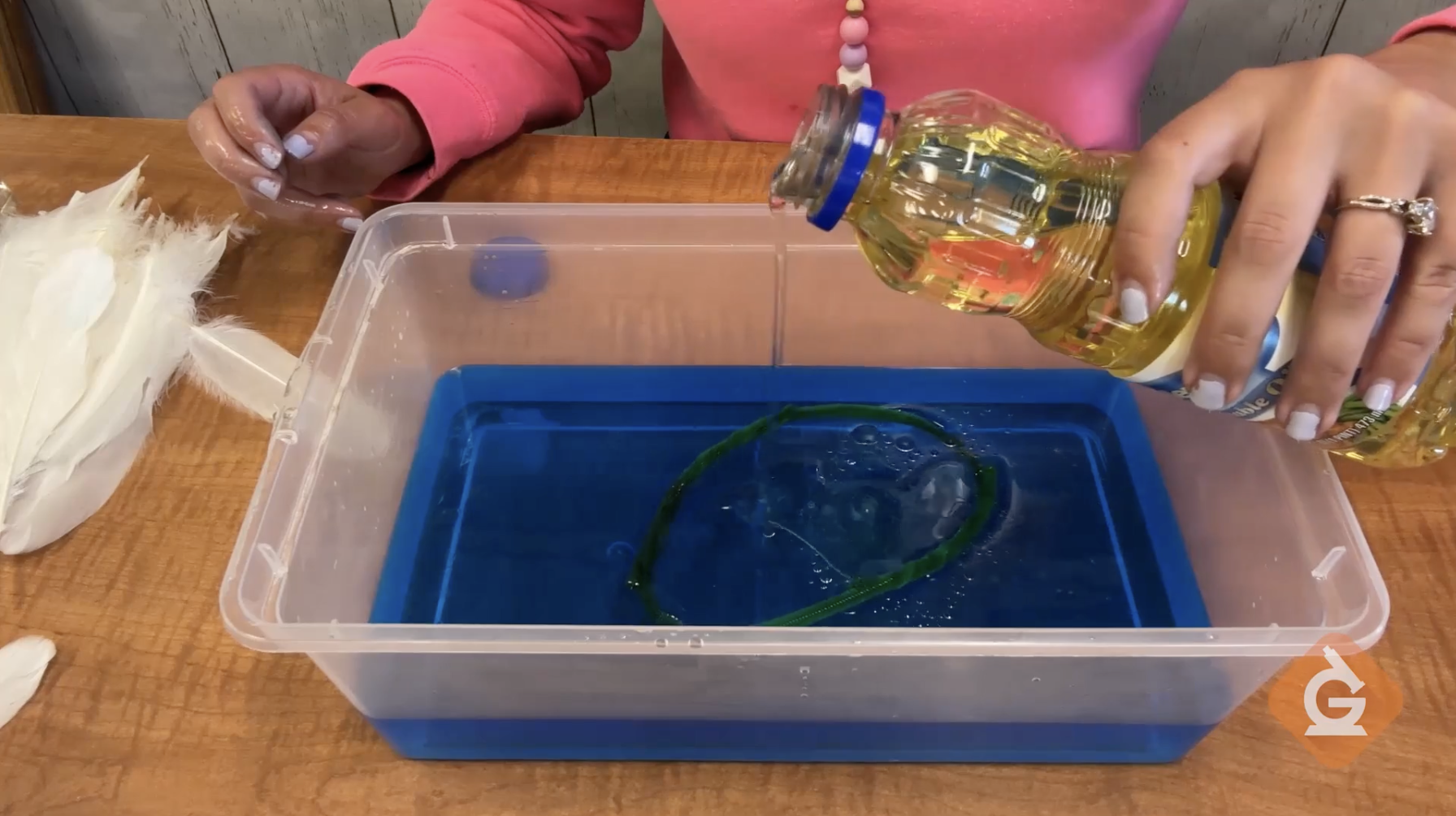
Next, create a fresh, clean ocean and pour some oil into the water. Twist pipe cleaners together into a ring, and quickly place it around the oil in the water. Pour some more oil into the contained area.
STEP 8
3:30

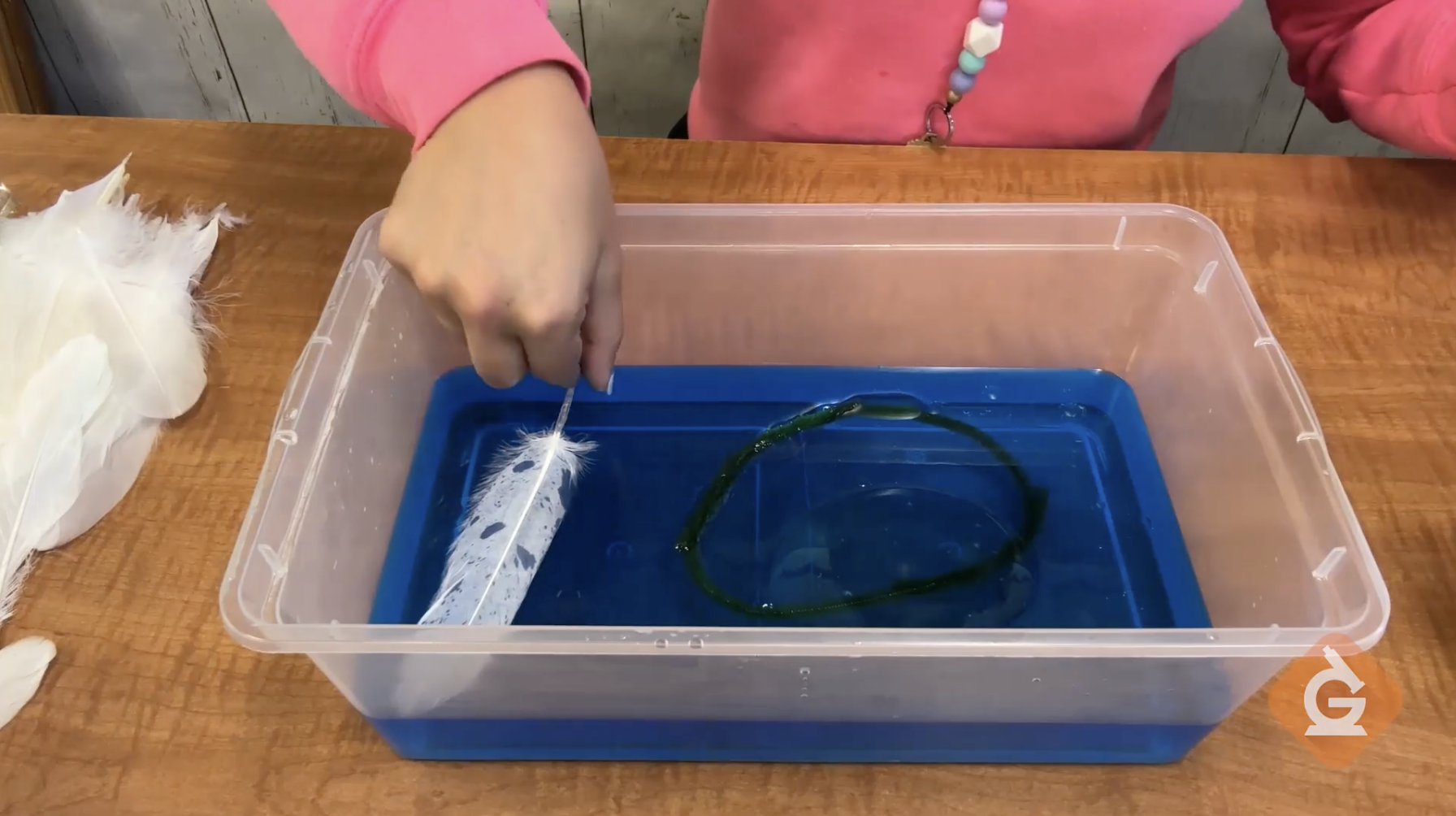
Now drop a feather outside the containment ring. Notice how the feather is far less affected than before — the oil stays contained inside the barrier.
STEP 9
4:26

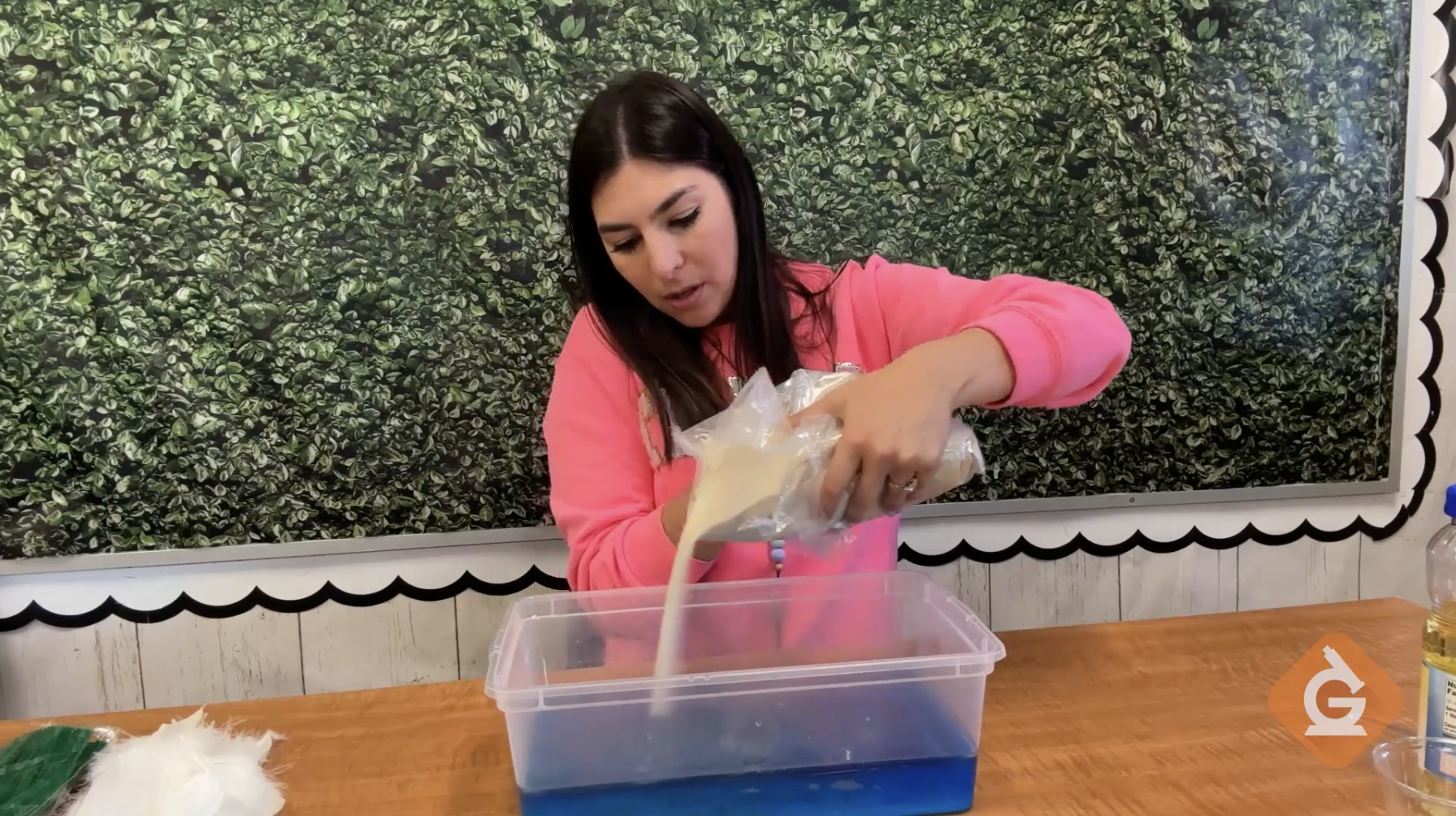
For our last method, remove the pipe cleaner so the oil can spread around in your ocean. Then, using the sand or kitty litter pour some on top of the oil.
STEP 10
5:21

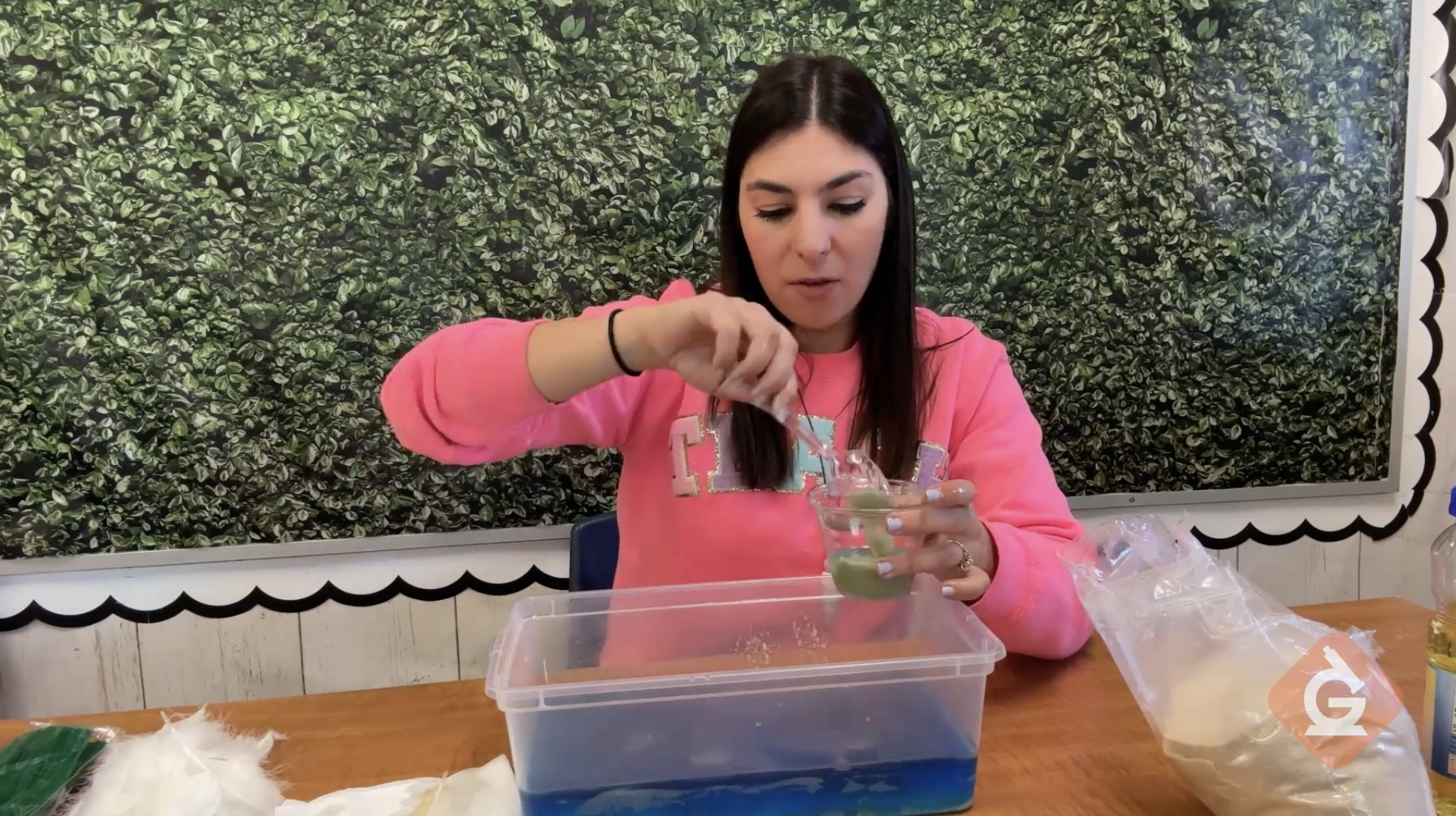
Next, using the skimming method that we used earlier, the oil has now combined with the sand into clumps making it easier to collect it from the water.
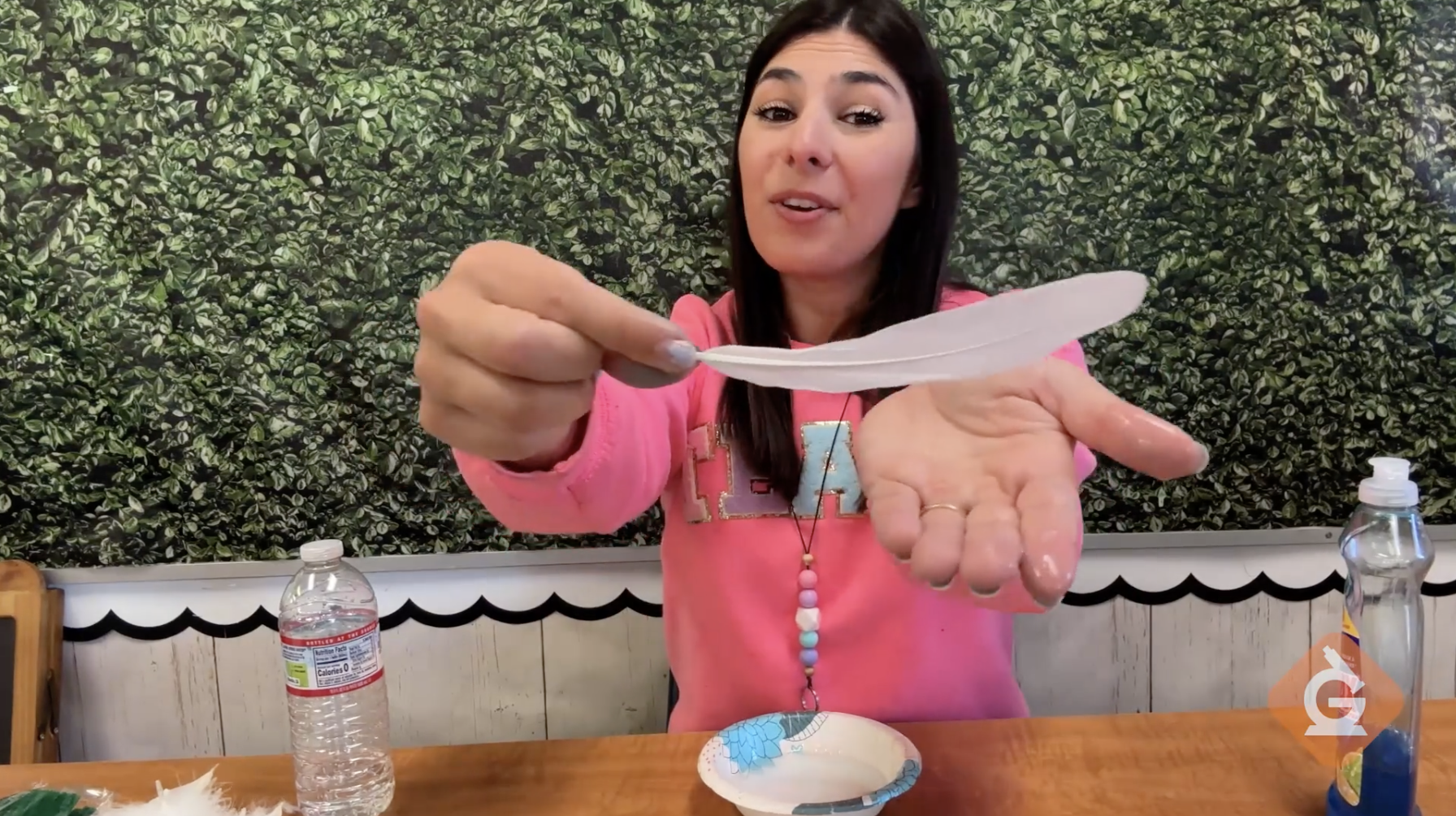
STEP 11
6:17

Bonus — Cleaning the Animal with Dish Soap: Add just a couple drops of dish soap to the oily feather and gently work it in. The soap breaks up the oil, allowing it to mix with water so it can be rinsed away.

How It Works

Oil and water are chemically different — oil is non-polar and water is polar. Their molecules repel each other, so oil always floats on top as a separate layer. That's why water alone can't wash oil off a feather — you need dish soap to break the oil up so it can rinse away.

When an oil spill happens, the oil coats the feathers or fur of animals so they clump together, making it impossible to stay warm or move. Oil also spreads across the ocean surface, affecting marine life far beyond where the spill started.

The big takeaway from this experiment: there is no one method that does everything. Real cleanup crews use scooping to protect future animals, absorption to clean animals already affected, containment (booms) to limit the spread, and clumping agents to make removal easier — all at the same time.
X
Success
We’ve sent you an email with instructions how to reset your password.
Ok
x
Choose Your Free Trial Period
3 Days

3 days to access to all of our teaching resources for free.

Continue to Lessons
30 Days

Get 30 days free by inviting other teachers to try it too.

Share with Teachers
Get 30 Days Free
By inviting 4 other teachers to try it too.
4 required

*only school emails accepted.

Skip, I will use a 3 day free trial

Thank You!

Enjoy your free 30 days trial